OEM skincare is a practical way for beauty brands to develop products under their own brand name.
A good manufacturer can help with formulas, samples, packaging, filling, quality checks, and scale production.
This topic is important for skincare brands, retail buyers, e-commerce sellers, distributors, salons, spas, supermarkets, and wholesale personal care suppliers.
The right partner should understand skin feel, formula stability, packaging, claim language, and product line planning.
As a personal care manufacturer, Xiangxiang Daily supports skincare, hair care, body care, and daily cosmetic products for global beauty brands.
1) What OEM Skincare Means
OEM skincare means a factory makes skincare products for your brand. The products are sold under your own brand name.
The factory can produce an existing formula. It can also help adjust texture, scent, ingredient story, packaging, and product claims.
Common products include face cream, serum, sunscreen, facial mask, eye mask, cleanser, makeup remover, toner, and lotion.
This model is useful for brands that want to launch products without building their own factory.
It also helps buyers test new product ideas before moving into larger orders.
Xiangxiang Daily supports skincare product development through skin care manufacturer services for private label brands and wholesale buyers.
2) Ready Formula vs Custom Formulations
Before starting a skincare project, brands should decide whether they need a ready formula or custom formulations.
Both options can work. The best choice depends on budget, launch time, product goal, and market position.
| Option | Best For | Main Benefit | Key Point |
|---|---|---|---|
| Ready Formula | Fast launch projects | Shorter sampling time | Good for testing demand |
| Custom Formulations | Brands with clear product ideas | More unique product story | Needs more development time |
| Contract Manufacturing | Brands with a clear formula or product plan | Production, filling, and packing support | Needs clear quality standards |
Ready to label skin care: This is useful for brands that want faster product development. It can work for serum, cream, cleanser, mask, or sunscreen projects.
Custom skincare formulas: These are useful when a brand needs a special texture, active ingredient story, scent, skin feel, or product claim.
Contract manufacturing: This is useful when the buyer already has a clear product plan and needs production, filling, packing, and quality control.
For many growing brands, the best path is simple. Start with a clear product direction. Then decide how much customization is needed.
3) Skin Care Products Brands Can Develop
A skincare line can start with one hero product. It can also be built as a full routine.
The best product depends on your market, channel, customer needs, and price level.
Facial serum: Serum products can focus on hydration, glow, uneven-looking skin tone, barrier care, or aging-care positioning.
Face cream: Cream products can support daily moisture, dry skin care, night care, and premium skincare sets.
Sunscreen: Sunscreen products can include lotion, cream, stick, gel, spray, or tinted sunscreen formats. SPF claims should be supported by suitable testing.
Facial mask: Sheet masks, cream masks, sleeping masks, and eye masks can work well for beauty retailers and online sellers.
Cleanser and makeup remover: Cleansing oil, gel cleanser, foam cleanser, and micellar products can support daily skincare routines.
Body and skin care sets: Some brands sell face care with body lotion, body scrub, body oil, and sunscreen. This can create a wider personal care line.
For serum and cream projects, brands can review facial serum manufacturer support. For sun care projects, private label sunscreen manufacturer support can help brands plan SPF products.
4) Formula Packaging and Claim Planning
A high quality skincare product needs more than a good ingredient list. Formula, packaging, and claim language should work together.
Formula direction: The product should match the target skin need. A hydrating serum, glow cream, sunscreen, and makeup remover all need different systems.
Texture goal: Texture affects repeat purchase. A product should not feel too sticky, too greasy, too thin, too heavy, or hard to absorb.
Ingredient story: Hyaluronic acid, niacinamide, vitamin C, peptides, centella, ceramides, aloe vera, and oat extract can support clear product stories.
Packaging type: Bottles, jars, tubes, droppers, airless pumps, sachets, and mini packs should match the formula and sales channel.
Claim language: Product claims should be clear and safe. Brands should avoid medical or unsupported treatment claims.
Product line logic: One product should fit into a routine. For example, cleanser can pair with serum, cream, sunscreen, and makeup remover.
For full product planning, OEM and ODM personal care services can help connect formula direction, packaging, sampling, and production needs.
5) Manufacturing Process for Skincare Projects
The manufacturing process should be clear before bulk production. This helps reduce mistakes and delays.
A simple process may include product brief, formula discussion, sample making, sample testing, packaging matching, label review, bulk production, filling, inspection, and shipment.
Product brief: The buyer confirms product type, target market, texture, scent, packaging, price level, and claim direction.
Formula discussion: The factory reviews formula type, active ingredients, skin feel, stability needs, and product positioning.
Sample making: The factory prepares samples based on the brief. The buyer checks texture, scent, color, absorption, and skin feel.
Sample adjustment: The formula may be adjusted for thickness, scent, color, after-feel, absorption, or ingredient story.
Packaging matching: Bottles, jars, tubes, pumps, droppers, labels, and cartons are checked with the formula.
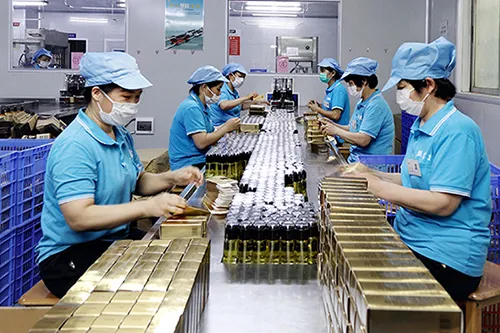
Bulk production: The approved product is produced, filled, capped, labeled, packed, and prepared for shipment.
Final inspection: The factory checks appearance, weight, packaging, labels, cartons, leakage, and batch records.
For larger orders, cosmetics manufacturing support can help with filling, packing, quality review, and export preparation.
6) Quality Checks Before Bulk Production
Quality control is very important in skincare manufacturing. A product should stay stable and feel consistent from sample to bulk order.
Appearance: The product should keep a stable color, scent, texture, and finish.
Stability: Heat, cold, freeze-thaw, separation, color change, and odor change should be reviewed.
Packaging fit: Pumps, droppers, tubes, jars, caps, labels, and cartons should be checked before shipment.
Leakage: Leakage testing is important for serum, toner, sunscreen, cleansing oil, and travel products.
Microbial control: Water-based skincare products need proper preservative review and microbial control.
Skin feel: The product should match the target texture. It should not feel too sticky, greasy, heavy, or irritating.
Batch consistency: Repeat orders should match the approved sample as closely as possible.
Brands can review cosmetic quality control needs before confirming large orders.
For sunscreen, glow products, and active skincare, brands should also confirm testing needs and local claim rules before launch.
7) How to Choose the Right OEM Partner
The right OEM skincare partner should match your product plan and sales channel.
A retail brand, wholesale buyer, e-commerce seller, and salon brand may not need the same support.
For skincare brands: Choose a supplier that can support formula direction, texture, packaging, claim language, and repeat production.
For wholesale buyers: Choose a supplier with stable products, practical pricing, clear packaging, and export support.
For e-commerce sellers: Choose a supplier that can support product sets, texture stories, packaging that ships well, and clear product pages.
For retail chains: Choose a supplier that can support high quality standards, stable lead time, packaging consistency, and category expansion.
For salons and spas: Choose a supplier that understands premium texture, professional packaging, treatment routines, and backbar size.
For multi-category brands: Choose a product manufacturer that can connect skincare with hair care, body care, and daily personal care products.
Before sampling, brands should prepare a clear brief.
- What skincare product do you want to develop first?
- Do you need ready to label skin care or custom formulations?
- What skin concern or product story do you want to focus on?
- What texture, scent, and ingredient story do you prefer?
- Do you need serum, cream, sunscreen, mask, cleanser, or a full set?
- What packaging style and price level do you need?
- Which market and sales channel will the product target first?
- What is your expected order plan after sample approval?
Clear information helps the manufacturer prepare better samples and a more accurate quotation.
Conclusion
OEM skincare is a useful path for beauty brands that want to develop skincare products under their own brand name.
The key is choosing a manufacturer that can support formulas, packaging, quality checks, communication, and scale production.
A good supplier should help you build more than one product. It should help you create a skincare line that fits your market, sales channel, price level, and customer needs.
Xiangxiang Daily supports OEM skincare, private label skin care products, sunscreen, serum, facial cream, masks, makeup remover, and wider personal care development.
For custom production, Xiangxiang Daily can help skincare brands, wholesale personal care suppliers, distributors, salons, spas, supermarkets, and online sellers develop retail-ready products with suitable formula, packaging, quality checks, and export support.
FAQ — OEM Skincare
Q1: What is OEM skincare?
OEM skincare means a factory makes skincare products for a brand. The products are sold under the brand’s own name.
Q2: What skincare products can a manufacturer make?
Common products include serum, face cream, sunscreen, facial mask, eye mask, cleanser, toner, makeup remover, and skincare sets.
Q3: What is the difference between ready formula and custom formulation?
Ready formula products are faster to develop. Custom formulations need more work for texture, active ingredients, scent, claims, and market position.
Q4: Can skincare manufacturers support packaging?
Yes. Many suppliers can help with bottles, jars, tubes, droppers, pumps, sachets, labels, boxes, and cartons.
Q5: Can a manufacturer make high quality skincare products?
Yes. Buyers should check sample quality, stability review, packaging fit, batch consistency, quality control process, and production records.
Q6: Is skincare OEM suitable for wholesale buyers?
Yes. Wholesale personal care buyers can develop practical skincare products with stable formulas, clear packaging, repeat production, and export-ready support.
Q7: How long does skincare development take?
The timeline depends on formula type, sample changes, packaging, testing, and order size. Ready formula projects are usually faster than custom formulations.
Q8: What should brands prepare before contacting a manufacturer?
Prepare your target market, product type, texture goal, ingredient story, scent direction, packaging idea, benchmark product, claim direction, sales channel, and order plan.