PDRN stands for polydeoxyribonucleotide, a mixture of DNA fragments used in medical research and, increasingly, in skin care. Traditionally associated with purified salmon or trout DNA, it now also appears in discussions of plant-derived ingredients. In cosmetics, PDRN is commonly featured in serums, creams, and toner pads marketed for hydration and healthier-looking skin. However, the ingredient name alone does not establish what a finished product can do.
Understanding what is PDRN involves more than decoding the acronym. Its source, formulation, method of application, and supporting research all matter. This guide explains those differences and shows how to compare topical products without confusing a daily skin care routine with an injectable treatment.
What Is PDRN in Skin Care
What the name means
Polydeoxyribonucleotide refers to chains made from DNA building blocks. PDRN is a DNA-derived material, rather than a peptide, vitamin, or exfoliating acid. Its name does not describe one identical ingredient specification shared by every supplier.
A review of PDRN pharmacology and clinical applications describes pharmaceutical preparations obtained by processing and purifying DNA from salmon trout or chum salmon. That information explains the background of the ingredient, but it does not establish the source, purity, or performance of every cosmetic labeled PDRN.
Is PDRN the same as salmon sperm
The phrase “salmon sperm skin care” describes a common source in a memorable way. It does not accurately describe the finished cosmetic ingredient: extraction and purification separate DNA-derived material from the starting biological material. A serum is not simply untreated salmon sperm added to a bottle.
Fish-derived PDRN is also not the only material being investigated. A study of PDRN isolated from cultivated ginseng roots examined effects in cells and reconstructed skin models. It provides an example of plant-derived research, rather than proof that all plant-labeled PDRN cosmetics are equivalent to fish-derived preparations or have the same effects on people.
What about PN and ingredient labels
You may encounter both PDRN and PN, meaning polynucleotide, in product descriptions. These are related terms, but the initials are not sufficient to establish that two materials are interchangeable. Compare the manufacturer’s specification and the evidence for the actual material being used.
For a finished cosmetic, read the full ingredient list alongside the brand’s explanation. If a PDRN claim is unclear, ask which listed ingredient it refers to and what its source is. A familiar acronym on the front of a package should be supported by a clear description of what is inside.
What Does PDRN Do for Skin
PDRN products are often positioned around moisture, comfort, a smoother appearance, and visible skin quality. Those are useful shopping goals, but they should be evaluated at the level of the finished formula. A product can contain several ingredients contributing to how skin feels and looks.
Why medical research attracts attention
The pharmacology review linked above discusses biological pathways, including adenosine A2A receptor activity, and studies of specific preparations in tissue repair. This helps explain why PDRN attracts interest. It does not mean that applying an ordinary cosmetic serum produces the same outcome as the treatments studied.
The most useful question is therefore not simply whether PDRN has been researched. It is whether the research matches the product, application method, and result being claimed.
| Evidence type | What it can help explain | What it does not establish by itself |
|---|---|---|
| Cell or reconstructed skin research | Biological responses under controlled experimental conditions | How a retail serum performs on intact human skin |
| Medical or injectable studies | Outcomes for the preparation and administration method studied | Equivalent results from a daily cream or toner pad |
| Human testing of a finished topical formula | Measured changes under a defined routine and study design | The same benefit from every other PDRN product |
| Reviews and before-and-after photos | Individual experiences and preferences | Which ingredient caused a change or how typical it is |
Evaluate the whole formula
If a PDRN serum also contains glycerin or hyaluronic acid, a more hydrated feel cannot automatically be credited to PDRN alone. Similarly, the emollients in a cream affect softness and afterfeel. Ingredient combinations are part of product performance, not a detail to ignore.
For claims about firmness, fine lines, or barrier function, look for testing of the actual product. Useful information includes the number of participants, duration, comparison group, measurement method, and whether the reported result was instrument-measured or self-reported.
Be cautious with phrases such as “clinically proven ingredient” when the only evidence concerns another preparation or delivery method. Equally, a limited evidence base is not a reason to declare every topical formula ineffective. It is a reason to keep the conclusion specific to what has been tested.
How Do PDRN Serums Creams and Toner Pads Compare
Choose a format according to the role it will play in your routine. A higher-priced format or a larger concentration claim does not automatically make a product a better match.
| Format | Typical role | What to compare |
|---|---|---|
| Serum | An additional leave-on step before moisturizer | Spreadability, stickiness, layering, and the complete ingredient list |
| Cream | A moisturizing step with a lighter or richer finish | Comfort, emollient system, residue, and packaging convenience |
| Toner pads | A pre-soaked format applied according to the product instructions | Pad softness, liquid amount, other actives, and container closure |
PDRN serums
A serum can suit someone who wants an additional step while keeping a familiar moisturizer. Consider whether it absorbs comfortably, pills when layered, or leaves a finish you dislike. The word “serum” does not guarantee a lightweight texture or greater effectiveness.
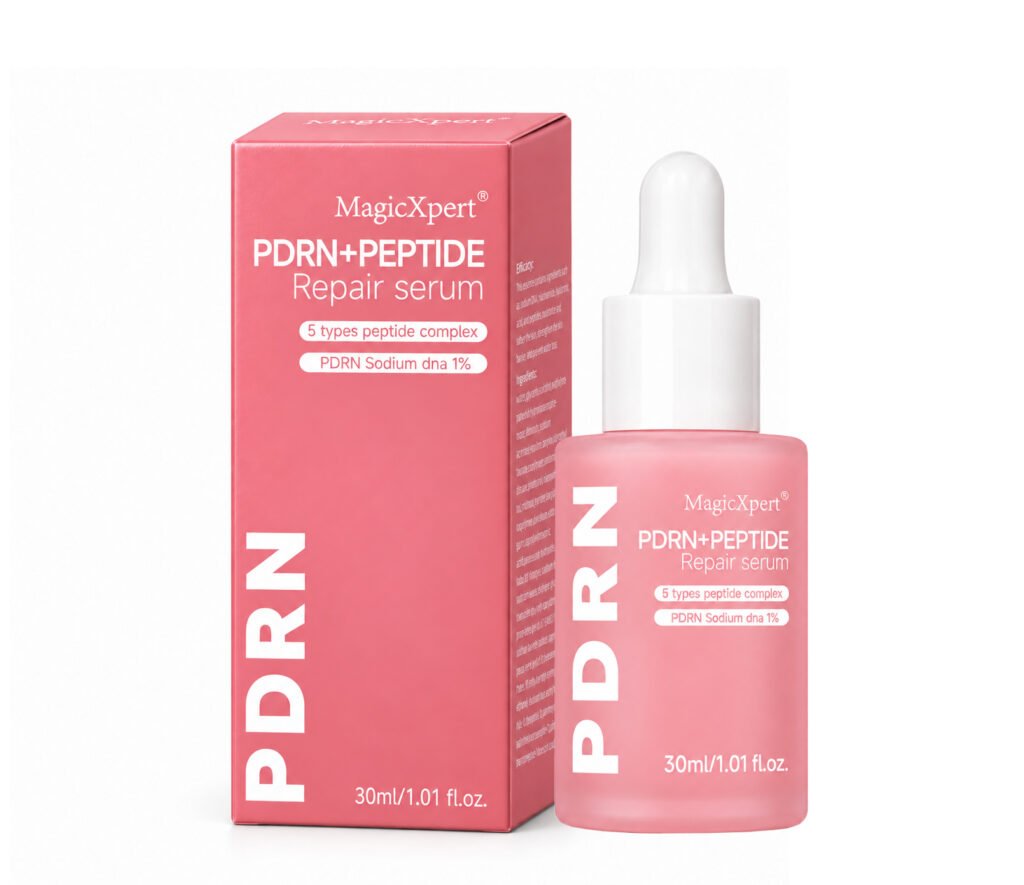
For brands exploring this format, Xiangxiang Daily’s PDRN peptide serum is a product concept to review. Its name identifies the format and positioning; specific claims should be checked against the confirmed formula and available testing.
PDRN creams
A cream may be a practical option when you prefer fewer steps or want a more substantial moisturizing finish. Compare how it feels after application and whether it works comfortably under sunscreen or makeup.
A capsule presentation introduces another texture and dispensing consideration. When reviewing a PDRN peptide capsule cream, ask how the product is intended to be mixed or applied. Visible capsules alone do not demonstrate encapsulated PDRN, improved penetration, or longer ingredient stability.
PDRN toner pads
Toner pads combine a liquid formula with an applicator. Their appeal may be convenience, a particular skin feel, or a preferred routine. The pad material and instructions matter alongside the liquid ingredients.
For a format example, see Xiangxiang Daily’s PDRN collagen toner pads. Do not assume all toner pads are exfoliating: check whether the formula contains exfoliating ingredients and how the manufacturer recommends using it.
How to Choose and Use PDRN Skin Care
Read concentration claims carefully
A label may give a concentration in parts per million, or ppm. Before comparing numbers, establish what is being measured: pure PDRN in the finished formula, a diluted raw material, or a blend containing several components.
For example, adding 1% of a raw material that itself contains 1% PDRN would contribute 0.01% PDRN to the finished formula, assuming both percentages are by weight. That equals 100 ppm. This is an arithmetic illustration, not a recommended dose or a specification for any product on this page.
Comparable concentration statements need the same basis. Even then, a larger number does not independently establish better results. The formula, intended use, and testing remain important.
Fit the product into a simple routine
Follow the product’s directions for application order, amount, and frequency. For a typical leave-on serum, the sequence is cleansing, serum, then moisturizer. A moisturizing cream may occupy the final moisturizing step. In a morning routine, continue using your usual sunscreen.
You do not need a PDRN serum, cream, and pad at the same time. Starting with one product makes it easier to judge its texture, comfort, and usefulness. It also avoids introducing several unfamiliar formulas together.
Consider sensitivity and other ingredients
A PDRN label does not make the entire formula suitable for every skin type. Fragrance, exfoliating ingredients, and other components can affect tolerance. If you have a fish allergy, ask the manufacturer about the source and discuss suitability with your clinician rather than assuming purification makes every product safe for you.
Follow any small-area testing instructions provided with the product before wider use. Stop using it if irritation develops, and seek professional advice for a suspected allergy. A successful home test does not guarantee that a later reaction cannot occur.
When combining a product with retinol, acids, or other active products, consider both complete formulas and their instructions. PDRN is not a reason to increase the strength or frequency of another active. For recently treated or injured skin, follow the treating professional’s aftercare advice instead of choosing a product solely because it is marketed for recovery.
What Should Brands Consider When Developing PDRN Products
For a private label brand, a clear product brief is more useful than asking for the highest available PDRN number. Start with the intended customer, product format, target texture, sales market, and proposed cosmetic claims.
- Raw material identity: Confirm the source, ingredient naming, supplier specification, and concentration basis. Request supporting documentation for any vegan positioning.
- Formula performance: Evaluate spreadability, afterfeel, layering, and fragrance preference. Assess the finished sample against the intended use.
- Packaging compatibility: Check dispensing consistency, closure performance, and formula interaction with the proposed container. Pads also require evaluation of the substrate and liquid distribution.
- Stability and quality: Agree on appropriate stability, microbiological, and preservative evaluation for the actual formula and packaging.
- Claim support: Separate raw material research from finished-product results. Plan suitable testing before committing to specific performance claims.
For more detailed product planning, explore our guide to PDRN serum development for private label brands or our overview of PDRN face cream development.
When discussing a project with Xiangxiang Daily, share your preferred format, benchmark texture, target market, packaging concept, and intended claims. These details help define the samples and documentation needed to evaluate a suitable product.
FAQ About PDRN in Skin Care
Is all PDRN made from salmon
No. Salmon and trout are established sources in the literature, while plant-derived materials are also being researched and marketed. Check the source of the specific ingredient instead of inferring it from the acronym.
Is PDRN skin care vegan
Fish-derived PDRN is not vegan. A plant-derived PDRN claim does not, by itself, verify the vegan status of the whole formula. Other ingredients and the brand’s supporting documentation also need to be considered.
Is PDRN serum the same as a PDRN injection
No. A cosmetic serum and an injectable preparation have different delivery methods and product requirements. They should not be treated as interchangeable, and results from one cannot be assumed for the other.
Can you use PDRN every day
Use the frequency stated for the finished product and adjust if it causes irritation. There is no single schedule that applies to every serum, cream, or pad carrying a PDRN claim.
Can PDRN replace retinol
PDRN and retinol are different ingredients. A PDRN product should not be presented as an equivalent substitute without evidence addressing the same outcome. Choose products according to your goal, tolerance, and appropriate professional advice.
How long does PDRN take to work
There is no universal timeline for all PDRN skin care. An immediate change in softness or surface hydration is different from a measured change in firmness or fine lines. Look for results from the specific product, including what was measured and over what period.