
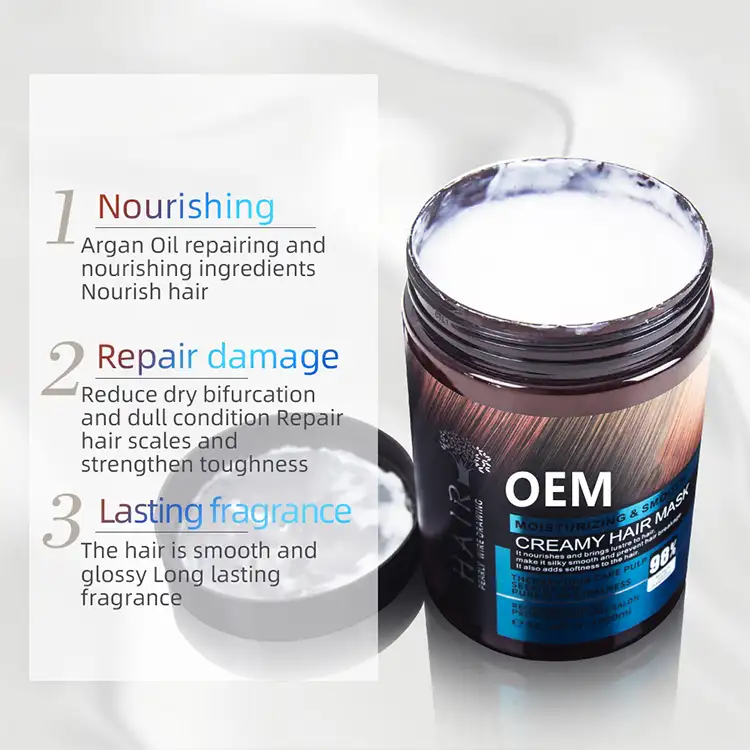
A hair mask is a conditioning treatment designed to make hair feel softer, smoother, and easier to manage. Many formulas provide extra care for dry hair, damaged hair, or strands that are difficult to detangle.
Most masks are applied after shampoo and rinsed out after a short wait. However, some are designed for use before washing or as a leave-in treatment, so check the product label first.
What Does a Hair Mask Do?
A hair mask helps improve the way hair strands look and feel. Depending on the formula, it can help:
- Make dry lengths feel softer.
- Reduce friction and make knots easier to comb.
- Smooth the appearance of frizz.
- Add shine and improve manageability.
- Provide extra care after coloring or heated styling.
Ingredients such as conditioning agents, oils, and proteins contribute to the result. They work together in the finished formula to help nourish and hydrate the hair or improve its surface feel.
A mask can make damaged hair look smoother, but it cannot permanently join split ends back together. Regular trims and gentler styling remain important.
Is a Hair Mask the Same as Conditioner?
They have similar jobs, but they may fit into your routine differently. Conditioner is commonly used after each shampoo for softness and detangling. A hair mask is often used when you want extra care, sometimes with a longer contact time.
The difference is not always obvious from the label. A thick mask is not automatically stronger than a light conditioner; ingredients and how the finished product performs matter more than texture alone.
You do not always need both. If a mask leaves your hair soft and easy to comb, it may be enough on that wash day. For a closer comparison, see our guide to hair mask vs conditioner.
How to Apply a Hair Mask
For a typical rinse-out mask, follow these steps:
- Shampoo and rinse. Clean your hair as usual unless the mask is intended for use before washing.
- Remove excess water. Gently squeeze the lengths so the product can spread more easily.
- Apply a hair mask. Work a small amount through the mid-lengths and ends, adding more if needed.
- Wait as directed. Follow the time on the package rather than assuming that longer is always better.
- Rinse thoroughly. Use lukewarm water and check that the lengths do not feel coated.
Do not apply every mask from roots to tips by default. If your roots become oily easily, focus on the lengths. Use it on your scalp only if the product directions say it is suitable.
A shower cap can keep hair contained while you wait, but it is not necessary for every formula. Follow the label before adding heat or leaving a treatment on overnight.
How Often Should You Use One?
How often you use a mask depends on the product and how your hair responds. Some people use one weekly; others use it only when their lengths feel rough or hard to manage.
Start with the directions on the package. If your hair feels soft but loses volume, try using less or using it less often. If your regular conditioner already gives you the result you want, an extra mask may be optional.
How Do You Choose a Mask for Your Hair Type?
Different hair types need different finishes. Consider the result you want after the hair has dried, not just how slippery it feels in the shower.
- Fine hair: Choose a lightweight formula and start with a small amount on the ends.
- Curly or coarse hair: Look for enough slip to help you detangle without pulling.
- Dry hair: Try a formula designed for deep conditioning and softness.
- Color-treated or damaged hair: Choose a product suited to your hair condition and follow its directions.
Your choice can also depend on your hair length, styling habits, and how much conditioning you already use. A rich formula that suits one person may weigh down another person’s hair.
If you prefer a homemade option, see our guide to how to make a natural hair mask at home. It covers simple recipes and how to choose ingredients for your hair.
Does a Hair Mask Replace Heat Protection?
Not automatically. A mask may improve softness and manageability, but do not assume it protects hair from a blow dryer or straightener.
Before using heated styling tools, choose a product with clear heat-protection directions. Lower temperatures and fewer passes can also help limit damage.
What Should Brands Consider When Developing a Hair Mask?
From a manufacturer’s perspective, a useful formula starts with a clear purpose. A lightweight product for fine hair and a richer treatment for dry lengths need different balances of texture, slip, and rinse feel.
At Xiangxiang Daily, brands can explore our private label hair mask range and discuss formula, fragrance, and packaging requirements with our team.
A hair mask is not the same as a face mask, even if both come in jars. Each product is formulated for a different use, so follow the directions for the treatment you choose.


