Private Label Shampoo is a strong product idea for UK hair care brands.
UK buyers often want shampoo that feels gentle, clear, and easy to trust.
Many brands look for SLS-free shampoo.
Some brands want sulfate-free shampoo.
Others focus on sensitive scalp, color safe, anti-dandruff, vegan, or natural hair care shampoo.
For B2B buyers, a good shampoo must do more than follow a trend.
It must clean well.
It must rinse well.
It must feel good after use.
It also needs clear claims, stable quality, reliable packaging, and UK rule support.
This guide explains how to develop Private Label Shampoo for UK retailers, online sellers, salons, distributors, and hair care brands.
It covers product ideas, formula direction, packaging, UK label basics, minimum order planning, custom formulation, and supplier checks.
As a personal care manufacturer, Xiangxiang Daily focuses on shampoo, conditioner, hair care, body care, and skin care products for private label and OEM/ODM buyers.
What Is Private Label Shampoo?
Private Label Shampoo is made by a manufacturer and sold under your own brand name.
The manufacturer supports formula, filling, packaging, labeling, samples, production, and quality checks.
Your brand controls the product name.
Your brand also controls the design, price, claim direction, and sales channel.
For UK brands, the product should be simple to understand.
The formula should match the target hair type.
The label should be easy to read.
The claims should be safe and realistic.
Useful product ideas include:
- SLS-free shampoo.
- Sulfate-free shampoo.
- Sensitive scalp shampoo.
- Anti-dandruff shampoo.
- Color safe shampoo.
- Natural hair care shampoo.
- Vegan shampoo.
- Moisturizing shampoo.
- Clarifying shampoo.
- Shampoo and conditioner set.
The best product is not always the most complex one.
A clear benefit can matter more.
A stable formula can matter more.
Good fragrance also matters.
High quality packaging matters too.
For product development, buyers can start from our private label shampoo manufacturer category.
Best Shampoo Ideas for the UK
A UK shampoo line can start with three to five products.
Each product should have one main job.
This makes the line easier to sell.
1. SLS-Free Shampoo
SLS-free shampoo is a strong idea for UK brands.
It can support mild cleansing.
It can also support scalp comfort.
The formula still needs good foam.
It also needs a clean rinse feel.
A mild shampoo will not sell well if it feels flat, greasy, or hard to rinse.
2. Sensitive Scalp Shampoo
Sensitive scalp shampoo should feel gentle.
It should not feel too strong.
It should not use a heavy fragrance.
Good ideas include mild cleansing, scalp comfort, low fragrance, and simple ingredients.
Claims should stay careful.
Do not claim to treat scalp disease unless the product and local rules support that claim.
3. Color Safe Shampoo
Color safe shampoo is useful for dyed or treated hair.
The product should cleanse without a harsh feel.
It can focus on gentle cleansing.
It can also focus on shine, smooth hair feel, and less color-stripping.
Buyers should test the formula on colored hair before confirming the final product.
4. Anti-Dandruff Shampoo
Anti-dandruff shampoo can work well when the benefit is clear.
The product can focus on flakes, oily scalp, itchiness, and fresh scalp feel.
If the formula uses stronger anti-dandruff actives, buyers should check claim wording before printing the label.
5. Natural or Organic Shampoo
Natural hair care shampoo can work when the ingredient story is simple.
Organic hair care products may also appeal to some UK brands.
Popular ideas include botanical extracts, vegan claims, herbal scent, and gentle scalp care.
Performance still matters.
A natural story is not enough if the shampoo has weak foam or poor rinse feel.
6. Shampoo and Conditioner Set
A shampoo and conditioner set is easier to sell as a routine.
The shampoo can focus on cleansing.
The conditioner can focus on softness and smoothness.
This works for online bundles, retail shelves, salons, and distributors.
It can also help brands build a complete hair care line.
For hair repair products, buyers can review our hair mask manufacturer category.
Formula Direction for UK Brands
Formula planning should start with the target user.
Fine hair needs a light finish.
Dry hair needs more softness.
Colored hair needs gentle cleansing.
Curly or textured hair may need more slip and moisture.
Useful formula ideas include:
- Mild cleansing: SLS-free or sulfate-free cleansing systems.
- Scalp comfort: gentle cleansing and careful fragrance use.
- Moisture support: glycerin, aloe vera, panthenol, oils, or butters.
- Color safe care: mild cleansing with less stripping feel.
- Clarifying care: fresh rinse feel for buildup from styling products.
- Natural hair care: botanical extracts with a clear ingredient story.
- Organic positioning: ingredients that fit the brand’s natural claim direction.
A custom formulation is useful when the brand needs a special texture, scent, claim, or ingredient story.
For example, a UK brand may want a low-fragrance sensitive scalp shampoo.
Another brand may want a color safe shampoo for dyed hair.
A salon brand may want a richer scent and smoother after-feel.
Fragrance also matters.
Fresh, clean, herbal, floral, citrus, salon-style, and soft creamy scents can work well.
The fragrance should match the product.
A sensitive scalp shampoo may need low fragrance.
It may also need a fragrance-free option.
A salon-style shampoo may use a stronger scent.
Buyers should test fragrance in three stages:
- In the bottle.
- During washing.
- After drying.
For scalp-focused hair care solutions, buyers can review our scalp treatment manufacturer category.
Packaging and Minimum Order
Packaging should match the sales channel.
UK buyers may sell through Amazon, Shopify, retail stores, salons, distributors, TikTok Shop, or subscription boxes.
Each channel has different needs.
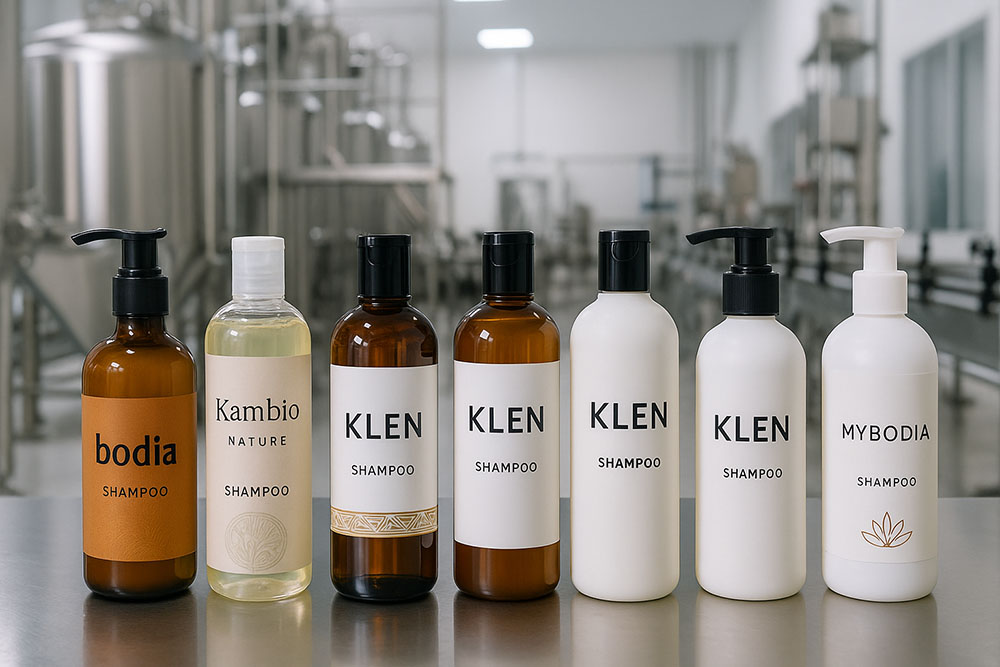
Common packaging options include:
- 100 ml travel-size bottle.
- 250 ml bottle.
- 300 ml bottle.
- 400 ml bottle.
- 500 ml pump bottle.
- Salon-size bottle.
- Shampoo and conditioner set.
- Refill pouch.
- Gift set packaging.
- Online bundle packaging.
A small bottle can help with trial purchases.
A 250 ml or 300 ml bottle can work well for retail and online sales.
A pump bottle can support family or salon use.
A refill pouch can support value or lower-plastic positioning.
Minimum order planning is also important.
A buyer testing a new product may prefer a lower minimum order.
A retailer or distributor may need a larger order for better unit cost.
The right minimum order depends on formula, bottle, label, and production plan.
Before confirming packaging, buyers should check:
- Bottle strength.
- Pump function.
- Cap tightness.
- Leakage risk.
- Label adhesion.
- Carton strength.
- Product viscosity and bottle match.
- Barcode and label layout.
- Online shipping protection.
High quality packaging helps reduce leakage, label damage, carton damage, and customer complaints.
For factory-side checks, buyers can review our personal care quality control page.
Existing Formula or Custom Formula?
Private label buyers usually choose between an existing formula and a custom formula.
Both options can work.
The right choice depends on speed, budget, product story, minimum order, and sales plan.
- Existing formula: better for fast launch and market testing.
- Custom formula: better for a unique scent, texture, claim, or ingredient story.
- Full service OEM/ODM project: better for long-term hair care line building.
An existing formula is useful when buyers need speed.
It can help a UK brand test demand before deeper development.
A custom formula is better when the brand needs a stronger product story.
For example, a buyer may want an SLS-free claim.
Another buyer may want a vegan story.
Another may want a color safe direction.
A premium brand may want a salon fragrance or a curly hair direction.
Custom development should include sample testing.
Buyers should test:
- Foam.
- Rinse feel.
- Fragrance.
- Scalp comfort.
- Hair softness.
- Detangling support.
- Viscosity.
- Packaging match.
A good supplier should help adjust the formula based on hair type, price level, channel, and claim direction.
UK Rules and Label Basics
Shampoo is a cosmetic product in the UK.
Brands should check UK cosmetic rules before selling.
For Great Britain, cosmetic products need a Responsible Person.
The Responsible Person must make sure the product meets the relevant rules.
GOV.UK explains that the Responsible Person must notify OPSS before the cosmetic product is made available to consumers in Great Britain.
You can review the official guidance here: making cosmetic products available to consumers in Great Britain.
GOV.UK also provides the Submit Cosmetic Product Notifications service here: submit a cosmetic product notification.
UK projects may involve:
- Responsible Person support.
- Product safety check.
- Product Information File.
- OPSS notification.
- Ingredient list review.
- Label artwork review.
- Batch and traceability information.
- Claim wording review.
Claim wording should stay realistic.
Safer claim ideas include:
- Helps cleanse the scalp.
- Leaves hair feeling fresh.
- Helps hair feel softer.
- Helps reduce the look of flakes.
- Helps make hair easier to manage.
- Helps reduce breakage caused by dryness.
- Supports daily hair care.
- Supports a gentle cleansing routine.
Avoid unsupported medical claims.
Do not promise to cure scalp disease.
Do not promise to permanently stop hair fall.
Do not claim to treat a medical condition.
How to Choose a Private Label Manufacturer
The private label manufacturer should understand shampoo development and export work.
A low price is not enough.
The shampoo must be stable.
It must be easy to use.
It must fit the UK product idea.
A full service manufacturer can support formula, packaging, label, samples, production, filling, and quality checks.
Hair care manufacturing also needs strong batch control.
The sample should match the bulk product.
The fragrance should stay stable.
The bottle should not leak.
The label should stay attached.
Before choosing a supplier, check:
- Shampoo and conditioner experience.
- SLS-free or sulfate-free formula options.
- Sensitive scalp formula experience.
- Anti-dandruff formula experience.
- Color safe shampoo experience.
- Natural hair care product experience.
- Organic hair care products experience.
- Existing formula library.
- Custom formula ability.
- Private label hair care products experience.
- Fragrance adjustment support.
- Packaging sourcing support.
- Custom label support.
- Minimum order options.
- Sample development process.
- Quality control process.
- Export document support.
- Ability to support conditioner, hair mask, hair oil, and styling products.
A good supplier should ask about your market.
They should ask about the target channel.
They should ask about price level.
They should ask about packaging style.
They should ask about fragrance and texture.
They should also ask about hair type and scalp concern.
If a supplier only asks for quantity, the product planning may not be strong enough.
For UK buyers, samples should match the exact product idea.
A sensitive scalp shampoo should feel gentle.
A salon-style shampoo should feel more premium.
A sulfate-free shampoo should still foam and rinse well.
A color safe shampoo should be tested for dyed or treated hair routines.
The packaging should also survive online shipping and retail handling.
Simple UK Product Line Plan
A simple UK shampoo line can start with three products.
- SLS-free daily shampoo.
- Sensitive scalp shampoo.
- Shampoo and conditioner set.
A stronger line can add more products.
- Anti-dandruff shampoo.
- Color safe shampoo.
- Moisturizing shampoo.
- Clarifying shampoo.
- Hair mask for dry or damaged hair.
- Hair oil for shine and softness.
- Light styling products for frizz control or daily styling.
This creates a clear product story.
It covers daily cleansing, scalp comfort, dandruff concern, color care, moisture care, and routine building.
It also helps brands build a more complete hair care line for the UK market.
Brands do not need to rely on one single shampoo SKU.
Xiangxiang Daily can support shampoo, conditioner, scalp treatment, hair mask, hair oil, styling products, packaging, samples, production, and quality checks for UK-focused private label hair care projects.
Conclusion
Private Label Shampoo is a strong product direction for UK hair care brands.
The best products are clear, stable, and easy to trust.
Strong directions include SLS-free shampoo, sulfate-free shampoo, sensitive scalp shampoo, anti-dandruff shampoo, color safe shampoo, natural hair care shampoo, organic hair care products, and shampoo and conditioner sets.
The formula should match the target hair type and sales channel.
The packaging should look professional and stay reliable during shipping and storage.
UK projects should also consider Responsible Person, safety check, notification, label, and claim wording requirements.
A strong supplier should support formula selection, custom formulation, packaging, minimum order planning, samples, quality checks, hair care manufacturing, and export preparation.
Xiangxiang Daily can help buyers develop Private Label Shampoo and build a complete hair care line for UK retail, salon, e-commerce, and distributor channels.
FAQ
What Private Label Shampoo products are suitable for UK brands?
SLS-free shampoo, sulfate-free shampoo, sensitive scalp shampoo, anti-dandruff shampoo, color safe shampoo, natural hair care shampoo, moisturizing shampoo, and shampoo and conditioner sets are useful directions.
Is SLS-free shampoo a good direction for the UK?
Yes.
SLS-free shampoo can work well for brands focused on mild cleansing, sensitive scalp positioning, or premium hair care.
The formula still needs good foam, rinse feel, and hair softness.
Can I launch color safe shampoo in the UK?
Yes.
Color safe shampoo can work for brands targeting dyed, bleached, or treated hair.
The formula should be tested for gentle cleansing and good hair feel.
Can I launch organic hair care products in the UK?
Yes.
Organic hair care products can work if the ingredient story, formula performance, certification direction, and claim wording are clear.
Buyers should confirm what “organic” means for their target market before printing labels.
Does shampoo need UK cosmetic notification?
For Great Britain, cosmetic products need to be notified to OPSS before being made available to consumers.
Brands should confirm requirements with their Responsible Person or local compliance advisor.
What is better, an existing formula or custom formulation?
An existing formula is better for fast launch and market testing.
A custom formulation is better when the brand needs a unique scent, texture, claim, or target hair care story.
What is the minimum order for Private Label Shampoo?
The minimum order depends on formula type, packaging choice, label design, and production plan.
Buyers should confirm MOQ with the manufacturer during quotation and sampling.
Why does hair care manufacturing matter?
Hair care manufacturing affects formula stability, fragrance, viscosity, filling quality, packaging compatibility, and batch consistency.
These details can affect customer reviews and repeat purchase.
How do I choose a private label manufacturer?
Choose a supplier with shampoo experience, formula support, packaging support, quality checks, custom label ability, minimum order options, and export support.
A full service manufacturer can make the project easier to manage.
Can Xiangxiang Daily develop Private Label Shampoo for UK brands?
Yes.
Xiangxiang Daily can support private label shampoo, conditioner, scalp treatment, hair mask, hair oil, styling products, packaging, samples, production, filling, quality checks, and export preparation for UK-focused hair care brands.