Can heat damaged hair be repaired? The answer depends on what you mean by repair. Hair products can make damaged hair feel softer, look smoother, and break less. But they cannot return a badly damaged strand to its original, undamaged state.
The good news is that you do not have to cut all your hair at once. Gentle care, less heat, and regular trims can improve how your hair looks while new hair grows in.
In this guide, you will learn how to spot heat damage, care for fragile hair, and protect it from further damage.
Can Heat Damaged Hair Be Repaired?
Heat can damage the outer layer of a hair strand and weaken its inner structure. Once the strand grows out of the scalp, it cannot heal itself like skin.
That means severe heat damage cannot be fully reversed. Split ends cannot be permanently joined back together, and a product cannot make an old strand completely new again.
However, damaged hair can still look and feel better. Conditioners, masks, and leave-in products can coat and smooth the hair. They can also make it easier to detangle, which may help reduce breakage.
Over time, trimming damaged ends removes the affected hair. New hair can then grow in, provided the scalp and hair follicles remain healthy.
What Does Heat Damaged Hair Look Like?
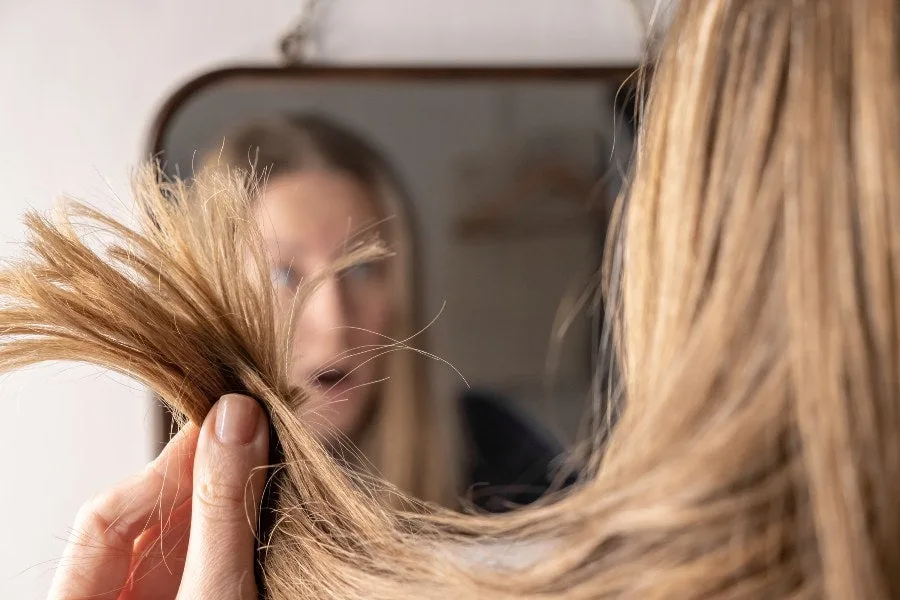
Heat damage can look different from person to person. It may affect only the ends, or it may be visible throughout the hair.
Common signs include:
- Dryness: Hair feels rough or dry, even after washing.
- Split ends: The ends of strands look frayed or split.
- Breakage: Short pieces of hair snap off during brushing or styling.
- Frizz: Hair looks less smooth and is harder to manage.
- Dullness: Hair reflects less light and looks less shiny.
- More tangles: Strands catch on each other more easily.
- Changes in texture: Curls or waves may look looser, uneven, or less defined.
These signs do not always mean that heat is the only cause. Bleaching, chemical treatments, sun exposure, and rough handling can also damage hair.
What Causes Heat Damage?
Heat damage often builds up when hair is exposed to high temperatures again and again. Flat irons, curling irons, hot brushes, and blow dryers can all contribute.
The risk may be higher when you use a tool on its highest setting, pass it over the same section many times, or use it too often. Hair that has been bleached or chemically treated may already be fragile.
Heat is not the only thing to consider. Pulling a brush through tangled hair while blow-drying can also cause breakage. A gentler routine can help protect your hair from both heat and friction.
How to Care for Heat Damaged Hair
You cannot undo every change to a damaged strand, but you can make your hair easier to manage. Start with these simple steps.
1. Take a Break From Hot Tools
Give your hair a break from flat irons, curling irons, and other hot tools when you can. This helps prevent more heat damage while you care for the hair you have.
Try air-drying, loose braids, or other styles that do not require heat. If you need to use a blow dryer, choose a cool or low-heat setting.
A break from heat will not erase old damage. It can, however, help protect new growth and reduce further stress on fragile ends.
2. Use a Gentle Shampoo
Choose a shampoo that cleans your scalp without leaving your hair feeling overly dry. Focus the shampoo on your scalp and let the lather run through the lengths when you rinse.
How often you wash depends on your scalp, hair type, and routine. Some people need to wash more often than others. Look for a schedule that keeps your scalp clean and your hair comfortable.
You do not have to choose a sulfate-free shampoo simply because your hair is damaged. What matters is how the whole formula feels and works for your hair.
3. Apply Conditioner After Washing
Conditioner helps smooth the surface of the hair and makes it easier to comb. This can reduce the pulling and friction that lead to breakage.
Apply conditioner mainly to the lengths and ends. Leave it on for the time stated on the label, then rinse well.
If your hair is fine, you may prefer a light formula. Thick, dry, or curly hair may benefit from a richer conditioner. Adjust the amount based on how your hair feels.
4. Try a Hair Mask
A hair mask can add extra conditioning when your hair feels very dry or rough. Use it as directed and focus on the areas that need the most care.
You do not need to use a mask every day. Start with the directions on the product label and adjust based on your results.
A mask can help hair feel soft and look smooth, but its effects do not permanently remove heat damage. Continue using gentle care between treatments.
5. Use a Leave-In Conditioner
A leave-in conditioner stays on the hair after washing. It can help with tangles, dryness, and frizz throughout the day.
Apply a small amount to the lengths and ends, following the label. Avoid using too much near the roots if your hair becomes flat or oily easily.
Some leave-in products also act as a heat protectant. Check the label rather than assuming that every leave-in conditioner provides heat protection.
6. Detangle With Care
Damaged hair can break when you pull through knots. Take your time and work in small sections.
Start near the ends and gently work your way up. A wide-tooth comb or a detangling tool suited to your hair type can help. Conditioner or a detangling product may also make the process easier.
Hair is often more fragile when wet. However, people with tightly curled or textured hair may find it easier to detangle while it is wet and conditioned. Choose the method that causes the least pulling for your hair.
7. Trim Split or Severely Damaged Ends
A trim removes split and damaged ends. It does not make hair grow faster from the scalp, but it can make the ends look fuller and feel smoother.
You do not have to remove all damaged hair in one appointment. If you want to keep your length, ask your stylist about trimming small amounts over time.
If damage is higher up the hair shaft, a stylist can help you decide how much to cut. The right approach depends on your hair and the look you want.
Do You Have to Cut Off Heat Damaged Hair?
Not always right away. If your hair has mild damage, gentle care may make it easier to manage while you keep most of your length.
If the ends are split or break easily, trimming them can help. Severely damaged sections must eventually be cut off if you want to remove them completely.
Some people prefer one larger cut. Others choose smaller trims as their hair grows. Both options are valid, so choose the approach that feels right for you.
Can Hair Oil Help Heat Damaged Hair?
Hair oil can help dry hair feel smoother and look shinier. It may also reduce friction when you handle your hair.
Use a small amount on the middle and ends of your hair. Fine hair may need only a drop or two, while thicker hair may need more. If the hair feels greasy or heavy, use less next time.
Oil cannot permanently repair split ends or make damaged hair new again. Also, do not assume that a regular hair oil works as a heat protectant. Use a product labeled for heat protection when styling with hot tools.
What About Protein and Bond Repair Treatments?
Some hair treatments contain proteins or are marketed as bond repair products. They may improve how damaged hair feels, looks, or handles, depending on the formula.
Results vary by product and hair type. Follow the instructions and give your hair time to respond. If a product leaves your hair feeling stiff or hard to manage, try using it less often or choose a different formula.
Be cautious with claims that promise to completely reverse all damage. A treatment can improve the condition of a strand without making it identical to hair that has never been damaged.
How Long Does Heat Damaged Hair Take to Improve?
Your hair may feel softer after the first few uses of a conditioner or mask. The time it takes to remove damaged hair is different: it depends on where the damage starts, how quickly your hair grows, and how much you trim.
There is no set recovery schedule for everyone. Focus on reducing further damage and caring for new growth. You can also take photos over time to track changes in your ends and overall hair length.
Can Heat Damaged Curls Return?
Sometimes curls look less defined because hair is dry or weighed down by products. A gentle wash and conditioning routine may help them look more defined.
However, if heat has permanently changed the shape of a strand, that section may not return to its original curl pattern. New growth may show your natural pattern, while the damaged sections grow out.
Try to avoid more heat while you assess your curls. A stylist who works with curly hair can also help you choose a cut and routine.
How to Prevent Heat Damage
Heat styling does not have to be an everyday habit. Small changes can reduce the amount of stress placed on your hair.
Use a Heat Protectant
Choose a product labeled as a heat protectant and apply it as directed before heat styling. Make sure you cover the sections you plan to style.
A heat protectant can help reduce damage, but it does not make hair immune to high heat. It works best as part of a gentle routine.
Choose a Lower Heat Setting
Use the lowest setting that gives you the result you want. Fine or already damaged hair may need extra care. Avoid holding a hot tool in one place for too long.
Let your hair dry before using a flat iron or curling iron unless the tool is specifically designed for use on damp hair. Follow the tool maker’s instructions.
Limit Repeated Passes
Passing a hot tool over the same section again and again adds more heat exposure. Work in manageable sections and avoid rushing.
If you need several passes to get the style you want, review your technique or ask a stylist for help. Raising the temperature is not always the best answer.
Reduce How Often You Style With Heat
Try to leave heat-free days between styling sessions. Loose styles, braids, and other low-heat options can give you variety without using a hot tool each day.
The American Academy of Dermatology offers more advice on styling hair without damage.
A Simple Routine for Heat Damaged Hair
You do not need a long list of products to start caring for your hair. A simple routine can be easier to follow:
- Wash: Use a shampoo that suits your scalp and hair.
- Condition: Apply conditioner to the lengths and ends.
- Detangle: Gently remove knots without pulling.
- Dry: Blot with a soft towel and air-dry when practical.
- Protect: Use a labeled heat protectant if you choose to heat style.
- Trim: Remove split ends as needed.
Add a mask or leave-in conditioner if your hair needs more care. Pay attention to how your hair feels and adjust the routine as needed.
When Should You See a Dermatologist?
Consider seeing a dermatologist if you notice sudden hair loss, widening bald patches, scalp pain, redness, or ongoing itching. These concerns may have causes other than heat damage.
It is also a good idea to seek advice if your hair keeps breaking despite gentle care. A dermatologist can assess your scalp and hair and help you understand what may be happening.
Frequently Asked Questions
Can heat damaged hair heal on its own?
The hair strand cannot heal itself in the same way that skin can. Gentle care can improve its look and feel, while damaged sections can be trimmed as new hair grows.
Can conditioner fix heat damaged hair?
Conditioner can make hair feel smoother and easier to detangle. It may also help reduce breakage from everyday handling. It cannot permanently reverse severe damage.
Should I stop using heat on damaged hair?
Taking a break can help prevent more damage. If you do use heat, apply a labeled heat protectant, choose a lower setting, and limit how often you style.
Is oil better than conditioner for damaged hair?
They serve different purposes. Conditioner helps smooth and detangle after washing. A small amount of oil can add shine and improve how the ends feel. Some people use both, depending on their hair type.
Can new hair grow after heat damage?
Heat damage to the hair shaft does not usually stop new hair from growing. If you have scalp burns, bald patches, or ongoing hair loss, speak with a dermatologist for an assessment.
How can I tell if my hair is damaged or just dry?
Dry hair may feel rough but become softer with conditioning. Damaged hair may also split, break, or show lasting changes in texture. The signs can overlap, so a stylist or dermatologist can help if you are unsure.
Final Thoughts
Heat damaged hair can look and feel better with the right care, even though a badly damaged strand cannot fully return to its original state. Start with gentle washing, conditioner, careful detangling, and less heat.
Be patient with your hair. Trim damaged ends as needed, protect new growth, and choose a routine that works for your hair type.