Cosmetic manufacturers help private label brands create products without owning a factory. They can support formula selection, packaging, production, and labeling.
The right partner depends on what you want to sell, where you plan to sell it, and how much you want to order. A makeup brand may need a different supplier from a brand launching shampoo or body lotion.
Below are ten cosmetic manufacturers to explore. The list uses public company information and is not an independent ranking. Contact each supplier to confirm its current services, production location, and order terms.
1. Xiangxiang Daily
Location: Guangzhou, China.
Xiangxiang Daily is a cosmetic and personal care manufacturer. It supports private label brands, distributors, and retailers with skin care, hair care, and body care projects.
Its product range includes facial serums, creams, shampoos, conditioners, body lotions, and hair oils. Brands can discuss their formula, fragrance, packaging, and label with the team.
The company also works with overseas customers. It is an option for businesses comparing cosmetic manufacturers in China and other markets.
Consider for: Brands seeking several personal care categories from one supplier.
Explore its skin care manufacturing range for examples of product categories.
2. Cosmetic Makers
Location: United States. Confirm the production site for your project.
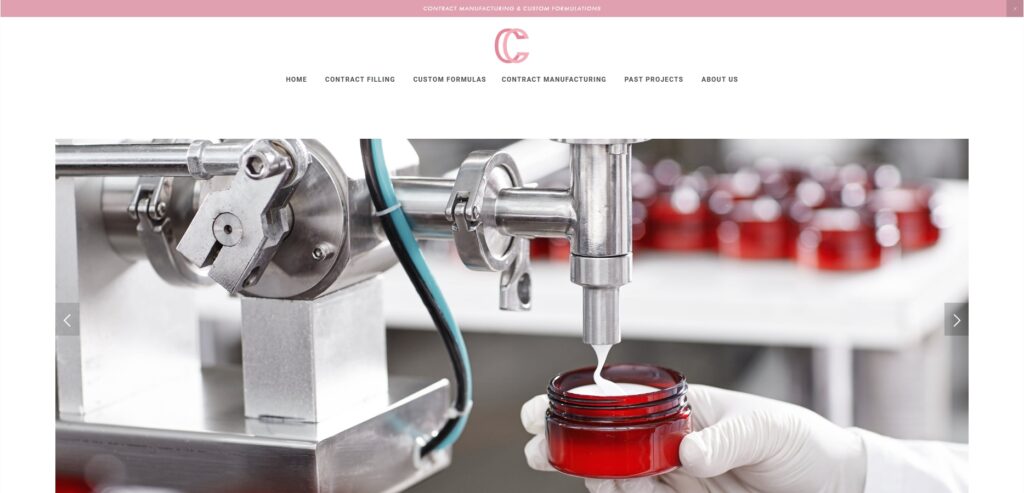
Cosmetic Makers offers contract manufacturing for creams, lotions, shampoos, conditioners, serums, and body products. It also presents existing formulas for private label brands.
The company states that it works with Lady Burd on makeup projects. Ask which company will formulate, fill, and package your product.
Consider for: Skin care, body care, and hair care projects.
3. Lady Burd
Location: New York, USA.
Lady Burd offers private label cosmetics, skin care, and personal care. Its catalog includes products for the face, eyes, lips, and cheeks.
Ask which shades and packaging options are available. You can also discuss whether a stock or custom formula suits your plan.
Consider for: Brands developing a makeup range.
4. Columbia Cosmetics
Location: San Francisco Bay Area, California, USA.
Columbia Cosmetics describes itself as a private label cosmetics manufacturer. It offers formulation and production services for cosmetics and skin care.
Ask about available shades, samples, packaging, and the level of customization offered for each product.
Consider for: Color cosmetics and skin care projects.
5. Kyma Labs
Location: California, USA.
Kyma Labs offers formulation, contract manufacturing, and private label services. It presents its services to both new and established beauty brands.
Share your product category and order plan to confirm the available formula, packaging, and production options.
Consider for: Brands seeking a California-based development partner.
6. Cosmetic Solutions
Location: Boca Raton, Florida, USA.
Cosmetic Solutions offers private label skin care and contract manufacturing. Its published information describes development and production services in Boca Raton.
Ask which stock formulas are available and which tests or services are included in the quote.
Consider for: Brands comparing existing and custom skin care formulas.
7. Tropical Labs
Location: Tampa, Florida, USA.
Tropical Labs lists contract manufacturing, private label, and co-packing services. Its categories include beauty, skin care, and personal care.
Confirm the formula, production location, packaging choices, and order requirements for your product.
Consider for: Brands seeking manufacturing and packaging support in the United States.
8. Dynamic Blending
Location: Vineyard, Utah, USA.
Dynamic Blending offers contract manufacturing for cosmetics, skin care, hair care, and other personal care categories. Its services also include formulation and packaging support.
Ask about development fees, sample revisions, formula ownership, and the production schedule.
Consider for: Brands planning a custom product project.
9. RainShadow Labs
Location: St. Helens, Oregon, USA.
RainShadow Labs offers private label, custom formulation, and bulk personal care manufacturing. Its published categories include skin care and hair care.
Request a quote based on your formula, fill size, package, and number of variants.
Consider for: Brands comparing stock and custom formulas.
10. Twincraft Skincare
Location: Vermont, USA.
Twincraft Skincare offers contract manufacturing for skin care, hair care, deodorant, and bar soap. It works with existing formulas and custom product development.
Ask about formula options, packaging, minimum orders, and the needs of your specific project.
Consider for: Brands exploring skin care, deodorant, or bar soap.
How to Compare Cosmetic Manufacturers
A useful comparison starts with the needs of your brand. One manufacturer may be a good fit for a small skin care launch, while another may focus on custom makeup or larger production runs.
Before contacting suppliers, decide which product you want to launch first. Then compare these five points:
- Product range: Can the supplier make your exact format, such as a serum, cream, shampoo, or lipstick?
- Formula options: Can you choose an existing formula, request changes, or develop a custom product?
- Minimum order: Does the MOQ fit your first order, and does it apply to each scent, shade, or package?
- Packaging: Can the supplier source your preferred bottle, pump, jar, label, and carton?
- Sales market: Can the team provide the product information you need for your intended market?
A supplier does not need to offer every service to be a good fit. What matters is knowing which parts of the project the supplier will handle and which parts your brand must arrange.
What to Include in Your Product Brief
A detailed brief helps cosmetic manufacturers understand your project and provide a more useful quote. You do not need to know every ingredient, but you should explain the result you want.
For a facial serum, for example, describe the target customer, preferred texture, bottle size, and sales channel. If you have a reference product, explain which features you like rather than asking the manufacturer to copy it exactly.
Include the following information when available:
- Product category and intended use.
- Target customer and sales market.
- Preferred texture, scent, and appearance.
- Ingredients or claims you want to discuss.
- Container size, label, and outer packaging.
- Estimated first order and launch date.
- Target cost and delivery destination.
If you do not yet know the order quantity, ask the supplier for its minimums and pricing at several quantities. This can help you plan a budget before choosing a formula.
How to Choose a Cosmetic Manufacturer
Send each supplier the same product brief. This makes it easier to compare their services and identify differences between quotes.
1. Check the Product Category
Cosmetic manufacturers do not all make the same products. A factory that fills lotions may not produce mascara, pressed powder, or aerosol sprays.
Ask whether the company has experience with your exact product format. If you plan a full range, check whether all products can be made by one supplier.
Some companies work with production partners. Ask who will formulate, fill, and pack each item so that you understand the supply chain.
2. Choose a Formula Route
- Stock formula: An existing formula offered with your branding.
- Modified formula: An existing base adjusted within the supplier’s available options.
- Custom formula: A formula developed around your product brief.
A stock formula may help a brand launch sooner. A custom formula may offer more control, but development and testing can take more time.
Ask to see samples before choosing a route. Also confirm which changes are possible. A supplier may allow a new fragrance but not changes to the base formula.
3. Understand Formula Ownership
Formula ownership matters if you want to change suppliers later. Do not assume that paying a development fee gives your brand ownership.
Ask who owns the formula and whether it can be sold to other brands. If you need exclusivity, discuss its cost, duration, and scope before signing.
Request written terms that explain what happens if the project ends or you move production to another factory.
4. Compare Minimum Order Quantities
Minimum order quantity, or MOQ, can vary by formula, scent, shade, and package. A stock product may have a different minimum from a custom product.
Ask whether the MOQ applies to each product variant. For example, three scents may require separate minimum orders even when they use the same base.
Packaging can also have its own minimum. A custom bottle, printed carton, or special pump may need a larger order than a standard package.
5. Review Samples
Samples help you assess a product before committing to production. Check its texture, scent, color, and ease of application.
Test the proposed container too. A serum may need a different dispenser from a thick cream. Pumps, caps, labels, and cartons should fit how customers will use the product.
Keep an approved sample for reference. Ask the manufacturer how the production batch will be compared with it.
6. Discuss Testing
Testing needs depend on the formula, package, claims, and sales market. Ask which assessments are appropriate for your project.
These may include stability, packaging compatibility, and microbiological testing. Confirm who arranges each test, who pays for it, and which reports you will receive.
If you change the formula or packaging after testing, ask whether further assessment is needed.
How to Compare Manufacturer Quotes
Two quotes may show similar unit prices but include different services. One may cover labels and cartons, while another may list them as separate costs.
Ask each supplier to explain the following:
- Whether the price includes the formula, filling, bottle, and cap.
- Whether labels, cartons, and artwork are included.
- Any fees for samples, formula changes, or testing.
- Shipping, storage, and import costs.
- Payment terms and the period for which the quote is valid.
For an overseas order, clarify the delivery terms and who is responsible for freight, customs, and duties. The lowest factory price may not be the lowest total cost once the product reaches your market.
Finally, ask when production can begin. A quoted lead time may start only after the formula, packaging, artwork, and deposit have been approved.
Private Label vs. Custom Manufacturing
Private label commonly means selling an existing product under your own brand. It can reduce development work, although the choices depend on the supplier.
Custom manufacturing starts with a specific brief. It may offer more control over the formula and packaging, but it can involve more cost and development time.
Some brands begin with a stock formula and move to a custom product later. Others choose custom development from the start because they need a particular texture, ingredient profile, or package.
Ask each supplier to explain what its service includes. Terms such as OEM, ODM, and private label can be used differently by different companies.
How Does the Manufacturing Process Work?
Step 1: Share Your Brief
Describe your product, target customer, sales market, and budget. A reference product can help explain the texture, scent, or packaging style you have in mind.
Step 2: Review the Quote
The supplier can outline formula options, MOQ, estimated cost, and timing. Check what is included before ordering samples.
Step 3: Approve Samples
Review the formula and package together. Record any changes and confirm which sample becomes the final approved version.
Step 4: Prepare for Production
Finalize the label, artwork, packaging, testing, and contract terms. The factory can then schedule production once the required approvals are complete.
Step 5: Arrange Delivery
Confirm the shipment terms, destination, and documents. For overseas orders, plan for freight, customs, duties, and possible delays.
Questions to Ask Cosmetic Manufacturers
- Where will the product be formulated, filled, and packaged?
- Do you offer stock formulas, custom development, or both?
- What is the MOQ for each formula, scent, shade, and package?
- Who owns the formula and artwork?
- How many sample revisions are included?
- Which tests are included in the quote?
- Who supplies the packaging and labels?
- When does the quoted production lead time begin?
- Who is responsible for labeling and regulatory tasks?
- What are the payment, shipping, and storage terms?
What About Regulatory Requirements?
Rules depend on where a product is made and sold, what it contains, and the claims on its label. Discuss responsibilities with your manufacturer and qualified regulatory advisers.
For the United States, the Food and Drug Administration explains that a cosmetic facility registration or product listing number does not mean the FDA has approved the facility or product.
Some products, such as certain sunscreens and acne treatments, may be regulated as drugs or as both drugs and cosmetics in the United States. Check the rules before finalizing your formula and claims.
Frequently Asked Questions
How much does it cost to manufacture cosmetics?
Costs vary by formula, packaging, order size, testing, and delivery. Request an itemized quote that includes development and shipping, rather than comparing unit prices alone.
Can a manufacturer help with packaging?
Many suppliers offer packaging sourcing or design support. Confirm whether the quote includes the container, label, carton, artwork, and compatibility assessment.
Can I create a cosmetic brand without owning a factory?
Yes. Many brands work with cosmetic manufacturers to produce items under their own names. The brand still needs to plan its budget, sales, labeling, and other business responsibilities.
Should I choose a local or overseas manufacturer?
Compare the whole project, including samples, communication, freight, duties, and delivery time. Confirm the actual production location before placing an order.
How do I know which manufacturer is right for my brand?
Look for a supplier that can make your product format, meet your order needs, and answer questions clearly. Review samples and written terms before committing.
Find the Right Cosmetic Manufacturing Partner
The best partner is one that can meet your product brief, quality expectations, order requirements, and timeline. Compare samples, written quotes, and contract terms before making a decision.
Xiangxiang Daily is a Guangzhou-based skin care manufacturer supporting brands with formulation and packaging projects.