
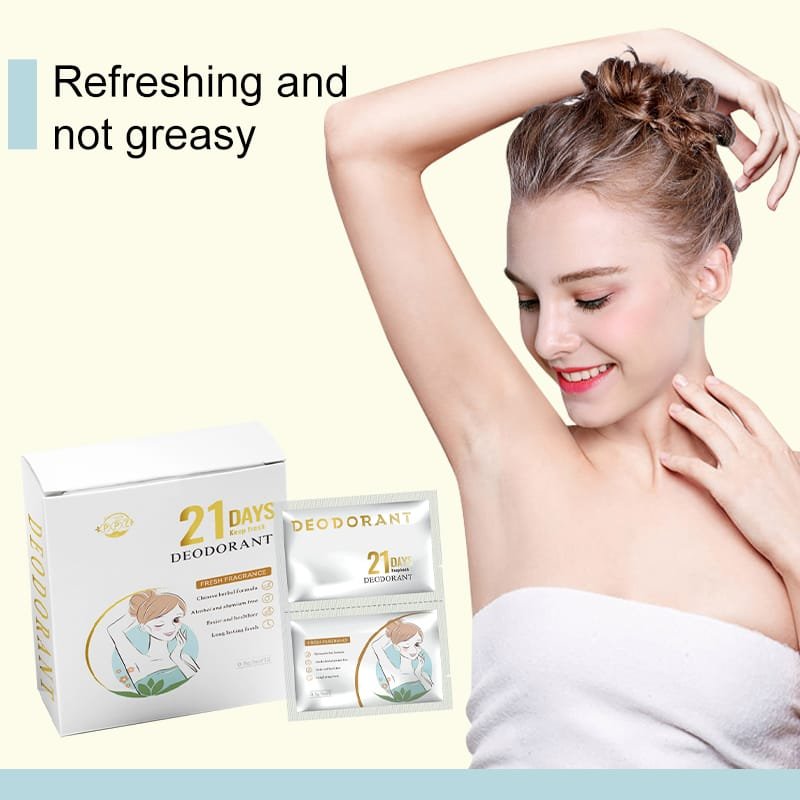
Yes, aluminum free deodorant can work for underarm odor. It does not work like an antiperspirant, though. If you want less smell, it may meet your needs. If you want less sweat, an antiperspirant is usually the better choice.
The result depends on the formula, your skin, and your daily routine. A product that works during an office day may need reapplication after exercise. Continued sweating does not mean the deodorant has failed if it still controls odor.
How Does Aluminum Free Deodorant Work
Underarm odor develops when skin bacteria break down substances in sweat. Deodorant targets that odor rather than stopping sweat from reaching the skin.
Depending on the formula, an aluminum free deodorant may help in several ways:
- Limit odor formation: Some ingredients help reduce the activity of odor causing bacteria.
- Reduce odor release: Other ingredients help trap or neutralize certain odor molecules.
- Add fragrance: Scent can help users feel fresh, though scent alone does not prove lasting odor control.
- Absorb some moisture: Powders can reduce the feeling of wetness without reducing sweat production.
These functions are different. A dry-feeling finish does not mean the product prevents sweating. Likewise, a strong fragrance is not a reliable measure of how well it controls odor.
Judge the finished product through normal use. An ingredient list can help you avoid something that irritates your skin, but it cannot tell you exactly how long protection will last.
Aluminum Free Deodorant vs Antiperspirant
Deodorants and antiperspirants have different jobs. Aluminum salts are used as the active ingredient in many antiperspirants. They form temporary plugs in sweat ducts, reducing the sweat that reaches the surface.
People sometimes describe this as “block sweat glands.” More precisely, these ingredients temporarily block sweat ducts rather than shutting down the body’s sweat glands.
| Your Goal | Aluminum Free Deodorant | Antiperspirant |
|---|---|---|
| Control underarm odor | Designed for this purpose | Can help, especially in a combined deodorant formula |
| Reduce sweating | No | Yes, when used as directed |
| Reduce the feeling of wetness | Absorbent ingredients may help | Reduces the amount of sweat reaching the skin |
| Avoid aluminum-based antiperspirant ingredients | Yes, check the full label | Usually not |
An antiperspirant deodorant combines sweat reduction with odor control. Check the product type on the label rather than choosing by stick, roll-on, or spray format. All of these formats can contain different kinds of formulas.
Why It May Seem Like Your Deodorant Is Not Working
You Expected It to Stop Sweat
Wet underarms and strong odor are separate concerns. If odor is controlled but your shirt still feels damp, the product may be doing its intended job. Switching deodorant scents will not turn it into an antiperspirant.
The Formula Does Not Suit Your Routine
Heat, exercise, and long workdays can change what you need from a product. Some users need to reapply according to the directions. Others find that a different formula gives better protection.
Compare products on similar days. Check odor, wetness, skin comfort, and marks on clothing separately. This helps you identify the problem instead of judging everything by fragrance strength.
You Notice Changes After Switching
After stopping an antiperspirant, more sweat can reach the skin. You may notice a change in wetness or odor. Some people call this an adjustment period.
That does not mean your underarms are releasing stored toxins. Cleveland Clinic explains that an armpit detox has no scientifically proven benefit. There is also no guaranteed waiting period after which every deodorant will start working.
You do not need to tolerate a rash or ongoing poor odor control to complete a “detox.” Reassess the product instead.
How to Choose and Use a Suitable Formula
Read Beyond the Aluminum Free Claim
Natural deodorants are not automatically gentler. Baking soda, fragrance, and essential oils can irritate some people. Aluminum free describes an ingredient choice, not a guarantee that the product suits sensitive skin.
If fragrance bothers you, look for a fragrance-free option. If a baking soda formula causes discomfort, consider a formula without it. Change one product at a time so you can track the result.
Also compare practical details. Does the stick glide without pulling? Does a roll-on dry before dressing? Does the cream leave residue? A product needs to fit your routine as well as control odor.
Apply as Directed
- Start with clean, dry skin. Follow the label’s application instructions.
- Use the recommended amount. Extra layers may leave residue without giving better results.
- Allow it to settle. Let a wet formula dry before putting on clothes.
- Reapply only as directed. Washing and drying first may be more useful than covering existing odor with more scent.
Do not apply to broken or irritated skin. Stop using a product that causes burning, itching, or a rash. Seek medical advice if the reaction persists.
Common Questions About Aluminum Free Deodorant
Is It Safer Than Deodorant With Aluminum
Not automatically. The National Cancer Institute states that scientific evidence does not link deodorant or antiperspirant use to breast cancer. Choosing aluminum free can be a personal preference, but it should not rely on claims that aluminum in antiperspirants is proven to cause cancer.
Can It Work During Exercise
It may control odor during exercise, depending on the formula and the person. It will not prevent sweat patches. Choose based on whether your priority is odor protection, sweat reduction, or both.
Are Crystal Deodorants Aluminum Free
Not necessarily. Some contain potassium alum or ammonium alum, which are aluminum-containing salts. “Natural mineral” and “aluminum free” are not interchangeable claims. Check the ingredient list.
What If Sweat or Odor Remains a Problem
If heavy sweating affects daily life, deodorant alone may not address it. Persistent odor, a sudden change, or ongoing irritation is worth discussing with a healthcare professional rather than repeatedly adding stronger fragrance.
What Brands Should Test Before Launching
For personal care products, “aluminum free” is a starting point, not proof of performance. Brands should define the intended benefit and test the finished formula against it.
Assess odor control separately from fragrance, moisture feel, and skin comfort. Check application, residue, packaging performance, and stability under expected storage conditions. Any stated protection period needs evidence that supports that exact claim.
Xiangxiang Daily’s private label body care manufacturer services can support discussions about an underarm care range. Share the target user, product format, fragrance preference, and performance goals to guide sampling.