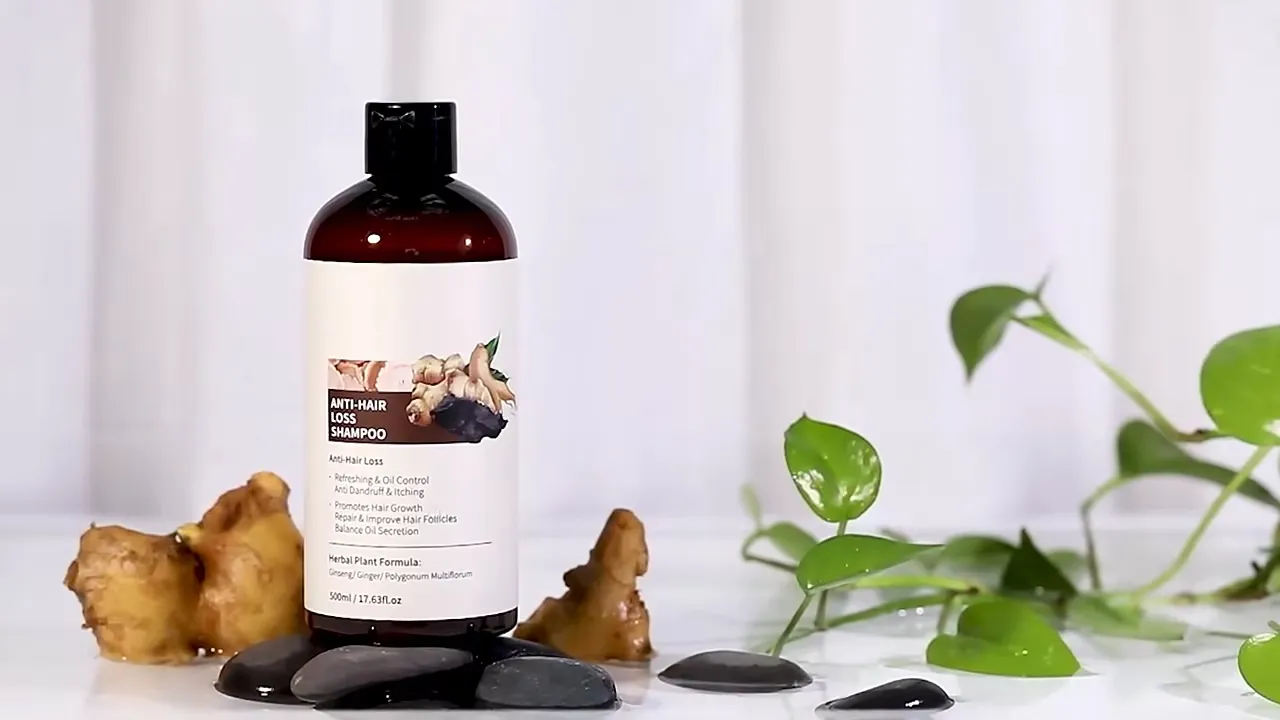
Anti Hair Loss Shampoo Ingredients should match one clear product goal.
Some users worry about hair fall.
Others have weak hair, breakage, oily hair, or scalp discomfort.
These problems are not always the same as medical hair loss.
A good shampoo should clean well and help support healthy hair.
It can also support scalp comfort and reduce breakage caused by dryness or rough care.
This guide explains how private label brands can choose ingredients for an anti-hair loss shampoo formula.
As a personal care manufacturer, Xiangxiang Daily develops shampoo, conditioner, scalp care, hair mask, hair oil, and other private label hair care products.
Start With the Type of Hair Loss
Hair loss can have many causes.
Genetics, hormone changes, illness, stress, some medicines, and tight hairstyles may lead to hair loss.
Poor nutrition can also play a role.
Hair breakage is different.
It happens when the hair strand breaks.
This does not always mean the hair follicle has stopped growing hair.
The type of hair loss matters when planning product claims.
The American Academy of Dermatology explains that many conditions can cause hair loss.
You can review its guidance here: AAD hair loss causes.
For a cosmetic shampoo, safer benefit directions include:
- Helps cleanse the scalp.
- Helps reduce hair breakage.
- Helps hair feel stronger.
- Supports softer hair.
- Supports scalp comfort.
- Helps remove excess oil.
- Improves hair manageability.
Brands should be careful with claims such as “treat hair loss” or “increase hair growth.”
For product development, buyers can review our private label shampoo manufacturer category.
What Can an Anti Hair Loss Shampoo Do?
Shampoo is mainly a rinse-off cleansing product.
Its first job is to clean the hair and scalp.
A balanced formula can also improve hair feel and support a healthy hair care routine.
For example, dry hair may break more easily during brushing.
Heavy buildup can make oily hair feel flat.
A harsh cleansing system may leave some scalps feeling tight.
The right formula can help reduce these problems.
However, shampoo should not be sold as a cure for medical hair loss.
The FDA explains that claims to restore hair growth may change how a product is regulated.
Buyers can review the official guidance here: FDA cosmetic or drug guidance.
Key Anti Hair Loss Shampoo Ingredients
A good formula usually combines cleansing, scalp care, and conditioning ingredients.
Each group has a different job.
Mild Cleansing Ingredients
The cleansing system forms the base of the shampoo.
Common options include sodium lauryl sulfate, sodium laureth sulfate, cocamidopropyl betaine, glucosides, and other surfactants.
Sodium lauryl sulfate gives strong cleansing and foam.
It may feel too strong for some dry or sensitive scalp formulas.
Sodium laureth sulfate also gives good foam and cleaning.
It is widely used in mass-market shampoo.
Cocamidopropyl betaine is often blended with other cleansers.
It can help improve foam and make the formula feel milder.
A sulfate free shampoo may use glucosides, isethionates, or similar systems.
Sulfate free does not always mean better.
The best choice depends on hair type, scalp type, price, and product position.
Panthenol
Panthenol is also called provitamin B5.
It is often used for dry or weak hair.
It can support softness and smoother hair feel.
This makes it useful for anti-breakage formulas.
Proteins and Amino Acids
Hydrolyzed proteins are common in damaged-hair products.
They can support smoother hair and easier combing.
Amino acids can also support conditioning.
These ingredients fit an anti-breakage story well.
Niacinamide
Niacinamide is often used in scalp care products.
It can fit formulas for oily hair or scalp comfort.
It should not be presented as a proven hair-regrowth treatment.
Caffeine and Biotin
Caffeine is popular in hair fall products.
Biotin is also common in strengthening formulas.
Both ingredients have strong consumer awareness.
However, shampoo has only a short contact time with the scalp.
Brands should avoid strong regrowth claims without evidence from the finished product.
Rosemary and Botanical Extracts
Rosemary is popular in scalp and hair care.
Other options include green tea, ginger, aloe vera, tea tree, and ginseng.
These ingredients can support a botanical product story.
The shampoo still needs good foam, rinse feel, and stability.
Argan Oil
Argan oil can support softness and shine.
It works well in formulas for dry or damaged hair.
The level should stay low enough to avoid a heavy feel.
This is especially important for oily hair and fine hair.
Citric Acid
Citric acid is often used to adjust shampoo pH.
It is not usually a hero marketing ingredient.
But it has an important technical role.
Correct pH can support stability and a better wash feel.
Match the Formula to Hair and Scalp Type
One formula should not try to solve every problem.
Start with the main user need.
Oily Hair
Oily hair needs effective cleansing and a light finish.
Useful directions include niacinamide, zinc PCA, green tea, rosemary, mint, or tea tree.
Heavy oils should be used carefully.
The conditioner system should also stay light.
Dry or Sensitive Scalp
This formula should focus on mild cleansing.
Cocamidopropyl betaine can be used in a gentle cleansing blend.
Sulfate free systems may also fit this product position.
Panthenol, aloe vera, or glycerin can support scalp comfort.
Fragrance may need to stay low.
Weak or Breakage-Prone Hair
This formula should focus on hair fiber care.
Useful options include panthenol, proteins, amino acids, argan oil, and conditioning polymers.
The goal is smoother hair and easier combing.
This can help reduce mechanical breakage.
Color-Treated Hair
Color-treated hair often needs mild cleansing.
It may also need more conditioning support.
A shampoo and conditioner set can work well for this group.
Ingredients to Use Carefully
It is too simple to divide shampoo ingredients into “good” and “bad.”
The full formula matters more.
Sulfates
Sodium lauryl sulfate and sodium laureth sulfate are not automatically harmful.
They can provide strong cleansing and good foam.
Some users may prefer a milder or sulfate free formula.
The choice depends on the target user.
Silicones
Silicones do not suffocate hair follicles.
They are often used for smoothness, shine, and easier combing.
Some brands avoid them for marketing reasons.
Others use them for better performance.
Preservatives
Shampoo needs a suitable preservation system.
It is not accurate to say that all parabens lead to hair loss.
The preservative should be safe and allowed in the target market.
The finished formula should also pass the required testing.
Zinc Pyrithione
Zinc pyrithione has been used in anti-dandruff shampoos.
Its legal status differs by market.
For example, it is prohibited in cosmetic products in the European Union.
Buyers can review the EU regulation here: EU Regulation 2021/1902.
Always check the target market before approving an active ingredient.
Fragrance and Essential Oils
Fragrance can improve the user experience.
But more fragrance is not always better.
Sensitive scalp formulas may need a lower fragrance level.
Essential oils also need suitable use levels.
How to Build a Private Label Formula
Start with the product brief.
Do not start with a long list of trending ingredients.
- Define the user. Choose oily hair, dry hair, weak hair, sensitive scalp, women, men, or another clear group.
- Choose one main benefit. Focus on breakage, scalp comfort, oil control, or another clear need.
- Select the cleansing system. Choose sulfate or sulfate free based on performance and positioning.
- Add support ingredients. Use panthenol, proteins, botanical extracts, oils, or scalp care ingredients where needed.
- Adjust pH and texture. Citric acid and thickeners can help reach the target.
- Choose fragrance and appearance. Match them to the brand.
- Review claims. Avoid claims that turn a cosmetic shampoo into a treatment product.
- Test samples. Check foam, rinse feel, scalp feel, softness, fragrance, and viscosity.
- Confirm quality. Complete stability and other required tests before production.
How to Choose a Shampoo Manufacturer
The formula is only one part of the project.
The manufacturer also needs to manage samples, production, packaging, quality, and documents.
Before choosing a supplier, check:
- Shampoo manufacturing experience.
- Anti-breakage formula options.
- Scalp care formula options.
- Sulfate and sulfate free systems.
- Custom fragrance support.
- pH and viscosity adjustment.
- Packaging sourcing.
- Minimum order quantity.
- Sample development.
- Stability testing.
- Quality control.
- Label and claim review.
- Export documentation.
A good supplier should ask about the target user and target country.
They should also ask what type of hair loss or hair concern the product is designed around.
This helps prevent weak or risky claims.
FAQ
What are useful Anti Hair Loss Shampoo Ingredients?
Useful options may include panthenol, proteins, amino acids, niacinamide, caffeine, biotin, rosemary, argan oil, mild cleansers, and conditioning agents.
The final formula should match the target concern.
Can shampoo stop hair loss?
A cosmetic shampoo should not promise to treat medical hair loss.
It can support cleansing, scalp comfort, softer hair, and reduced breakage.
Is sulfate free shampoo better for hair fall?
Not always.
It may feel milder for some users.
The full cleansing system matters more than one label claim.
Is sodium lauryl sulfate bad for thinning hair?
It is a strong cleanser.
Some dry or sensitive users may prefer a milder system.
That does not mean it automatically causes hair loss.
What does cocamidopropyl betaine do?
It is commonly used as a co-surfactant.
It can support foam and make a cleansing system feel milder.
Why is citric acid used in shampoo?
Citric acid is mainly used to adjust pH.
Good pH control can support formula stability and wash feel.
Can argan oil be used in this type of shampoo?
Yes.
Argan oil can support softness and shine.
It fits an anti-breakage story better than a hair-regrowth claim.
Can Xiangxiang Daily develop this type of shampoo?
Yes.
Xiangxiang Daily can support formula selection, samples, packaging, production, quality checks, and export preparation.
The formula can be adjusted for oily hair, dry scalp, weak hair, sensitive scalp, or breakage-prone hair.
Final point: Good Anti Hair Loss Shampoo Ingredients should support a clear and realistic product goal.
The formula should clean well, rinse well, and leave hair easy to manage.
It does not need a long list of trendy actives.
For private label brands, a focused formula should support healthy hair, good scalp care, and reliable product performance.