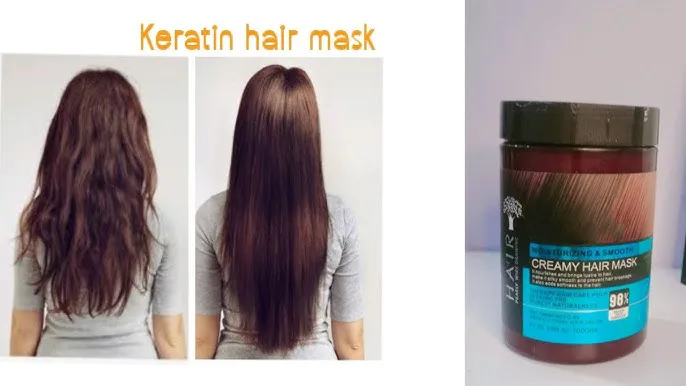
A keratin mask for hair is a deep conditioning treatment.
It is used to make hair feel smoother, softer, and stronger.
Many people use it for frizz, dryness, breakage, dullness, and damage from heat or color treatments.
A good mask can leave hair easier to comb and easier to style.
It can also help hair look closer to a frizz free finish.
But it is not the same as a salon straightening treatment.
It also cannot repair every type of hair damage forever.
This guide explains what a keratin mask does, how to use it, how often to apply it, and what results are realistic.
As a personal care manufacturer, Xiangxiang Daily focuses on hair care, body care, and skin care products for private label buyers.
What Is a Keratin Mask for Hair?
A keratin mask for hair is a rinse-off treatment made for damaged, dry, frizzy, or rough-feeling hair.
It usually contains keratin, hydrolyzed keratin, amino acids, conditioning agents, oils, butters, or other softening ingredients.
Some formulas may also use ingredients such as behentrimonium chloride to improve slip and make hair easier to detangle.
Keratin is a protein naturally found in hair.
Hair can lose strength and smoothness after heat styling, bleaching, coloring, brushing, sun exposure, or harsh washing.
A keratin hair mask helps coat and condition the hair surface.
It can make the cuticle feel smoother.
It can also reduce friction when combing.
That is why it often leaves hair softer, shinier, and easier to manage.
For private label product projects, buyers can review our hair mask manufacturer category.
What Does a Keratin Hair Mask Do?
The main job of a keratin mask is to improve hair feel.
It works like a deep conditioning treatment for weak, dry, or rough hair.
It can help rough hair feel smoother.
It can help dry hair feel softer.
It can also make frizzy hair look more controlled.
The results are usually cosmetic.
That means the hair looks and feels better after use.
The mask does not permanently rebuild the hair.
| Hair Concern | How the Mask May Help | Realistic Limit |
|---|---|---|
| Frizz | Helps smooth the hair surface | Does not permanently change hair texture |
| Dryness | Adds conditioning and softness | May need regular use |
| Breakage | Can reduce friction during combing | Cannot fully repair severe breakage |
| Dull hair | Helps hair reflect light better | Too much product can cause buildup |
| Heat damage | Leaves hair smoother and easier to style | Cannot undo all heat damage |
The best result is usually smoother hair with better slip.
This can make daily styling easier.
It can also help reduce new breakage from rough brushing.
Benefits of Using a Keratin Mask
A keratin mask for hair can be useful for many hair routines.
The most common benefits are simple and easy to understand.
1. Smoother Hair
The mask can help smooth the cuticle.
This leaves hair less rough to the touch.
It may also reduce the look of frizz.
2. Softer Feel
Conditioning ingredients help dry hair feel softer.
This is helpful for hair that feels brittle, rough, or hard to comb.
3. Better Shine
Smoother hair reflects light better.
That can make dull hair look glossier.
4. Less Breakage from Combing
A mask can add slip.
Slip helps a comb move through the hair more easily.
This may reduce pulling and snapping during detangling.
5. Easier Styling
When hair feels smoother, it is often easier to blow-dry or style.
This is useful for frizzy, wavy, curly, colored, or chemically treated hair.
For complete hair routines, buyers can also review our private label shampoo manufacturer category.
Who Should Use It?
This type of mask is best for hair that feels weak, dry, frizzy, dull, or damaged.
It is especially useful after coloring, bleaching, straightening, curling, or frequent heat styling.
It can also help hair that tangles easily.
| Hair Type | Best Formula Direction | Use Note |
|---|---|---|
| Dry hair | Keratin with shea butter, argan oil, or coconut oil | Use weekly or as needed |
| Fine hair | Lightweight keratin or amino acid formula | Avoid heavy butters |
| Curly hair | Keratin with moisture and slip ingredients | Do not overuse protein-heavy products |
| Colored hair | Color-safe, sulfate-free support routine | Pair with gentle shampoo |
| Heat-damaged hair | Repair-positioned mask with conditioning agents | Reduce heat styling when possible |
Not every hair type needs a heavy keratin mask.
Fine or oily hair may feel weighed down.
Curly hair may need a balance of protein and moisture.
If hair feels stiff after use, the formula may be too protein-heavy or used too often.
How to Use a Keratin Mask for Hair
Always follow the product label first.
Most rinse-off masks are used after shampooing.
They are usually applied to clean, damp hair.
- Wash hair with a gentle shampoo.
- Squeeze out extra water.
- Apply the mask from mid-lengths to ends.
- Use less near the scalp if your hair gets oily.
- Comb gently with a wide-tooth comb if needed.
- Leave it on for the time listed on the label.
- Rinse well with lukewarm water.
- Dry and style gently.
Do not leave the mask on longer than the label suggests unless the product allows it.
More time does not always mean better results.
Too much product can leave hair heavy or coated.
AAD recommends gentle hair care habits for fragile hair, including gentle washing and moisturizing conditioner. Read more here: AAD hair loss care tips.
How Often Should You Use It?
Most people can use a keratin mask once a week.
Very dry or damaged hair may need it more often for a short period.
Fine or oily hair may only need it every two weeks.
If hair starts to feel stiff, heavy, or dull, reduce use.
Common Mistakes to Avoid
- Using it every day.
- Applying too much product.
- Leaving it on too long.
- Using it on dirty or oily hair.
- Skipping rinse-out instructions.
- Using too much heat after treatment.
- Using a protein-heavy mask when hair needs moisture.
- Applying heavy formulas to fine hair.
Daily use is usually not needed.
Too much protein can make hair feel stiff or brittle.
Too much oil or butter can leave hair greasy.
The best routine is balanced.
Use shampoo, conditioner, mask, and leave-in care based on hair condition.
For dry ends or shine support, a light product from our hair oil manufacturer category can work with a mask routine.
Keratin Mask vs Keratin Treatment
A keratin mask is not the same as a salon keratin treatment.
This difference matters.
A keratin mask is usually a conditioning product.
It is applied, left on for a short time, and rinsed out.
A salon keratin treatment is often a smoothing or straightening service.
It may use heat and stronger chemistry.
| Product Type | Main Purpose | Typical Result |
|---|---|---|
| Keratin mask | Conditioning and smoothing | Leaves hair softer and easier to manage |
| Keratin conditioner | Daily or regular softness | Leaves hair lightly conditioned with better slip |
| Keratin smoothing treatment | Longer-lasting smoothing or straightening | Stronger result, often with salon process |
Some hair smoothing products can release formaldehyde or related substances when heated.
FDA gives safety information about hair smoothing products and formaldehyde here: FDA hair dye and hair relaxer safety information.
For everyday home care, many users only need a rinse-off mask, conditioner, or treatment set.
For factory projects, the claim direction should be clear.
A mask should not be marketed as a professional straightening treatment unless the formula and testing support that claim.
Private Label Keratin Hair Mask Ideas
Keratin masks are a strong product direction for personal care brands.
They fit hair repair, frizz control, smoothing, color care, and damaged hair routines.
They also work well in a full hair care set.
Product ideas include:
- Keratin repair hair mask.
- Anti-frizz keratin mask.
- Frizz free keratin mask.
- Color-care keratin mask.
- Deep conditioning treatment mask.
- Keratin mask for dry hair.
- Keratin mask for curly hair.
- Protein and moisture balance mask.
- Keratin shampoo and mask set.
- Keratin conditioner and mask set.
Good claim directions include:
- Leaves hair smoother.
- Leaves hair softer and easier to comb.
- Helps reduce frizz.
- Helps support a frizz free look.
- Helps improve softness.
- Helps reduce breakage caused by dryness.
- Helps damaged-feeling hair feel stronger.
- Supports easier detangling.
- Adds shine.
Formula direction also matters.
Ingredients such as keratin, amino acids, panthenol, oils, butters, and behentrimonium chloride can support softness, slip, and easier combing.
Avoid claims that sound too medical or permanent.
Do not promise to “permanently repair hair” or “make hair grow faster.”
For full product line planning, buyers can review our private label hair care manufacturer category.
For batch checks, stability, packaging, and inspection, review our personal care quality control support.
Conclusion
A keratin mask for hair is best used as a conditioning and smoothing treatment.
It can help dry, frizzy, damaged, colored, or heat-styled hair feel softer and easier to manage.
It can also leave hair shinier and smoother after use.
But it is not a permanent repair product.
It is also not the same as a salon keratin straightening treatment.
Use it based on hair type, product instructions, and how your hair feels after rinsing.
For B2B buyers, keratin hair masks are a strong fit for private label hair care lines, especially when paired with shampoo, conditioner, hair oil, or scalp treatment products.
Xiangxiang Daily can support hair mask, shampoo, conditioner, hair oil, scalp care, and broader personal care product development for global brands.
FAQ
What does a keratin mask do for hair?
It helps smooth, soften, and condition the hair.
It can also help reduce frizz and make hair easier to comb.
Is a keratin mask a deep conditioning treatment?
Yes, many keratin masks work as a deep conditioning treatment for dry, frizzy, or damaged-feeling hair.
How often should I use a keratin mask?
Most people use it once a week.
Fine or oily hair may need it less often.
Can I use a keratin mask every day?
Daily use is usually not recommended.
Too much protein or conditioning product can make hair feel stiff, heavy, or dull.
Should I apply it to the scalp?
Most masks work best on mid-lengths and ends.
Apply near the scalp only if the label says it is suitable for scalp use.
Does a keratin mask make hair grow?
No mask can guarantee hair growth.
It may help reduce breakage, which can help hair keep more length over time.
Can it help hair look frizz free?
It may help reduce frizz and leave hair smoother.
The result depends on hair type, formula, humidity, and styling routine.
What is the difference between a keratin mask and a keratin treatment?
A mask is usually a rinse-off conditioning product.
A salon treatment may use stronger chemistry and heat for longer-lasting smoothing.
Can Xiangxiang Daily develop private label keratin hair masks?
Yes.
Xiangxiang Daily can support private label hair masks, shampoo, conditioner, hair oil, scalp treatment, packaging, samples, and quality checks for personal care brands.