Private label skin products are made by a manufacturer and sold under your brand name. You choose the product range, agree on the formula and packaging, and launch it with your own label.
The best starting point is a clear customer need and a realistic budget. As a private label skin care manufacturer, Xiangxiang Daily offers skincare options for brands, retailers, distributors, and salon businesses. This guide explains how to shortlist products and compare supplier proposals.
Which Private Label Skin Products Should You Choose
Start with products that fit one customer group and work together in a routine. A focused range is easier to sample, explain, and manage than a large collection with overlapping benefits.
| Product | Role in the range | Key sample checks |
|---|---|---|
| Facial cleanser | A daily cleansing step | Rinsing, residue, and skin feel after washing |
| Face serum | A focused product for a defined skin concern | Texture, tackiness, and layering with other products |
| Moisturiser or cream | A daily moisture-care step | Spread, finish, and suitability for the target skin type |
| Facial mask | An extra step or an addition to a set | Fit or application, removal, and after-feel |
| Makeup remover | A cleansing option for makeup users | Removal performance and residue |
For example, a simple hydration range could pair a cleanser with a serum and cream. This is a planning option, not a guarantee of sales. Use customer feedback and your sales channel to decide which products deserve investment.
Xiangxiang Daily’s private label facial cream and serum range includes hyaluronic acid, niacinamide, peptide, and PDRN product options. Compare complete formulas and sample results rather than choosing by ingredient name alone.
Choose an Existing Formula or Custom Development
An existing formula gives you a starting point that the supplier already offers. It may reduce development work, but you still need to approve samples, packaging, labels, and market requirements.
Custom development allows changes to ingredients, texture, fragrance, or product feel. It usually needs more sample rounds and testing. Even a small change can affect stability or how the formula works with its container.
Ask what the supplier means by “private label,” “white label,” and “custom.” These terms can cover different services. Confirm formula ownership, exclusivity, and any limits on changes in writing.
Compare MOQ and the Full Launch Cost
Request a quote for the finished product, not just the bulk formula. Include the bottle or jar, closure, label, carton, filling, and packing.
Check whether the minimum order quantity applies to each formula, size, fragrance, or pack design. A packaging supplier’s minimum may be higher than the filling minimum.
Keep these costs separate when comparing offers:
- Samples, development, and testing.
- Formula, filling, and packaging.
- Artwork, printing, and setup fees.
- Freight, import charges, and local delivery.
A lower unit price may require more stock than you can sell. Compare the total cash needed for launch and keep funds available for repeat orders.
Approve Samples Packaging and Product Claims
Give each sample a clear review brief. Record texture, scent, spread, absorption, and finish. For a serum-and-cream set, test the products together and check for pilling.
Sample feedback does not replace safety or stability testing. Ask which tests cover the final formula and pack, what records are available, and whether further work is needed.
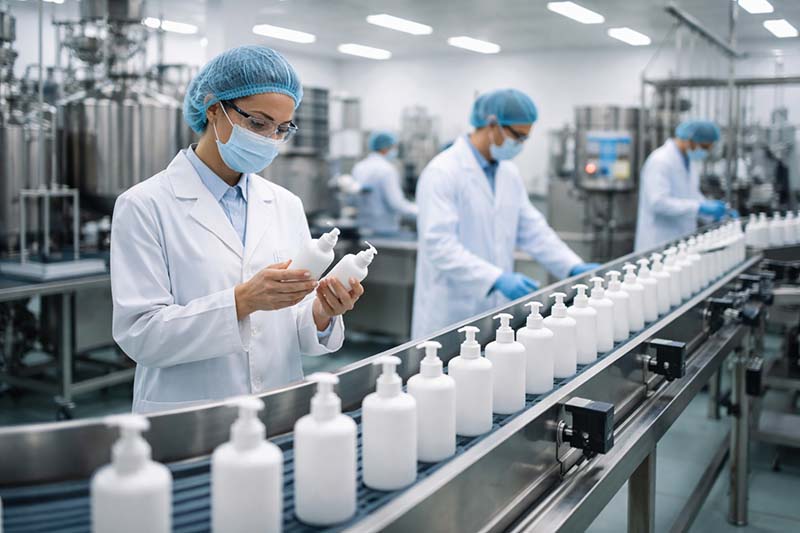
Check pump output, cap security, leakage, and label adhesion. A thick cream may not dispense well through the same pump as a light lotion.
Review claims before printing. Ingredient research alone does not prove that the finished product delivers the same results. Ask for evidence relevant to the claim and have the label reviewed for your target market.
Prepare Your Product Brief and Next Steps
Send your supplier the target country, customer group, sales channel, product type, pack size, order quantity, and target price. Add a reference product and explain what you want to change.
Before paying a production deposit, agree on the approved sample, specifications, lead time, inspection terms, and process for handling defects. Keep a reference sample for checking later batches.
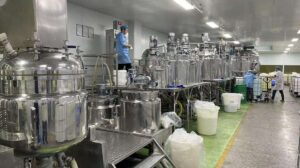
Contact Xiangxiang Daily to discuss product options, samples, and packaging for your skincare brand. Factory visits are welcome by appointment.