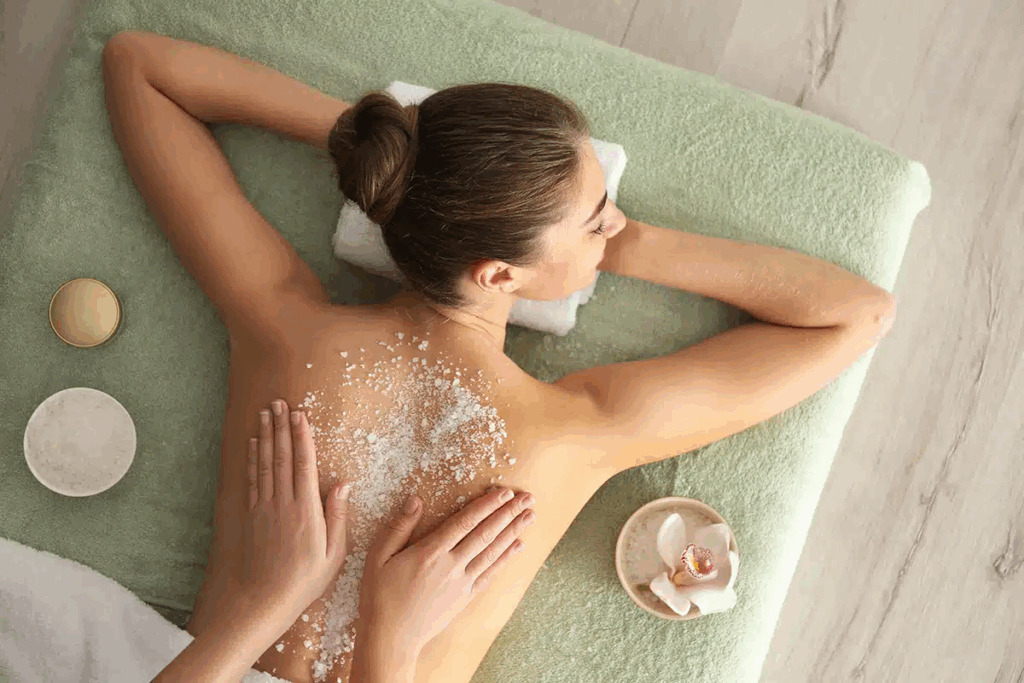
A salt scrub for body care uses small salt particles to remove dead skin cells from the skin’s surface. It can leave skin feeling smoother, especially on rough areas such as the elbows and feet.
You can buy a ready-made body scrub or make a small batch at home. The best choice depends on your skin type, the size of the salt grains, and how your skin responds.
This guide covers salt types, a simple DIY recipe, and tips for using a scrub gently.
What Is a Salt Scrub for Body Care?
A salt scrub combines salt with ingredients such as oils or butters. When you massage it over damp skin, the grains gently exfoliate the surface.
Some formulas contain fragrance or plant oils. Others are made with fewer ingredients. Check the complete label if you have sensitive skin or allergies.
A scrub is not required for a healthy skin care routine. If your skin feels comfortable with a gentle wash and moisturizer, there is no need to add one.
Salt Scrub Products to Consider
The following examples show different types of products. They are not ranked or personally tested. Check the current ingredients and directions before buying.
| Product | What to Know | What to Check |
|---|---|---|
| True Ocean Salt Scrub | Lists sea salt, shea butter, and several oils | Contains fragrance and sweet almond oil |
| AHAVA Mineral Body Exfoliator | A body exfoliator with Dead Sea salts | Current ingredients and product directions |
See the True Ocean and AHAVA product pages for details.
For businesses, Xiangxiang Daily also offers a Himalayan Salt Body Scrub for private label projects. Contact our team to discuss the formula, packaging, and order terms.
Benefits of a Salt Body Scrub
Removes Dead Skin Cells
Salt scrubs are a type of physical exfoliant. The grains help remove loose, dead skin cells from the surface as you massage the product over your body.
Use light pressure. Scrubbing harder does not mean you will get better results, and it may irritate your skin.
Helps Skin Feel Smoother
After rinsing, rough areas may feel softer. Products that contain oils or butters can also leave a moisturized feel.
Follow with a body moisturizer if your skin feels dry. A scrub should not replace your regular moisturizer.
Offers Different Textures
Salt comes in different grain sizes. Fine grains may feel less rough, while larger crystals can feel more abrasive.
The complete formula matters too. Try a small area first, especially if you are not sure how your skin will react.
Which Type of Salt Is Best for a Body Scrub?
| Type of Salt | What to Know | What to Check |
|---|---|---|
| Sea salt | Used in many body scrubs and available in different grain sizes | Choose fine grains if you prefer a less rough feel |
| Himalayan salt | A pink salt often used for its color and texture | Check that the crystals are finely ground |
| Dead Sea salt | Contains minerals and is used in some bath and body products | Review the full formula and directions |
| Epsom salt | Magnesium sulfate, often used in baths | Grain size and how the product feels on skin |
Some salts contain trace minerals such as magnesium or calcium. This does not mean a scrub will deliver a proven mineral dose through your skin.
The choice is often a matter of personal preference. Pay more attention to the texture, ingredients, and your skin’s response than to the color of the salt.
How to Make a Simple Salt Scrub for Body Use
This small recipe is for one use. It combines fine salt with oil to create a paste. Choose an oil you know your skin tolerates.
Ingredients
- Two tablespoons of fine sea salt.
- One tablespoon of olive oil or coconut oil.
Directions
- Place the salt in a clean, dry bowl.
- Add the oil and mix until the grains are coated.
- Wet the area of skin you want to exfoliate.
- Apply a small amount with your fingertips.
- Massage lightly, then rinse with lukewarm water.
- Pat dry and apply moisturizer.
Use the mixture right away and discard any leftovers. Do not store this homemade scrub in the shower. Water and unclean containers can introduce microbes.
Oil can make the bath or shower floor slippery, so take care when rinsing. Do not add essential oils if you are unsure how your skin will react.
How to Use a Salt Scrub Safely
The American Academy of Dermatology recommends using a light touch when exfoliating. If you use a scrub, massage it gently in small circles, then rinse with lukewarm water.
- Test a small area: See how your skin reacts before applying the scrub more widely.
- Use light pressure: Let the product do the work rather than rubbing hard.
- Rinse well: Make sure the grains are removed from your skin.
- Moisturize: Apply a cream or lotion after exfoliating.
Do not use a scrub on open cuts, wounds, sunburn, or irritated skin. Avoid your face unless a product is specifically designed for facial use.
If your skin becomes red, sore, or uncomfortable, stop using the product. Speak with a dermatologist if the reaction continues.
Can You Use a Salt Scrub on Sensitive Skin?
Salt grains can feel rough on sensitive skin. Some people may prefer a softer washcloth or another gentle method instead.
If you choose to try a scrub, use a product with a texture your skin tolerates. Test a small area and use very light pressure. Avoid applying it to skin that is already irritated.
People with eczema, active acne, or a skin condition should ask a dermatologist before adding an exfoliating product.
Salt Scrub vs. Sugar Scrub
A salt scrub uses salt crystals, while a sugar scrub uses sugar crystals. Both are physical exfoliants, and both can irritate skin if used too firmly or too often.
There is no rule that one is always gentle. Grain size and the full formula affect how either product feels.
Read more about the differences in our guide to salt scrub vs sugar scrub.
How Often Should You Use a Body Scrub?
There is no schedule that suits everyone. Start slowly and watch how your skin responds. If it feels dry or tender, reduce use or stop.
The stronger the exfoliation, the more time your skin may need between uses. Follow the product label and avoid combining several exfoliating products on the same area if they cause irritation.
Can a Salt Scrub Clear Clogged Pores?
A body scrub removes some dead skin cells from the surface, but it is not a guaranteed treatment for clogged pores or acne.
Scrubbing acne-prone skin can make irritation worse. If you have body acne or persistent bumps, ask a dermatologist about suitable care.
Can Brands Create Their Own Salt Scrub?
Yes. Brands can work with a manufacturer to discuss the salt type, grain size, oils, fragrance, and packaging.
A product made for sale needs more planning than a one-use DIY recipe. Ask about stability, microbiological quality, packaging compatibility, and labels for your target market.
Xiangxiang Daily is a personal care manufacturer based in Guangzhou, China, with years of export experience. Explore our private label body scrub options.
Frequently Asked Questions
Is a salt scrub good for dry skin?
It may make some rough areas feel smoother, but physical exfoliation can also irritate dry skin. Use light pressure and moisturize afterward.
Can I use a salt scrub every day?
Daily use may be too much for some people. Follow the product directions and stop if your skin feels sore or irritated.
Should I use a scrub before or after body wash?
Follow the product directions. After rinsing the scrub, pat your skin dry and apply moisturizer.
Can I use coconut oil in a homemade scrub?
Yes, if your skin tolerates it. Make a small amount for one use and remember that oil can make the shower floor slippery.
Can I use a salt scrub after shaving?
Freshly shaved skin may sting or become irritated. Wait until your skin feels comfortable, and never use the scrub on cuts.
Is Epsom salt the same as sea salt?
No. Epsom salt is magnesium sulfate, while sea salt is mainly sodium chloride with varying amounts of other minerals.
Choose a Scrub That Suits Your Skin
A salt scrub can be a pleasant way to exfoliate and moisturize as part of a body care routine. Choose a texture that feels comfortable, use a light touch, and pay attention to how your skin responds.