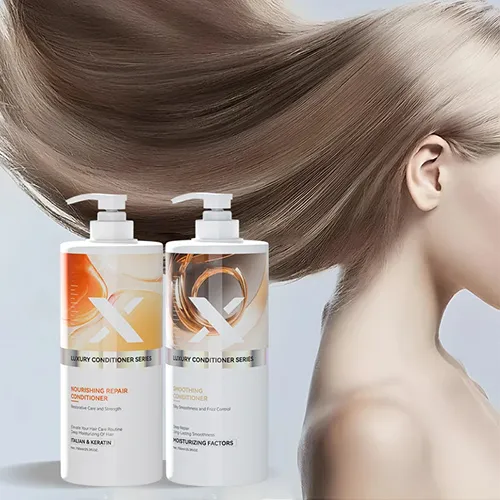
What does conditioner do? It improves the way hair feels and behaves after washing. By reducing friction between strands, it helps with detangling, softens rough lengths, and can make hair look smoother and shinier.
The result depends on your hair type and the formula you choose. Fine hair may respond best to a lightweight product on the ends, while curly or damaged hair may need richer conditioning through more of its length.
What Does Conditioner Do to Your Hair?
Shampoo removes dirt, styling residue, and excess natural oils from the scalp and hair. After cleansing, however, the lengths can feel rough or become difficult to comb, particularly if they are long, bleached, or prone to tangling.
Conditioning ingredients attach to the surface of the hair shaft and improve slip between strands. This reduces friction during brushing and styling, which can help limit the pulling that contributes to breakage.
Depending on the formula and your hair’s condition, the benefits may include:
- Easier detangling and less pulling.
- A smoother, softer feel after washing.
- Reduced static and visible frizz.
- Improved shine and manageability.
- More comfortable styling for dry or damaged hair.
These effects are temporary rather than a permanent change to the hair. Your washing routine, styling habits, and exposure to heat or chemical treatments will continue to influence the result.
How Does It Work After You Rinse?
Rinsing removes excess product, but some conditioning ingredients remain on the hair surface. Their presence helps the strands move against each other more easily, even after the slippery feeling in the shower has faded.
Many formulas contain positively charged conditioning agents that are attracted to the hair surface. They may also include fatty alcohols, silicones, proteins, or natural oils. Together, these ingredients influence the product’s texture, application, rinsing, and final feel.
Hair condition affects the outcome too. Bleached or chemically treated sections may interact with conditioning ingredients differently from untreated roots. This is one reason the same formula can feel lightweight on one person and too heavy on another.
From a manufacturing perspective, a thicker product is not automatically more effective. The balance between conditioning performance and easy rinsing matters, especially when developing a formula for fine hair.
How to Apply Conditioner
- Shampoo your scalp and hair, then rinse thoroughly.
- Gently squeeze excess water from the lengths so the product can spread more evenly.
- Apply it where your hair needs the most care, usually from the mid-lengths to the ends.
- Distribute it with your fingers or a wide-tooth comb, working through knots gently.
- Leave it on for the time stated on the label.
- Rinse thoroughly if you are using a rinse-out formula.
When applying conditioner for the first time, start with a small amount. If your hair feels coated or flat after drying, try using less or switching to a lighter formula. If the ends still feel rough, check whether you applied enough product to those areas.
Should You Apply It to Your Scalp?
For a regular hair-conditioning product, the lengths and ends are often the best place to start. They are older than the hair near your roots and may have experienced more friction, heat styling, or chemical processing.
The American Academy of Dermatology recommends focusing on the ends if you have fine or straight hair. People with dry or curly hair may prefer to apply the product through more of the length.
Some formulas are designed for both scalp and hair. Follow the label, and stop using a product if it causes itching or irritation.
Which Type Should You Choose?
Rinse-Out Products
Rinse-out conditioners are commonly used after shampoo. They provide softness and slip during wash day, then rinse away according to the product directions.
A lightweight formula may be enough for fine hair. If the lengths remain difficult to detangle, a richer option may provide a more comfortable finish.
Leave-In Products
Leave-in conditioners remain on the hair after washing. They can offer extra slip, help with styling, and make the lengths feel softer between washes.
Choose a product intended for this use. Typical conditioners should be rinsed unless their labels say otherwise. Fine hair may need only a light spray, while coarse or curly hair may benefit from a richer leave-in formula.
Deep Treatments and Masks
A deep conditioner or hair mask can provide extra conditioning when the lengths feel especially dry or difficult to manage. Follow the recommended contact time and frequency rather than assuming that leaving it on longer will always improve the result.
The product name alone does not guarantee a richer formula. A lightweight mask may feel less heavy than a thick rinse-out product. Our guide to hair mask vs conditioner explains how to compare them.
How to Choose a Formula for Your Hair Type
Fine or straight hair: Begin with a lightweight product and a small amount on the ends. If your hair feels flat once dry, use less or check that you have rinsed thoroughly.
Curly hair: Look for enough slip to support gentle detangling. Depending on your curl pattern, a richer rinse-out formula or a leave-in product may provide the extra moisture and softness you prefer.
Dry or coarse hair: A richer formula may make the lengths easier to manage. Concentrate on the mid-lengths and ends, then adjust the amount based on how your hair feels after drying.
Damaged or color-treated hair: Choose a product that supports gentle detangling and fits your color-care routine. Conditioning can improve the look and feel of damaged hair, but it cannot permanently join split ends back together.
Why Does My Hair Still Feel Tangled?
First, check whether the product reached the parts that need it. If your ends feel rough but most of the formula was applied near the roots, the driest sections may not have received enough.
Next, consider distribution and contact time. Long or thick hair may need more careful application, while fine hair may need a smaller amount. Work through knots from the ends upward, rather than pulling a comb from the roots.
If your hair feels slippery when wet but coated after drying, adding more product may not solve the problem. Try a lighter formula or review how thoroughly you rinse. Changing one step at a time makes it easier to identify what works.
Does Everyone Need Conditioner?
Conditioning is useful for many people, particularly when hair feels rough or tangles after washing. However, the amount and type of care needed will vary.
Someone with short hair that feels comfortable without it may notice only a small difference. For longer, curly, bleached, or frequently styled hair, the added slip may make detangling and everyday care easier.
Does It Replace Heat Protection?
Do not assume that a regular rinse-out product protects hair from heat styling. Some leave-in conditioners also carry heat-protection instructions, but typical conditioners do not automatically provide that benefit.
Before using a blow dryer, straightener, or curling iron, choose a product with clear heat-protection directions. Using a lower temperature and handling the hair gently can also help limit damage.
What Should Brands Consider When Developing a Formula?
A useful formula begins with a defined hair type and a clear purpose. A product for fine hair may prioritize easy rinsing and a lightweight finish, while one for dry lengths may focus on slip, softness, and a richer texture.
During development, brands should assess the product on the intended hair type. Wet detangling, dry feel, appearance, fragrance, and unwanted weight can all influence whether customers enjoy using it.
At Xiangxiang Daily, we develop hair care products with choices in formula, fragrance, and packaging. Brands can explore our private label shampoo and conditioner range and discuss their desired product experience with our team.