
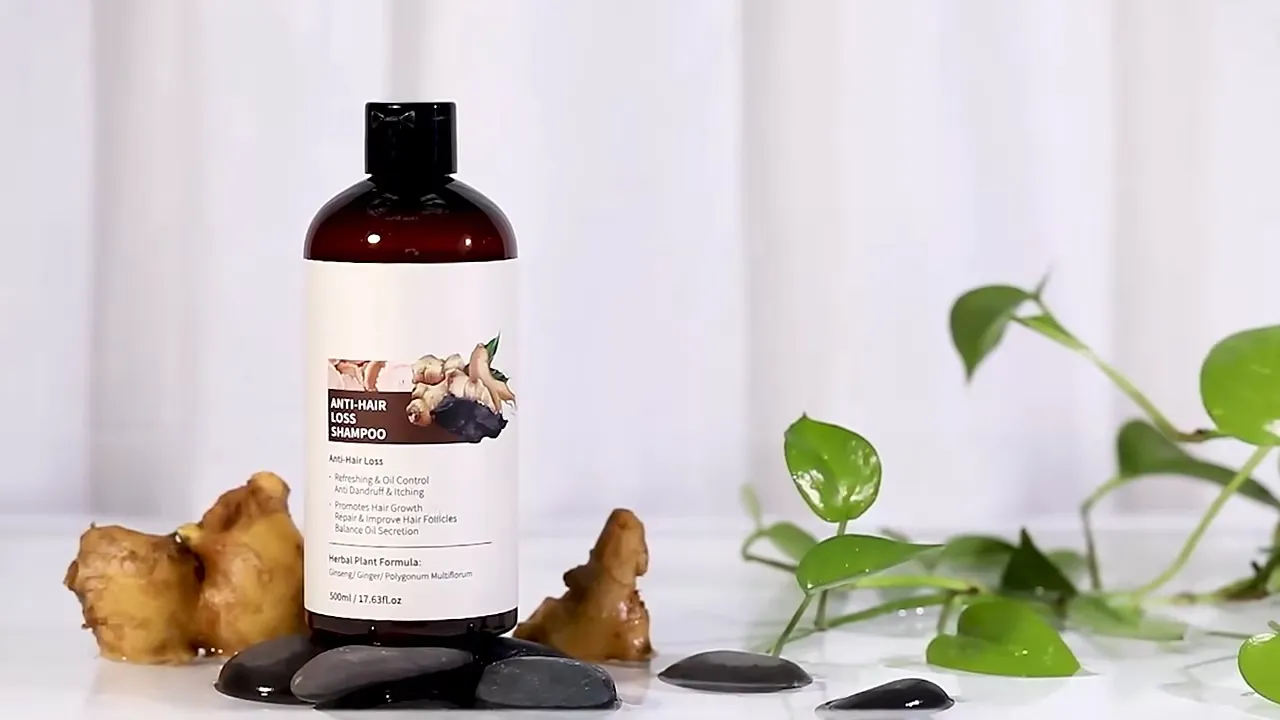
Choosing anti hair loss shampoo ingredients starts with one question: what are you trying to improve? Some ingredients help manage dandruff or make hair feel stronger. Others are studied for their possible role in hair growth, but evidence for a specific shampoo may be limited.
A shampoo can support your scalp and hair care routine, but it cannot diagnose the cause of thinning. Use this guide to compare key ingredients and choose a formula that fits your needs.
What Can an Anti Hair Loss Shampoo Do?
A shampoo cleans the hair and scalp. Depending on its formula, it may also help control dandruff or improve the feel of dry hair, leaving hair softer and easier to manage. A gentle shampoo and conditioner can support healthy hair by helping reduce breakage during everyday care.
Breakage is different from hair shedding. A broken strand snaps along its length, while a shed hair falls from its follicle. Hair follicles produce new hair, but thinning can have many causes. If you notice ongoing changes in your hair health, shampoo alone may not address the underlying problem.
Anti Hair Loss Shampoo Ingredients to Compare
| Ingredient | What it may do | What to keep in mind |
|---|---|---|
| Caffeine | Appears in shampoos marketed for thinning hair. | Some formulations have been studied, but results from one product do not prove that every caffeine shampoo promotes hair growth. |
| Ketoconazole | An antifungal ingredient used in some medicated anti-dandruff shampoos. | Choose it for an appropriate scalp concern and follow the product label. Dandruff treatment does not automatically mean proven hair regrowth. |
| Biotin | Often included in hair care products marketed for fuller-looking hair. | Its presence in shampoo is not proof that the product can regrow hair or treat a biotin deficiency. |
| Panthenol | A conditioning ingredient that can help improve how hair feels. | Conditioning the hair shaft is different from treating hair loss at the follicle. |
| Conditioning agents | Can improve slip and make hair easier to handle. | They may help reduce damage from combing, but they are not a proven treatment for every cause of hair loss. |
Caffeine research is promising, but the available evidence varies by formulation and study design. Before buying a shampoo for hair loss, look for evidence about the finished product rather than relying only on a featured ingredient.
How to Read a Shampoo Ingredient List
Start with your goal. If dandruff is your main concern, check whether the product identifies an appropriate active ingredient and provides clear directions. If your hair breaks easily, a gentle shampoo and a suitable conditioner may be more useful than a long list of growth claims.
Next, look at the complete formula. A high quality product should clearly identify its ingredients and intended use. Seeing caffeine, biotin, or a botanical extract on the label does not tell you on its own whether the finished shampoo can combat hair loss.
Also check whether the brand provides research on the same formula, used in the same way. A study of a leave-on treatment or a different blend does not automatically establish the effects of a rinse-off shampoo.
Which Ingredients Should Sensitive Scalps Avoid?
There is no single list of harsh chemicals that everyone needs to avoid. People react differently, and a shampoo’s effect depends on the full formula as well as the individual user.
If your scalp is sensitive, consider a fragrance-free product and avoid ingredients you already know irritate your skin. Natural extracts and essential oils can also cause irritation for some people. Stop using a product if it causes persistent itching, burning, or a rash, and seek medical advice if the reaction is significant.
Sulfates are cleansing ingredients; their presence alone does not prove that a shampoo causes hair loss. Choose a cleanser that leaves your scalp comfortable and suits how often you wash your hair.
How to Choose for Your Hair and Scalp
- For dandruff: Consider an appropriate anti-dandruff shampoo and follow its directions.
- For dry or fragile hair: Choose a gentle cleanser and use conditioner to make detangling easier.
- For thinning hair: Look beyond the label. A shampoo may support hair care, but a clinician can help identify the cause of ongoing thinning.
- For a sensitive scalp: Keep the routine simple and check for ingredients that have irritated you before.
If you are developing a hair care line, review ingredient choices, product testing, and intended claims with your private label shampoo manufacturer. Requirements for medicated products and hair-growth claims depend on the market.
When Should You See a Dermatologist?
Seek professional advice if hair loss is sudden, patchy, or increasing, or if it comes with scalp pain, redness, or significant scaling. A dermatologist can assess possible causes and discuss treatment options appropriate for you.
Frequently Asked Questions
Can biotin shampoo regrow hair?
Biotin is common in shampoos, but its inclusion does not prove that a product regrows hair. If you are concerned about a deficiency or ongoing shedding, ask a healthcare professional for advice.
How long should I leave an anti hair loss shampoo on?
Follow the directions on the label. Medicated shampoos may have specific contact-time instructions. Leaving any shampoo on for longer than directed does not guarantee better results and may irritate your scalp.