
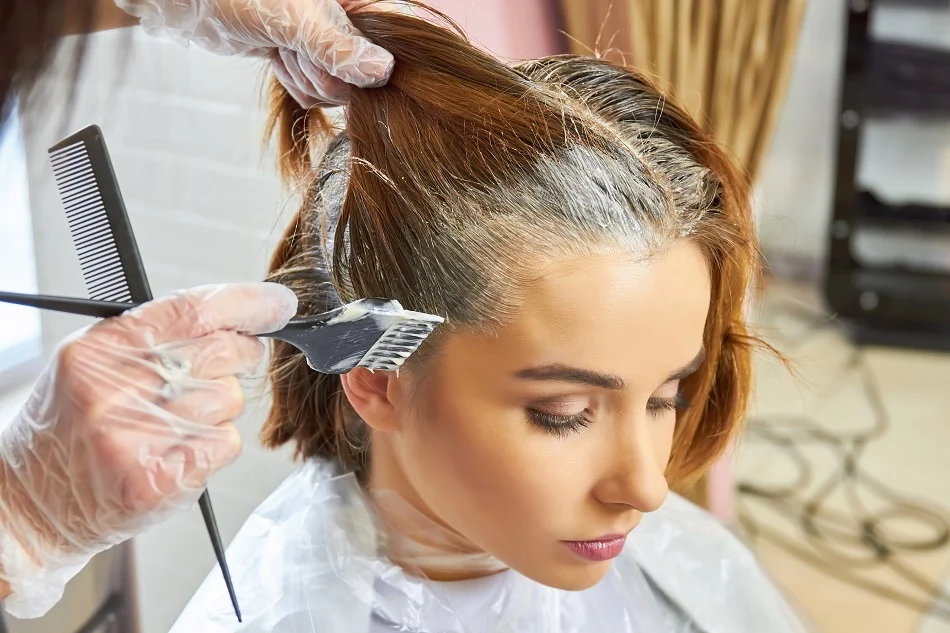
The best lice treatment for colored hair is one that treats an active infestation and is suitable for both the person using it and their hair color. A pharmacist or healthcare provider can help you choose a product, while the manufacturer can advise whether its exact formula is compatible with your dye.
Do not rely on hair dye or bleach to treat head lice. They are not reliable lice treatments, and they can irritate or damage the scalp. Start by checking for live lice, then choose a treatment and follow its full directions.
First, Check for Live Head Lice
An itchy scalp does not always mean you have lice. Dry skin, product irritation, and other conditions can also cause itching. Finding a live, crawling louse is the best way to confirm an active infestation.
Use a fine-toothed lice comb and examine the hair close to the scalp, especially behind the ears and near the back of the neck. Lice eggs are attached to individual hairs, but empty egg cases can remain after an infestation has ended.
If you are not sure what you are seeing, ask a pharmacist or healthcare provider to help you check before starting treatment.
Lice Treatment Options for Colored Hair
There is no single treatment that is best for every person or every type of hair dye. Consider the person’s age, the product’s directions, local availability, and the type of color on the hair.
Dimeticone or Dimethicone Lice Treatment
Some products made to treat head lice contain dimeticone, also called dimethicone. They work through a physical action rather than relying on a conventional insecticide.
Choose a product specifically intended for head lice. A regular shampoo or conditioner that happens to contain dimethicone is not automatically a lice treatment.
For one product-specific example, the maker of Hedrin Kills Lice Wash Out says it can be used with permanent hair dyes. The company notes that semi-permanent and temporary colors may respond differently. Check the exact product available to you and ask the manufacturer or a pharmacist if you are unsure.
Medicated Lice Products
In some countries, lice medicines include products containing permethrin or other active ingredients. Some are available without a prescription, while others require a healthcare provider’s prescription.
Effectiveness, age limits, and directions vary. Lice can also be resistant to certain medicines in some areas. Ask a pharmacist or healthcare provider which option is suitable where you live.
Do not assume that every medicated treatment will damage hair color. Equally, do not assume that every product is color-safe. Ask about the exact treatment and tell the professional whether your hair has permanent, semi-permanent, or temporary color.
Wet Combing
Wet combing uses a fine-toothed lice comb to remove lice from the hair. It can be an option for people who prefer a non-drug method, but it takes time and must be repeated on the schedule recommended by a healthcare service.
Wet combing usually involves conditioner to help the comb move through the hair. If you are also using a lice medicine, check its directions first: conditioner before some treatments can make the medicine less effective.
How to Protect Your Hair Color During Treatment
Before you begin, tell your pharmacist or the product maker about your color. Include when you dyed your hair and whether you used permanent dye, a temporary color, bleach, toner, or another salon treatment.
- Ask whether the exact lice treatment has been checked for use with your type of color.
- Follow any product advice about testing a small section of hair for color compatibility.
- Use the amount, contact time, and repeat schedule stated on the label.
- Avoid combining treatments or adding other products unless a healthcare professional advises it.
A strand test can help you check for an unwanted color change, but it does not prove that a product is safe for your skin or that it will kill lice. Follow the product’s separate skin-safety directions and do not delay getting treatment advice.
How to Use Lice Medicine and a Lice Comb
Read the full instructions before applying any lice medicine. Some products go on dry hair, while others have different directions. Long or thick hair may require more than one pack to cover the hair as directed.
- Prepare the hair: Follow the product label. Do not use conditioner or a combined shampoo and conditioner before lice medicine unless the product’s instructions or a healthcare professional tell you otherwise.
- Apply the treatment: Use the stated amount and cover the areas described on the label.
- Watch the time: Leave the product on only for the required period, then remove it as directed.
- Comb if directed: Divide the hair into sections and use a lice comb from close to the scalp through the ends. Clean the comb between passes.
- Plan the next check: Follow the label for checking and retreatment. Some products need a second application; others have different instructions.
The CDC guide to treating head lice advises against rewashing the hair for one to two days after removing lice medicine. Check your own product’s directions and ask a healthcare provider if the instructions are unclear.
Does Hair Dye Kill Lice and Lice Eggs?
Hair dye is not a reliable way to treat head lice. Even if a dye or bleach affects some lice, you cannot rely on it to clear the infestation or deal with all lice eggs.
Some hair color products contain hydrogen peroxide. That does not make them approved lice treatments. Applying extra dye, hair bleach, or peroxide to try to kill lice can irritate or injure the scalp.
Never apply household bleach to hair or skin. If you find live lice, use an appropriate treatment or ask a healthcare professional about your options.
When Can You Color Your Hair Again?
There is no waiting period that applies to every lice treatment and every hair dye. Check the treatment label and ask the product maker, pharmacist, or colorist before coloring or bleaching again.
If your scalp is sore or irritated, speak with a healthcare professional before applying another chemical product. Avoid putting dye on an irritated scalp unless you have been advised that it is appropriate.
When Should You Ask for Medical Advice?
Ask a pharmacist or healthcare provider for help if you are unsure whether you have lice, if the scalp is sore or infected, or if the treatment does not appear to work. Get advice before treating a young child, and check with a healthcare professional about treatment choices during pregnancy or breastfeeding.
Do not repeat a product early or switch between several treatments without advice. Live lice after treatment can have different causes, including missed applications, reinfestation, or resistance.
Frequently Asked Questions
Will lice treatment strip my hair color?
It depends on the exact product and the type of dye. Ask the manufacturer about permanent, semi-permanent, or temporary color rather than assuming that all treatments have the same effect.
Can a lice comb remove lice without medicine?
Wet combing can be used as a non-drug method when performed carefully and repeated on the recommended schedule. Ask a healthcare professional for guidance if you are unsure how to do it or if lice remain.
Do I need to treat everyone in the household?
Check household members and close contacts. Follow local health guidance about who should be treated; the CDC advises treating people with active lice and those who share a bed with them at the same time.
Can I dye my hair to get rid of lice?
No. Hair dye is not a reliable lice treatment. Choose a suitable lice treatment or seek professional advice instead.