Introduction
Cambodia’s beauty and personal care market has expanded steadily in recent years, supported by rising disposable incomes, rapid urbanization, and a digitally native demographic heavily active on social media platforms. Within this landscape, custom shampoo and specialized hair formulations stand out as highly dynamic segments. Market indicators demonstrate stable, multi-tiered demand across both mass-market consumer goods and premium professional lines, much of which is driven by high-quality imported brands.
In this competitive retail ecosystem, packaging design does far more than contain the formula. It acts as a primary business tool that communicates function, price positioning, and clinical identity at a glance—both on crowded physical shelves and within digital e-commerce thumbnails. For international brands and regional contract suppliers looking to capture market share, mastering the visual, linguistic, and regulatory demands of Cambodian packaging is an absolute necessity.
This comprehensive B2B analysis details the essential design features, regulatory compliance frameworks, and shifting consumer preferences shaping Cambodian shampoo packaging, offering actionable strategies for global brand managers and procurement executives.
1. Cambodian Shampoo Market and Consumers
1.1 Macro Market Context
The Cambodian cosmetics and personal care market is projected to maintain an annual growth rate of 5–6%, propelled by expanding retail infrastructure, urban tourism, and the deep penetration of regional beauty trends originating from Korea, Japan, and Thailand. Daily-use hair care—specifically targeting functional shampoos, restorative hair masks, and scalp therapies—constitutes a massive baseline of this volume. Professional salon networks in urban centers like Phnom Penh are similarly accelerating the demand for premium, high-performance formulations.
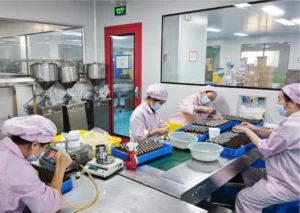
While global multinationals and regional Asian giants hold an established presence, emerging brands are successfully competing by positioning themselves through agile pricing strategies and “natural, clean-label” formulas. To navigate this competitive landscape, many successful brands partner with an internationally certified personal care manufacturer to ensure consistent batch quality, scalable output, and export-ready compliance.
1.2 B2C Procurement Drivers & Consumer Behavior
Several distinct consumer behaviors dictate how custom shampoo packaging must be executed to secure high retail turn rates:
- Youth-Driven Demographics: Cambodia’s predominantly young population is highly receptive to sophisticated personal expression, aesthetic innovation, and modern branding concepts.
- Social Media & Live-Commerce Integration: Purchasing behavior is heavily steered by interactive platforms like TikTok, Facebook, and Instagram. Consequently, packaging must be optimized for visual clarity, looking distinct and “sharable” through digital screens.
- Function-Plus-Image Demands: Corporate procurement teams must note that while consumers demand explicit functional claims (such as anti-dandruff, hair fall control, and color preservation), they prioritize sleek, modern structural silhouettes.
- The Convergence with Skin Care Aesthetics: Mirroring global trends, hair care is experiencing a “skinification.” Consumers increasingly look for ingredient-led formulas. This shift requires packaging to borrow design cues from high-end Private Label Skin Care Manufacturer lines—using clean typography, clinical ingredient callouts, and transparent componentry.
2. Regulatory and Labelling Frameworks
Shampoo packaging architecture in Cambodia is strictly governed by national product-safety laws and commercial labeling compliance mandates. Non-compliance risks immediate customs impoundment, punitive regulatory fines, or mandatory retail product recalls.
2.1 Khmer Language Labeling Requirements
The Ministry of Commerce enforces strict guidelines requiring essential consumer product information to be displayed in Khmer, the official language of Cambodia. Regulatory enforcement has intensified, dictating that all imported and locally manufactured cosmetics must feature clear Khmer text, either integrated directly into the primary packaging print or applied via high-durability, permanent adhesive overlays.
For custom shampoo and hair care containers, the mandatory compliance checklist includes:
- Official product name, sub-line variant, and functional description.
- Comprehensive usage instructions and application directions.
- Full ingredient deck or regulatory raw material disclosures.
- Safety warnings, allergen precautions, and contraindications.
- Complete manufacturer, importer, and distributor corporate details.
- Verified country of origin.
- Accurate net volume or weight metrics.
While global marketing languages like English, Korean, or Japanese are permitted on the front panels to protect international brand equity, they must complement rather than replace the mandatory Khmer text layout.
2.2 Cosmetic-Specific Regulatory Compliance
To be legally distributed, hair formulations must comply with the Ministry of Health’s cosmetic directives. This involves mandatory product notification filings, independent safety assessments, and the clear display of product registration numbers on the external label.
From a structural and graphic design standpoint, packaging layouts must strategically allocate high-contrast zones for regulatory tracking numbers, verified expiration dates, and batch codes. Furthermore, all marketing text must be audited to ensure it displays legally compliant, verifiable claims rather than speculative, medicalized, or exaggerated structural promises.
3. Cultural Influences on Custom Hair Care Packaging
To successfully drive consumer engagement, international packaging designs must harmoniously merge strict legal mandates with local cultural aesthetics and purchasing psychology.
3.1 Multilingual Typography Layouts
High-converting shampoo bottles in this market typically utilize a sophisticated bilingual layout on the primary facing panels. Global brand marks are preserved in bold Latin characters to project international prestige and quality assurance. Concurrently, core functional descriptors—such as “Anti-Hair Fall” or “Deep Hydrating Herbal Blend”—are paired with clear Khmer translations, ensuring immediate comprehension for retail shoppers.
3.2 Visual Cues and Botanical Motifs
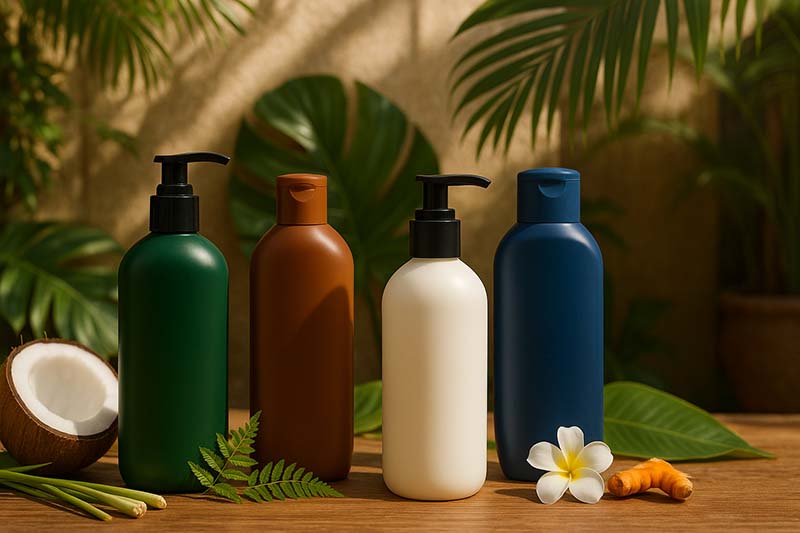
Packaging imagery should leverage local raw ingredient familiarity and broader Asian beauty preferences. Visual representations of botanical actives—such as coconut milk, rice water extract, ginger root, turmeric, lemongrass, and citrus oils—effectively communicate holistic nourishment and traditional therapeutic remedies.
To establish a premium tier, brands often implement subtle cultural references, such as refined geometric gold accents, delicate filigree borders inspired by traditional Khmer crafts, or sophisticated gradient metallics that elevate the container’s perceived value without relying on overused historical stereotypes.
3.3 Strategic Color Psychology
Color palettes serve as immediate functional shorthand on the retail floor, allowing consumers to categorize formulas instantly:
- Earthy Greens, Browns, and Warm Beiges: Explicitly communicate organic sourcing, herbal remedies, and eco-friendly clean formulas.
- Crisp Blues and Pure Whites: Universally represent clinical anti-dandruff efficacy, scalp-soothing menthol cooling, and refreshing hydration.
- Matte Blacks, Deep Charcoal, and Gold Metallics: Signal advanced salon-grade technology, targeted hair loss prevention, and professional strength.
- Soft Pinks, Lavenders, and Pastel Violets: Position products for targeted color preservation, intense floral fragrance profiles, and moisturizing salon treatments.
4. Technical Design Features and Bottle Structures
4.1 Structural Formats and Retail Volume Segments
Custom shampoo packaging must be structurally engineered to match specific retail channels, target household budgets, and purchasing frequencies:
- Standard Consumer Bottles (200ml – 400ml): The baseline standard for modern retail shelves and minimarts, typically utilizing ergonomic squeeze bottles with durable flip-top caps.
- Family-Scale Pump Dispensers (400ml – 800ml+): Highly popular for high-frequency domestic use. Implementing robust, lockable liquid pumps adds immediate commercial convenience and supports premium retail pricing models.
- Professional Salon & Backbar Packaging: Large-volume industrial jugs or heavy-duty refill pouches designed for professional salons, relying on clean, clinical, minimalist layout graphics.
- Travel-Size Minis and Single-Use Sachets: Critical entry-level components that capture price-sensitive demographics, driving consumer trial and brand switching before buyers commit to larger bulk volumes.
4.2 Advanced Packaging Finishes and Materials
While high-gloss PET and rigid HDPE plastics remain the industrial standard for mass-market shampoo lines due to their impact resistance and chemical stability, premium lines are undergoing a structural shift. Brands aiming for a luxury or medical positioning increasingly deploy matte, soft-touch coatings paired with muted, sophisticated pastel or nude colorways.
Transparent or tinted amber and green PET bottles are highly effective for oil-infused, translucent gel, or micellar formulas, allowing the raw beauty, texture, and color suspension of the liquid to serve as a primary visual selling point. High-speed foil stamping, metallic inks, and silk-screened gradient backgrounds are utilized to highlight hero active claims on the front label efficiently.
5. Cross-Category Sourcing: Maximizing Supply Chain Synergy
For international beauty brands expanding into Cambodia and the broader ASEAN zone, consolidating your multi-category manufacturing footprint under a unified, highly accredited global supplier optimizes procurement costs, shortens lead times, and ensures absolute batch-to-batch consistency.
A premier contract manufacturing partner like Xiangxiang Daily provides full turnkey OEM/ODM industrial lines across all high-demand beauty verticals, allowing you to streamline your product development portfolio:
| Category Vertical | Turnkey Manufacturing Infrastructure | Targeted Formulations & B2B Capabilities |
|---|---|---|
| Hair Care & Cleansing | Partner with an accredited Private Label Shampoo & Conditioner Manufacturer | Custom functional shampoos, clarifying formulas, deep scalp tonics, nourishing keratin hair masks, and premium professional salon lines. |
| Skin Care Actives | Collaborate with an integrated Facial Serum & Cream Manufacturer | Advanced science-backed face creams, active clinical serums, hyperpigmentation treatments, and barrier-repairing emulsions. |
| Sun Protection | Source via a certified, high-stability sunscreen manufacturer | Broad-spectrum UVA/UVB protection, lightweight daily facial sunscreens, and non-greasy, water-resistant body blocks. |
| Body & Cleansing | Scale production with a high-volume Body Wash Manufacturer | Bulk liquid body washes, exfoliating body scrubs, skin-brightening lotions, and custom-scented hotel or retail personal care lines. |
6. Sustainability and Eco-Friendly Packaging Shifts
While initial purchasing decisions in Cambodia remain heavily driven by price and functional efficacy, environmental sustainability is rapidly transforming into a powerful differentiator among urban, educated, and younger demographic segments.
Data regarding sustainable packaging preferences indicates that green materials and eco-conscious structural design significantly boost long-term brand equity and customer loyalty. Forward-thinking hair care brands are actively implementing practical sustainability features on-pack, including the use of high-content post-consumer recycled (PCR) plastics, the elimination of unnecessary secondary cardboard outer boxes for single bottles, and the deployment of high-volume refill pouches that minimize single-use plastic waste.
By blending an earthy, minimalist visual design language with explicit on-pack recycling instructions in both English and Khmer, corporate brands can leverage their packaging as an authentic storytelling platform that justifies premium retail margins.
Conclusion
Successful Cambodian shampoo packaging operates at the critical intersection of stringent national regulations, local cultural nuances, and global beauty design aesthetics. For international brands seeking long-term profitability, packaging cannot be treated as an afterthought. It requires a systematic design approach that seamlessly integrates mandatory Khmer compliance labels, high-visibility visual hierarchies, and clear functional value propositions into a cohesive, consumer-trusted structure that commands attention at a glance.