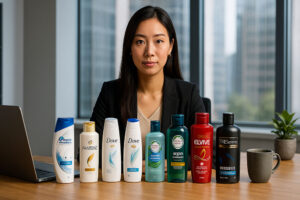
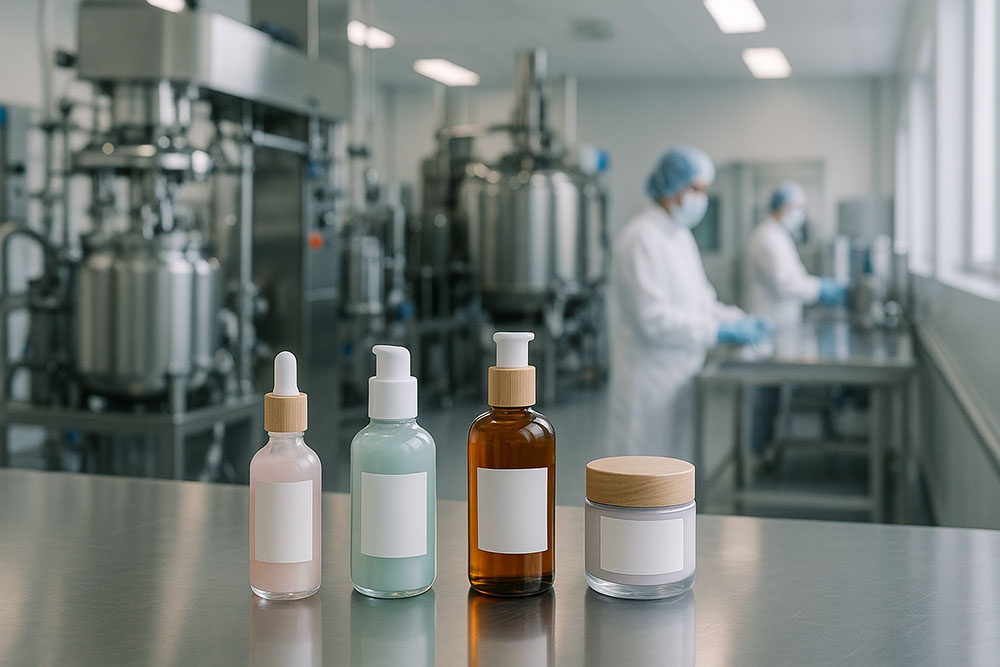
To start a skin care brand in the Philippines, define a specific customer, choose a focused product range, select a manufacturing partner, build a realistic budget, and confirm the business and cosmetic regulatory requirements that apply to your operation. Then evaluate samples, finalize packaging and claims, and prepare fulfillment and customer support before launching.
You do not need to begin with a large collection. A small range with a clear purpose is easier to explain, fund, and improve. Whether you plan to sell online, work with salons, or supply retailers, the central task is to connect a customer need with a reliable product and a sustainable selling price.
Below, work through the decisions in order: customer, product, supplier, budget, compliance, and launch. The aim is to build a brand you can replenish and grow after the first production run.
Define Your Target Customer and First Skin Care Products
Choose a customer before choosing a trending ingredient
“Skin care for everyone” gives a new brand little direction. A more useful brief identifies the buyer, the routine, the desired texture, and the price the customer is willing to pay. Examples might include a simple moisturizing routine for busy professionals or lightweight products for customers who dislike a heavy finish.
Treat those ideas as hypotheses to test. Interview prospective customers and compare the products they already purchase. Read reviews for repeated complaints about stickiness, fragrance, leaking packs, unclear directions, or poor value. Separate recurring problems from isolated comments.
When researching online marketplaces, record the product size, regular and promotional prices, seller identity, claims, and review dates. A bestseller badge or one viral video does not establish sustained demand for your proposed product.
Build a focused launch range
Starting with one hero product or a small complementary routine is a planning option, not a universal rule. The right number of products depends on your budget and route to market. Each additional formula creates another sampling, packaging, inventory, and documentation task.
| Product direction | Customer question to validate | Development priority |
|---|---|---|
| Lightweight moisturizer | Does the customer want moisture without a heavy finish? | Afterfeel, layering, packaging, and product stability |
| Hydrating serum | Does an extra serum step solve a problem in the existing routine? | Stickiness, dispensing, formula compatibility, and supported claims |
| Makeup remover | What makeup or sunscreen does the customer need to remove? | Cleansing performance, rinsing, and appropriate tolerance evaluation |
| Face mask | Is the customer seeking convenience, an occasional treatment, or a gifting format? | Application experience, packaging integrity, and formula quality |
Explore Xiangxiang Daily’s private label skin care options to translate a market idea into a product brief. For a moisturizer or serum concept, the facial cream and serum range provides a more focused starting point.
Do not select sunscreen or products with treatment-style claims merely because the category looks attractive. Confirm the classification, testing, documentation, and claim requirements before estimating the launch effort.
Choose Between Private Label and Custom Manufacturing
Understand what you are actually buying
Reselling an existing brand, applying your brand to a supplier’s formula, and commissioning a new formula are different businesses. If a supplier offers a “rebranding package,” ask whether the quote covers finished products carrying your own brand, packaging design, documentation support, and a repeatable supply arrangement. The package name alone does not answer those questions.
Compare existing formulas with custom development
Supplier terminology varies. Ask what “private label,” “OEM,” and “ODM” mean in the actual quotation rather than assuming each term guarantees a particular service.
| Route | Possible advantage | Questions to resolve |
|---|---|---|
| Existing formula with your branding | A defined starting formula and fewer formulation decisions | What documentation is available, what can change, and is the formula exclusive? |
| Modified existing formula | Some differentiation in texture, fragrance, or ingredients | Which changes require additional evaluation, testing, or documentation? |
| Custom formulation | Development around a more specific product brief | Who owns the formula, what are the development charges, and what happens if samples miss the brief? |
An existing formula can reduce development work, but it does not automatically make a newly branded product ready for sale. Confirm its suitability for your market, packaging, label, and regulatory arrangements.
Compare local and overseas production on the same basis
A Philippine manufacturer may make visits, local coordination, and domestic delivery easier. An overseas manufacturer may offer a different product range or packaging selection. Neither location alone proves that a supplier is the right partner.
For imported products, establish who will handle importation, local regulatory responsibilities, shipment documentation, receiving inspection, and complaints. Do not assume a factory’s quotation includes all of these tasks.
Use our overview of skin care manufacturers serving the Philippines as a starting point for supplier research. Verify each shortlisted company’s current capabilities directly.
For both local and overseas suppliers, compare the cost of finished stock delivered to your receiving point, the documentation available, and the effort needed to replenish. A lower factory price may lose its advantage after freight, clearance, or a larger packaging commitment.
Send one consistent brief to shortlisted suppliers
- Target customer, intended sales channel, and target retail price.
- Product type, fill size, benchmark texture, and fragrance preference.
- Proposed claims and ingredients you want included or excluded.
- Packaging format and decoration requirements.
- Initial order estimate and anticipated reorder needs.
- Required documentation, test reports, and responsibility for local filings.
Request separate minimum quantities for the formula, bottle or jar, decoration, and outer carton. A supplier’s headline MOQ may not cover every component. Also agree on sample approval, permitted substitutions, production specifications, and how defects will be investigated.
Calculate Your Startup Budget and Product Pricing
There is no reliable universal amount needed to start a skin care brand in the Philippines. A stock-formula launch in standard packaging and a custom range in decorated packs have different cash requirements. Build your budget from written quotations instead of adopting another founder’s headline number.
| Budget item | What to include |
|---|---|
| Development and sampling | Sample rounds, delivery, formulation work, and agreed evaluation |
| Testing and documentation | Safety and quality work, claim support, and regulatory assistance appropriate to the project |
| Packaging and artwork | Containers, closures, labels, cartons, printing setup, and proofs |
| Production and delivery | Finished goods, freight, insurance where applicable, and local transport |
| Import-related costs | Applicable duties, taxes, clearance, and broker charges confirmed for the shipment |
| Selling and fulfillment | Channel fees, payment charges, commissions, pick-and-pack, and shipping support |
| Launch and working capital | Content, customer service, returns, initial marketing, and money reserved for replenishment |
Translate the MOQ into inventory you can sell
Check whether a quoted minimum is stated in kilograms of bulk formula, filled units, or packaging components. These quantities are not interchangeable. For a product filled by weight, an illustrative 100 kg batch divided into 50 g packs yields 2,000 theoretical fills before process losses, retained samples, and overfill. This is a calculation example, not a Xiangxiang Daily MOQ. Volume-based packs require the relevant formula density for conversion.
Ask the supplier to quote the expected saleable quantity and any unused packaging balance. Then estimate how long that stock would last under a conservative sales scenario. Compare launch budgets only when they include the same number of products, pack sizes, services, and delivery terms.
Distinguish landed cost from profit
The factory unit price is only one part of cost. Calculate landed cost per saleable unit using the costs needed to receive usable stock at your warehouse. Then account separately for the variable costs of selling each unit.
Contribution per unit = net sales revenue per unit minus landed product cost minus variable selling and fulfillment costs.
Use consistent tax treatment and avoid counting discounts or platform charges twice. Your accountant can help establish the appropriate treatment for your business.
For illustration only, suppose a sale provides PHP 400 in net revenue, landed product cost is PHP 120, and variable selling and fulfillment costs total PHP 100. The remaining PHP 180 is contribution before fixed costs and income tax, not net profit. These are invented planning figures, not supplier quotations or typical Philippine market margins.
Allow for the next order
Map when cash leaves the business and when sales proceeds become available. A deposit, packaging balance, shipping bill, and replenishment order may fall due before the first batch has generated enough cash.
Ask suppliers to distinguish formula production, packaging procurement, testing, and transport lead times. A single “delivery time” can hide dependencies that determine when stock is actually ready to sell.
Prepare Your Business Registration and Cosmetic Compliance
Separate business identity from permission to operate
Choose a suitable business structure and identify the registration, tax, and local permit steps that apply to it. In its official business name FAQ, DTI explains that business name registration provides a legal identity and does not replace a Business or Mayor’s Permit.
Company incorporation, tax registration, and local permits are separate matters to verify for your chosen structure. If foreign ownership or an overseas company is involved, obtain advice for that arrangement rather than assuming a locally owned sole proprietorship process applies.
Check your proposed brand name before ordering printed packaging. Business name registration and trademark protection are different questions; resolve both through the appropriate authorities and advisers.
Confirm the FDA pathway for your actual activities
Before placing goods on the Philippine market, have your local regulatory lead establish the applicable establishment licensing and cosmetic product notification requirements. Identify who will manufacture, import, trade, distribute, and take local responsibility for the products. Those roles should match the actual arrangement, not just the wording on a supplier’s sales page.
Keep establishment authorization and product notification separate in your project checklist. A document relating to a manufacturer is not, by itself, evidence that every product under your new brand is ready for sale.
Ask the responsible party to verify current requirements with the Philippine Food and Drug Administration, including the correct application route, documents, fees, and any renewal obligations. Do not build the launch around an unverified processing-time promise. A notification should not be marketed as an endorsement of efficacy.
Put responsibilities in writing
Use a responsibility sheet during supplier discussions. The following is a suggested project allocation to agree with your partners, not a statement that a particular party must legally hold each role.
| Workstream | What to agree before committing |
|---|---|
| Formula and product specifications | Who develops and approves the formula, controls changes, and holds ownership or usage rights |
| Testing and technical records | Which party arranges evaluation and supplies the agreed reports and supporting documents |
| Philippine regulatory work | Which local entity is responsible, who prepares submissions, and who maintains the relevant records |
| Packaging and claims | Who checks artwork and evidence before the brand authorizes printing or advertising |
| Importation and delivery | Who handles shipping, clearance, receiving checks, and additional costs |
| Complaints and corrective action | Who receives reports, investigates batches, and coordinates any necessary response |
Review the formula and label before printing
The ASEAN Cosmetic Directive document collection includes regional guidance on ingredients, labeling, claims, good manufacturing practices, safety assessment, and Product Information Files. This collection is hosted by Singapore’s HSA; use it for the regional framework, not as a substitute for Philippine application procedures.
Prepare a label-review pack covering the product identity and function, instructions, ingredient list, net contents, manufacturer and local responsible-party details, country of manufacture, batch coding, relevant dates, and precautions. Have the final requirements and layout checked for the Philippine market before printing. This is a preparation checklist, not an exhaustive legal label specification.
Assign responsibility for keeping the Product Information File and supporting safety, quality, and claim documentation accessible. Agree on how confidential formula information will reach the people who need it for assessment or regulatory purposes.
Review promotional language alongside the pack. Do not approve a cautious label and then give creators unsupported disease-treatment or guaranteed-result claims. Specific statements such as SPF ratings, testing claims, or quantified performance improvements need appropriate evidence for the finished product.
Approve Samples and Plan Your Brand Launch
Approve a complete product rather than a jar of bulk formula
Evaluate the sample in the intended packaging whenever possible. A serum can feel good on skin but dispense poorly from the selected pump. A cream can suit your texture brief but leak from a closure during delivery.
Ask the manufacturer to propose appropriate stability, microbiological, preservative, and packaging-compatibility evaluation. Include expected storage and transport conditions in the brief. Customer preference testing is useful for texture and fragrance decisions, but it does not replace safety evaluation or substantiate every marketing claim.
Record the approved sample version, artwork, packaging components, fill size, and acceptance criteria. Agree that material changes require review before production. At receiving, check batch identification, quantities, pack condition, and the agreed release documents.
Choose a manageable first sales channel
Compare a marketplace-led launch, your own online store, and wholesale or salon distribution according to your team’s capabilities. Review the current seller requirements and fee schedules of platforms you are considering, such as Shopee, Lazada, or TikTok Shop, directly before budgeting.
Prepare product pages that show the actual packaging, size, texture, directions, relevant precautions, and realistic benefits. Keep marketplace copy, creator scripts, customer-service replies, and the approved label consistent.
A focused launch lets you learn which questions prevent purchase and whether customers like the product enough to reorder. Broad distribution is harder to support if your stock records, customer service, and returns process are not yet reliable.
Set up traceability and replenishment
- Connect incoming and outgoing stock records to the relevant batches.
- Define storage conditions, stock rotation, and treatment of damaged goods.
- Establish a complaint process that records product, batch, and reported issue.
- Agree on escalation with the manufacturer and local regulatory lead.
- Track contribution margin, returns, repeat purchases, and actual replenishment time.
Before launch, confirm four things: the approved product is documented, the applicable regulatory steps are complete, stock is ready for reliable fulfillment, and customer-facing claims match the evidence. Avoid fixing a public launch date before these dependencies are understood.
For an OEM or ODM project, Xiangxiang Daily’s manufacturing support for the Philippine market provides a starting point for discussion. Share your target customer, product brief, quantity estimate, packaging preferences, and documentation needs. Review our quality control approach and confirm the specific testing and records included in your quotation.
FAQ About Starting a Skin Care Brand in the Philippines
Can I start a skin care brand without owning a factory
Yes. Contract manufacturing and private label arrangements allow a brand to source finished products. You still need to agree on product specifications, claims, business responsibilities, and the regulatory arrangements that apply to your operation.
How much money should I prepare
Build a project-specific budget covering development, documentation, packaging, production, delivery, sales costs, and working capital. Compare quotations for the same specifications. A low unit price is not enough to establish an affordable launch.
Can I import skin care products under my own brand
Importing is a sourcing route to evaluate, but confirm the applicable Philippine importer, establishment, product, and customs requirements before arranging shipment. Decide who owns each responsibility and which documents the overseas supplier must provide.
Does the manufacturer’s license cover my brand automatically
Do not assume so. Have your regulatory lead check the parties, activities, product identity, and authorization scope. Ask for an explanation of how the documents apply to your specific arrangement, not simply copies of unrelated certificates.
How long does it take to launch
Timing depends on sample revisions, packaging availability, testing, business and regulatory work, production, and transport. Build the schedule around these dependencies. An existing formula may simplify development, but it does not remove all other launch steps.
Should I launch a full routine at once
Only if customer evidence, cash flow, and operational capacity support it. A smaller launch can make inventory and learning easier to manage. Add products when they solve a clear customer need and fit the economics of the range.