To start a body care business, choose a clear customer, select your first product and decide how it will be made. Then review samples, plan your costs, prepare your packaging and launch through a sales channel that reaches your audience.
You do not need to create an entire body care line at once. A body wash, lotion, scrub or oil can be a starting point. What matters is choosing a product that fits your customer’s routine and your budget.
This guide walks through the steps from product idea to first order, including how to work with a private label body care manufacturer.
1. Choose Your Body Care Customer and Niche
A strong body care business starts with a specific customer. Think about how that person uses body care products and what would make them choose yours.
For example, your brand could focus on:
- A simple shower routine for busy customers.
- Rich body creams for people who prefer a heavier skin feel.
- Lightweight lotions for customers who dislike a sticky finish.
- Body scrubs and oils for a spa-inspired routine.
- Coordinated body care products for salon or gift sets.
Then research the products your audience already buys. Compare their pack sizes, prices, scents and reviews. Look for repeated comments about texture, fragrance, packaging or value.
Turn what you learn into one clear product idea. “A lightweight lotion in a pump bottle” gives your manufacturer a more useful starting point than “a lotion for everyone.”
2. Pick Your First Body Care Products
Start with one product or a small group that makes sense together. Each product needs its own formula, packaging, label and order plan, so a larger launch also means more decisions and inventory.
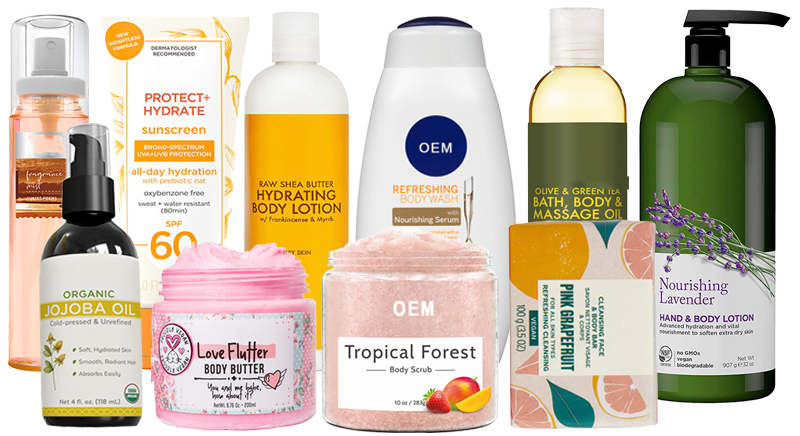
| Product | Role in the routine | What to check |
|---|---|---|
| Body wash | Cleansing in the shower or bath | Foam, scent, rinse feel and bottle closure |
| Body lotion or cream | Daily body moisturizing | Texture, spread, after-feel and dispensing |
| Body scrub | Adding an exfoliating step | Particle feel, mixing, rinse-off and jar access |
| Body oil | Adding an oil-based step after bathing or for massage | Spread, finish, fragrance and leakage control |
A body wash and lotion can form a simple daily set. A scrub and body oil may suit a spa-inspired line. Pick the combination that fits your customer rather than adding products only to make the range look larger.
For product ideas, explore our private label body wash manufacturer range and private label body lotion manufacturer options. If a scrub is central to your concept, review our private label body scrub manufacturer range, including the Shea Sugar Scrub.
3. Decide How Your Body Care Products Will Be Made
There are several ways to create a body care line. Choose the route that fits your product idea, order size and budget.
Start With an Existing Formula
An existing formula lets you review an available product and discuss your own branding and packaging. This can reduce development work if the sample already matches your needs.
Ask which changes are included. A custom label does not automatically mean you can change the scent, ingredients or texture. Also ask whether the same formula is available to other brands.
Modify an Existing Formula
A modified formula starts with a base and changes agreed features, such as fragrance or texture. This route can help you shape the product without beginning from a blank brief.
Ask whether the changes require new samples or further testing. Confirm how they affect the minimum order and schedule.
Develop a Custom Formula
Custom development begins with your product brief. You can discuss the intended skin feel, ingredients, fragrance and packaging with the manufacturer.
Before development starts, agree on sample fees, revision rounds, formula ownership and confidentiality. Put the terms in writing so both sides understand what happens after the formula is approved.
4. Prepare a Body Care Product Brief
A product brief turns your idea into details a manufacturer can quote. It does not need to be long, but it should answer the main product and business questions.
- Product: Body wash, lotion, scrub, oil or another format.
- Customer: Who will use it and what experience do they want?
- Texture: Light lotion, rich cream, smooth oil or scrub with visible particles.
- Fragrance: Scent direction or a preference for no added fragrance.
- Packaging: Bottle or jar, fill size, closure, label and outer box.
- Market: Country, sales channel and intended product claims.
- Order plan: Estimated quantity, target price and desired launch date.
If you have a reference product, explain what you like about it. For example, say that you want a body lotion with a lighter finish after application. Clear feedback helps the manufacturer understand the product you want to build.
5. Find and Compare Body Care Manufacturers
Send the same brief to each supplier. This helps you compare quotes for the same product, pack size and service.
Ask each manufacturer:
- Can you make the product format and fill it into my chosen packaging?
- Can I start with an existing formula or request changes?
- What are the sample costs and how many revisions are included?
- What is the minimum order for each product and packaging component?
- Which tests and documents are included in the quote?
- Who owns the formula and what information can my brand access?
- When does production begin, and what approvals are required first?
Compare the full scope rather than only the lowest unit price. A quote that excludes the bottle, testing or freight may look cheaper until those costs are added.
6. Calculate Your Startup Costs and Pricing
Your startup budget should include both one-time costs and the cost of each product you sell.
One-time costs may include branding, artwork, samples, formula development and agreed testing. Product costs may include the formula, filling, bottle or jar, label and carton. Also plan for freight, import charges, storage, selling fees, marketing and reorders.
Example: Estimate the Cost per Unit
Suppose a first order of 1,000 saleable lotions costs $4,000 for filled products and packaging. Freight and import charges add $800. The total delivered inventory cost is $4,800, or $4.80 per lotion.
At a selling price of $16, the difference is $11.20 per unit before payment fees, fulfillment, advertising, returns and other business costs. This is an example to show the calculation, not a manufacturer quote.
If you plan to sell through retailers or distributors, also check whether your wholesale price leaves room for their margin and your own costs.
7. Understand Minimum Order Quantities
MOQ means minimum order quantity. It is the smallest quantity a supplier will accept under agreed conditions.
Ask whether the MOQ applies per formula, fragrance, size, label or packaging design. A factory’s filling minimum can differ from the minimum for a custom bottle or printed carton.
For example, if you want one body wash in two scents, ask whether the scents can share the same order quantity. If the answer is no, each scent may need its own minimum.
A stock bottle with a custom label may have different terms from a custom-colored bottle. Ask for both options if you want to compare the effect on your first order.
8. Review Samples and Packaging
Review each sample in the way your customer will use it. The questions should match the product.
- Body wash: How does it foam, spread and rinse? Is the bottle easy to handle in the shower?
- Body lotion: Does it spread easily? How does the skin feel after application?
- Body scrub: How do the particles feel? Can the customer take out the product easily?
- Body oil: Does the dispenser release a useful amount? Does the bottle stay clean after use?
Write down the sample version and your feedback. If a cream feels too heavy, describe the finish you expected. If a scrub is hard to scoop, explain the packaging issue as well as the formula issue.
Where possible, review the product in its intended container. Ask how the formula and packaging will be checked together before the final order.
9. Review Product Safety, Labels and Claims
Choose your first sales market before you approve labels. The formula, product claims and required documents should be reviewed for that market.
For example, the FDA’s small business guidance explains that cosmetics sold in the United States must be safe and properly labeled. A product’s intended use and claims can also affect whether it is regulated as a cosmetic, a drug or both.
For lotions, washes and scrubs, discuss the appropriate safety, stability and microbiological checks with your manufacturer or qualified assessor. A pleasant sample is useful for reviewing texture and scent, but it does not replace safety support for the finished product.
If you plan to sell in the United States, review the applicable MoCRA requirements. Confirm who is responsible for product information, safety records and any required registration or listing. Some exemptions may apply.
10. Build Your Brand Identity and Choose a Sales Channel
Your brand identity should help customers understand what you sell and why the product fits their routine. Choose a clear name, packaging style, tone of voice and product message.
Then choose where to make your first sales:
- Your own website: Gives you control over the product page and customer experience, but you need a plan to attract visitors.
- Online marketplaces: Can place your product in front of existing shoppers, but fees and listing rules affect your costs.
- Salons, spas and retailers: Can introduce your body care line to an existing audience. Prepare samples and a clear wholesale price list.
- Social media: Helps show texture, packaging and how a product fits into a routine. Direct interested customers to a clear place to buy.
Start with a channel you can manage well. Use customer questions to improve your product descriptions, photos and instructions.
11. Approve the First Order and Plan Your Launch
Before production, confirm the final details with your supplier:
- Approved formula and sample version.
- Quantity, fill size, bottle or jar and closure.
- Final label artwork, claims and outer packaging.
- Agreed quality specifications, tests and documents.
- Price, payment stages, shipping terms and delivery destination.
- The approvals needed before the production schedule begins.
After launch, track which products sell, what customers ask and whether packaging causes complaints. Use that information before placing a reorder or adding a new scent, size or product.
How Much Does It Cost to Start a Body Care Business?
The cost depends on the formula, order size, packaging and target market. An existing body wash in a standard bottle will have a different budget from a custom body cream in a bespoke jar.
Request a detailed quote for your first product. Then compare it with a simpler option, such as standard packaging with a custom label. This makes it easier to see which decisions affect your starting budget.
Can You Start a Body Care Business Without Making the Products Yourself?
Yes. You can work with a private label or contract manufacturer. The manufacturer may provide an existing formula, adjust a base or develop a product from your brief.
Your brand still needs to make the business decisions: who the product is for, where it will be sold, what it will cost and who is responsible for each market requirement.
Start Your Body Care Line With Xiangxiang Daily
Xiangxiang Daily supports brands, retailers, salons and distributors with body care product projects. Our range includes body wash, lotion, scrub and oil.
Explore our private label body care manufacturer range. For an oil-based product, review our private label body oil manufacturer options.
Share your product idea, target market, preferred packaging and estimated quantity with our team. We can discuss available formulas and prepare a project-specific quotation.
If you also plan to add facial skincare products, read our guide on how to start a skincare line.