
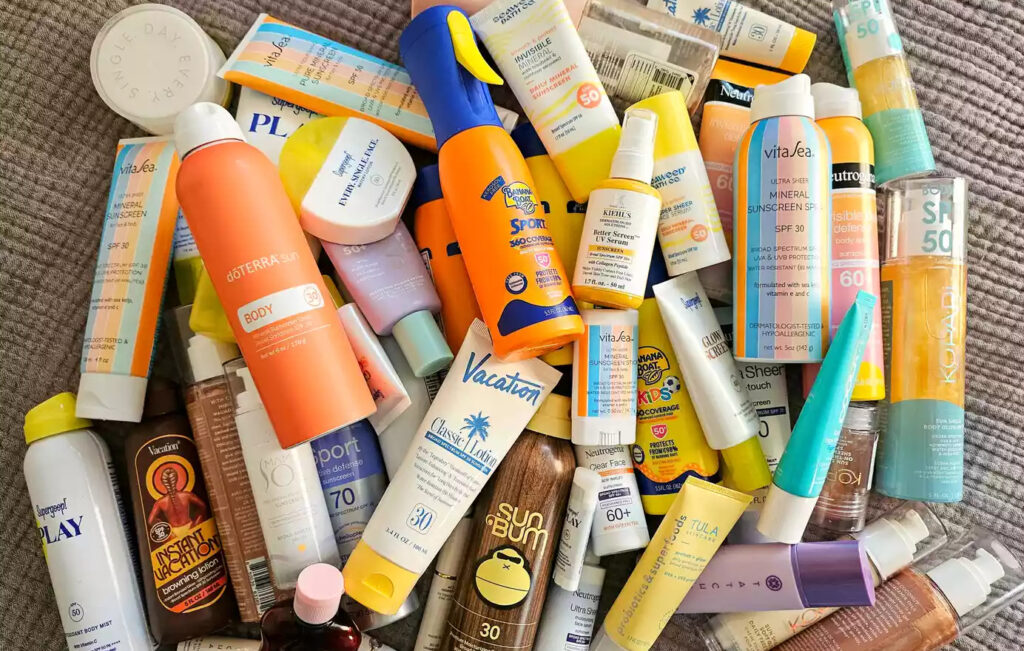
If sunscreen often stings your skin, start with a fragrance-free mineral sunscreen. If a white cast makes you apply less than you need, try a sheer chemical sunscreen or a tinted mineral formula that matches your complexion. Either type can protect you well. Look for broad-spectrum coverage, SPF 30 or higher, and water resistance. Then choose a finish you can comfortably wear at the recommended amount and reapply outdoors.
Mineral vs chemical sunscreen at a glance
| What to compare | Mineral sunscreen | Chemical sunscreen |
|---|---|---|
| Active ingredients | Zinc oxide, titanium dioxide, or both | Filters such as avobenzone, octisalate, or octocrylene |
| How it handles UV rays | Primarily absorbs UV radiation and also scatters or reflects some light | Absorbs UV radiation and dissipates the energy |
| Appearance on skin | Untinted formulas can leave a white cast, especially on darker skin tones | Many formulas dry clear, although shine and texture vary |
| When to try it | Other sunscreens sting, or you prefer a tinted cream | You want a transparent finish under makeup or around facial hair |
| What to check for swimming | Water resistance of 40 or 80 minutes on the U.S. label | The same 40- or 80-minute label claim |
How do mineral and chemical sunscreens work?
Mineral sunscreen, also called physical sunscreen, uses zinc oxide or titanium dioxide as its UV filters. It’s often described as a shield that reflects sunlight. In a laboratory study of mineral filters, researchers measured both absorption and reflection. The particles absorbed most of the UV radiation they blocked. A chalky finish shows how the product looks in visible light; it tells you little about its SPF.
Chemical sunscreens absorb UV rays through filters such as avobenzone and release the energy, largely as heat. To identify the type of sunscreen in your hand, read the active ingredients on its U.S. Drug Facts label. Zinc oxide as the only active indicates a mineral formula. If the list includes both zinc oxide and octocrylene, the product combines mineral and chemical filters. This is often called a hybrid sunscreen.
Which sunscreen should you try if your skin or eyes sting?
If applying sunscreen makes your skin sting or burn, the American Academy of Dermatology suggests trying one that uses only zinc oxide, titanium dioxide, or a combination of the two as its sunscreen filters. Look for a fragrance-free version if scented skin care has irritated you before.
If discomfort starts halfway through a run, notice whether sweat is carrying the product into your eyes. A cream or stick gives you more control over where you apply it. Keep sunscreen out of your eyes and wear UV-protective sunglasses. You can use a mineral cream on your face and a chemical lotion on your arms and legs if those textures work better in each area.
Which sunscreen leaves less white cast?
A clear chemical sunscreen is a practical starting point if untinted mineral formulas leave pale streaks along your hairline or collect in your beard. If you prefer mineral filters, compare tinted shades along your jaw in daylight. Use enough to see the finish you’ll actually wear. A tiny dab on your hand can look transparent even when a full application leaves a noticeable line between your face and neck.
Tint also matters if you’re concerned about dark spots. The AAD recommends tinted sunscreen with iron oxides for added protection against visible light. Look for iron oxides in the ingredient list and broad-spectrum protection on the package. Our guide to tinted sunscreen explains how pigments and UV filters contribute to the finished formula.
What matters most on the sunscreen label?
Broad spectrum means the product protects against both UVA and UVB rays. SPF primarily measures protection against sunburn, which is mainly caused by UVB. For swimming or heavy sweating, check the water-resistance time as well. In the U.S., products carrying this claim specify 40 or 80 minutes. The FDA’s sunscreen guide explains how to read these claims.
Product names can help you choose a texture. In Xiangxiang Daily’s private label sunscreen range, for example, oil-free face sunscreen describes a formulation feature, while sunscreen cream stick identifies a solid format. For either product, the active ingredient list is where you check the filters, and the protection claims are where you check suitability for outdoor use.
How much should you apply, and when?
Apply either type to dry skin about 15 minutes before going outdoors. Most adults need about one ounce of sunscreen to cover exposed skin when wearing a swimsuit. Include the ears, back of the neck, and tops of the feet. For daily facial use, spread an even layer before applying makeup.
Reapply at least every two hours outdoors. When swimming or sweating, follow the shorter interval on the product label, and reapply immediately after towel drying. For example, if you swim for 20 minutes and then dry off, apply a fresh layer even if the bottle says water resistant for 80 minutes. Shade, protective clothing, and a broad-brimmed hat provide additional protection against sun exposure and help reduce skin cancer risk.
How do you choose between two bottles with the same SPF?
Suppose a tinted mineral cream and a clear chemical lotion both offer broad-spectrum SPF 50. For a workday, compare how the tint looks in daylight, whether either formula stings, and how a second application sits over your morning skin care. For a beach day, check water resistance first. If only the lotion carries an 80-minute water-resistance claim, choose it for swimming and pack enough to reapply.
If you’re taking a bottle left over from last summer, check how to tell whether your sunscreen has expired before packing it for the beach.