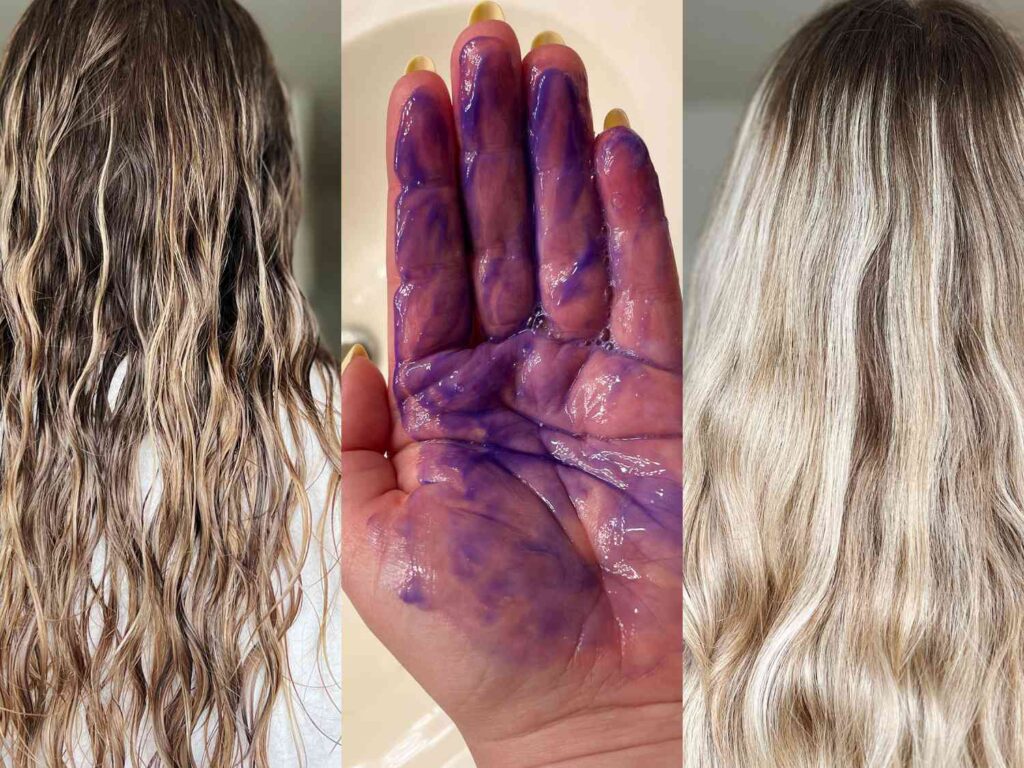
Shampoo matizador is a Spanish term for toning shampoo. It contains pigments that help reduce the appearance of unwanted tones in the hair. Purple shampoo is often used for yellow tones, while blue shampoo is commonly chosen for orange tones.
The right product depends on the color you want to correct. Look at your hair in natural daylight and identify the unwanted tone before choosing a formula.
What Does Shampoo Matizador Do?
A toning shampoo cleanses the hair while depositing pigment. That pigment can temporarily make certain warm tones look less noticeable.
For example, purple shampoo may make yellow tones in blonde, white, or gray hair look cooler. Blue shampoo is generally intended for orange tones, which can appear in lightened brown hair or darker blonde highlights.
The result depends on your starting color, hair condition, and the product. Shampoo matizador does not bleach hair, turn dark hair blonde, or cover gray roots like permanent dye.
Purple vs. Blue Shampoo: Which One Do You Need?
| Unwanted tone | Product to consider | Common situation |
|---|---|---|
| Yellow | Purple shampoo | Light blonde, white, gray, or pale highlighted hair |
| Orange | Blue shampoo | Lightened brown hair or darker blonde highlights |
| Both yellow and orange | Choose for the dominant tone or consult a colorist | Hair with mixed or unevenly lightened sections |
Focus on the tone you see rather than your overall hair color. Brown hair can have yellow highlights, while blonde hair can contain orange areas. You do not need to neutralize warmth if you prefer a golden or copper finish.
For examples of how results can differ, read our guide to purple shampoo on brown hair.
How to Use Shampoo Matizador
Follow the directions on your product. Pigment strength and recommended contact time vary between formulas.
- Test a small strand. This is especially useful if your hair is bleached, very light, or damaged.
- Wet your hair as directed. Most products are applied to wet hair, but check the label.
- Apply to the areas you want to tone. Distribute the product according to its instructions.
- Watch the time. Stay within the recommended range, then rinse thoroughly.
- Condition if needed. Use a conditioner suited to your hair, especially if the lengths feel dry.
Leaving the shampoo on longer than directed will not make it lighten your hair. It can increase the chance of an unwanted tint or uneven result.
Why Do the Ends Turn Purple Before the Roots?
Lightened or damaged ends may be more porous than newer hair near the roots. They can take up pigment differently and look more violet after the same application.
Starting color matters too. If the roots look orange and the ends look pale yellow, purple shampoo may have a more visible effect on the lighter ends.
If your ends turn violet, pause the toning product and return to your regular shampoo. The tint may fade with washing. Avoid harsh repeated washing, and ask a colorist for advice if the result is strong or uneven.
Why Is Your Toning Shampoo Not Working?
Before using more product, check the tone and the result you expect:
- The unwanted tone is orange: A purple formula mainly targets yellow; a blue formula may be more suitable for orange.
- Your hair is dark: The change may be subtle because toning shampoo does not lighten the underlying color.
- Your hair has uneven tones: Lighter or more porous areas may show the pigment more clearly.
- You want a major color change: Shampoo is mainly a maintenance product. A colorist can advise whether another service is needed.
Can You Use It on Gray Hair?
Yes. A purple toning shampoo may help reduce yellow-looking tones in white, silver, or gray strands. It will not restore the original hair color or cover gray roots.
Very light strands can show unwanted violet pigment, so follow the label and consider a strand test. Learn more in our guide to purple shampoo for gray hair.
How Often Should You Use Shampoo Matizador?
Start with the product’s directions or your colorist’s advice. Many people alternate a toning shampoo with their regular cleanser, then adjust based on how their hair looks and feels.
If your hair becomes too cool, dull, or violet, reduce use or pause the product. If your scalp feels irritated, stop using it and seek professional advice when needed.
Private Label Toning Shampoo for Brands
A useful product brief starts with the target hair shade and unwanted tone. Brands should also consider pigment appearance, intended contact time, cleansing feel, fragrance, and packaging.
Xiangxiang Daily offers private label shampoo manufacturing. Contact our team to discuss your toning shampoo concept and confirm available formula, packaging, and testing options.