Wondering when to use essence in skin care routine steps? For a typical hydrating essence, apply it after cleansing and toner, then follow with serum and moisturizer. In the morning, finish with sunscreen.
That order works for many lightweight essences, but product directions come first. If you use prescription skin medicine or an essence with exfoliating active ingredients, ask your healthcare professional or follow the specific label.
Where Does Essence Go in a Skin Care Routine?
A common order for a routine with a hydrating essence is:
- Cleanser.
- Toner, if you use one.
- Essence.
- Serum or other treatment, if suitable for your routine.
- Moisturizer.
- Sunscreen in the morning.
Not every step is necessary. You can use an essence after cleanser and go straight to moisturizer if you do not use toner or serum.
For prescription skin medicine, the order may be different. The American Academy of Dermatology advises applying medicine or treatment after cleansing. Follow your prescriber’s directions for your own routine.
What Is an Essence?
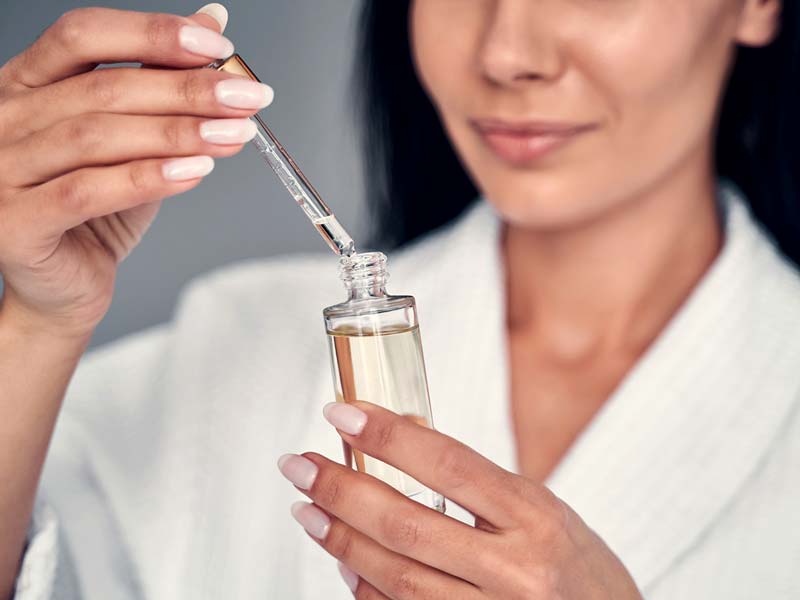
A facial essence is usually a lightweight skin care product designed to add hydration or deliver other ingredients. Many have a watery or slightly thicker texture and are left on the skin.
Essences can contain ingredients such as glycerin, hyaluronic acid, niacinamide, or botanical extracts. Their purpose depends on the complete formula, so read the label rather than assuming all essences work in the same way.
An essence may help prep the skin by adding a comfortable layer of hydration. It does not guarantee that every product applied afterward will work better.
How to Apply Essence
- Cleanse your face. Use a cleanser suited to your skin type, then rinse and gently pat your skin.
- Apply toner if you use one. Check its directions, especially if it contains exfoliating acids.
- Apply the essence. Place the recommended amount in clean hands or use the method stated on the label.
- Press it onto the skin. Spread the product evenly, gently patting rather than rubbing.
- Continue your routine. Follow with serum and moisturizer as appropriate, allowing each layer to settle.
Most leave-on essences do not need to be rinsed off. Check the package, however, because application methods can differ between products.
Should You Use Essence Before or After Serum?
A lightweight, watery essence is commonly applied before a thicker serum. This lets you layer products from a lighter texture to a richer one.
Texture is a useful guide, not a fixed rule. If your essence or serum has specific active ingredients or directions, follow the product instructions. A prescribed treatment may also need a different position in your routine.
Morning Skin Care Routine With Essence
A simple morning routine can be:
- Cleanser.
- Hydrating essence.
- Serum, if you use one.
- Moisturizer.
- Broad-spectrum sunscreen.
Use sunscreen according to its label and reapply as directed. An essence does not replace sunscreen, even if it contains antioxidants or other active ingredients.
If your moisturizer and sunscreen work well without an extra hydrating layer, an essence is optional. The goal is a routine your skin tolerates and that you can follow consistently.
Evening Skin Care Routine With Essence
At night, cleanse your face and apply your hydrating essence before serum or moisturizer. If you wear makeup or sunscreen, make sure your cleansing routine removes them gently.
If you use a prescription treatment, retinoid, or exfoliating acid, follow its instructions. Some treatments are intended for dry skin or require a specific order. When in doubt, ask your dermatologist rather than adding several new layers at once.
Essence vs. Toner vs. Serum
Essence vs. Toner
Both toner and essence can have a watery texture. Some toners focus on hydration, while others contain exfoliating ingredients. Essences are often marketed for hydration and skin conditioning.
The categories overlap, so the label alone does not tell you everything. If your toner and essence provide the same benefit and both feel good on your skin, you may choose one rather than using both.
Essence vs. Serum
A serum is often used for a particular skin concern, such as the appearance of dark spots or dryness. An essence may be lighter and focus on hydration, but some essences also contain active ingredients.
Choose based on the formula and your needs. Neither product is automatically stronger or better simply because it is called a serum or an essence.
Essence vs. Moisturizer
A hydrating essence can add water-based hydration, while a moisturizer is designed to help maintain skin moisture. If you have dry skin, you may still need moisturizer after essence.
Some lightweight moisturizers may be enough for oily skin. Pay attention to how your skin feels and choose a routine that remains comfortable throughout the day.
How to Choose an Essence for Your Skin Type
Dry Skin
Look for a hydrating essence with ingredients such as glycerin or hyaluronic acid. Follow with a moisturizer suitable for dry skin, especially if your face feels tight after cleansing.
Oily or Combination Skin
A lightweight essence may add hydration without feeling heavy. Apply a small amount first and check whether you still need a separate serum or moisturizer for each area of your face.
Sensitive Skin
Consider a fragrance-free formula and introduce it slowly. Even a product described as gentle can cause irritation for some people, so review the ingredients and test new products before regular use.
Skin With Specific Concerns
Some essences include exfoliating acids, retinoids, or other active ingredients. These products are not always interchangeable with a simple hydration essence. Follow their individual directions and avoid combining too many potentially irritating products at once.
Do You Need Both Essence and Serum?
No. You can use both if they serve different purposes and your skin tolerates them. For example, a hydrating essence may be followed by a serum chosen for a separate concern.
You can also use just one. If your current serum and moisturizer already meet your needs, adding an essence is a personal choice rather than a required step.
Common Essence Mistakes
- Using too many layers: Several products with similar ingredients may add little benefit and can make a routine harder to follow.
- Ignoring active ingredients: An exfoliating essence should be used according to its label, not treated as a simple hydrating liquid.
- Skipping moisturizer: If your skin feels dry, an essence alone may not provide enough moisture support.
- Replacing sunscreen: Essence does not provide reliable sun protection unless it is specifically labeled and used as sunscreen.
- Applying over irritated skin: Stop a product that causes burning, a rash, or ongoing discomfort, and seek advice if needed.
Frequently Asked Questions
When should I use essence in my skin care routine?
For a typical hydrating essence, use it after cleansing and toner, if you use one, and before serum and moisturizer. Follow your product’s directions and any medical advice.
Can I use essence without toner?
Yes. Apply the essence after cleansing, then continue with your serum or moisturizer. Toner is an optional step.
Can I use essence morning and night?
Many hydrating essences can be used in the morning and evening, but the appropriate frequency depends on the formula. Check the label, particularly when it contains exfoliating ingredients.
Should essence go on damp or dry skin?
Follow the product directions. Some hydrating essences are applied to slightly damp skin, while products containing certain active ingredients may specify dry skin.
A Facial Care Manufacturer’s View
Essence, toner, and serum names can overlap, so brands should define the product’s texture, ingredients, intended use, and application instructions clearly. The finished formula and packaging should also be assessed for stability and suitability in the target market.
Xiangxiang Daily is a facial serum manufacturer supporting brands with skin care formulation and packaging projects.