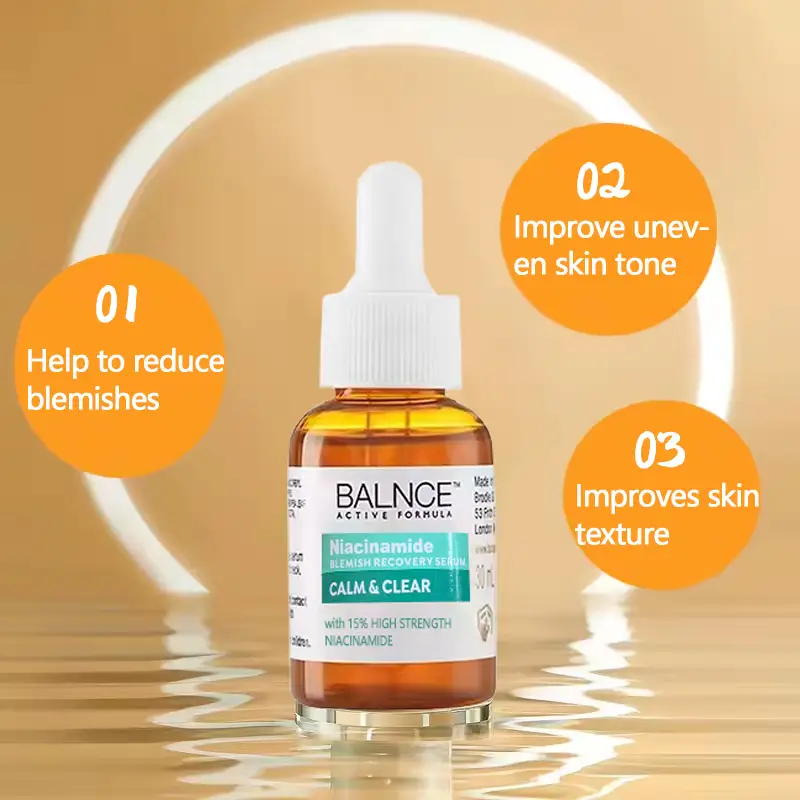
Niacinamide helps skin hold on to moisture and can make dark spots, fine lines, and uneven skin tone less noticeable. It can also reduce facial shine. If your cheeks feel tight after washing, start with a moisturizer that contains niacinamide. If you like your current moisturizer and want to fade the brown mark a blemish left behind, a serum lets you add niacinamide without replacing it.
What is niacinamide, and how does it help dry skin?
Niacinamide is a form of vitamin B3, also called nicotinamide. In skin care, it appears in everything from cleansers to body lotions. The studies behind several of its best-known benefits used products that stayed on the skin. When choosing between a face wash and a cream specifically for these benefits, a leave-on cream is the closer match to the research.
One way niacinamide helps strengthen the skin barrier is by supporting the production of ceramides. These fats fill spaces between cells in the outer layer of skin and slow the escape of water. In a study of skin barrier lipids, researchers found that cultured skin cells made more ceramides when exposed to niacinamide. They also measured less water loss after applying it to dry skin.
That distinction matters when your face still feels tight after a hydrating serum. An ingredient such as hyaluronic acid attracts water. A cream also supplies ingredients that soften rough patches and help by locking in moisture. If dryness is your main concern, try changing the moisturizer step before buying a stronger serum. For dryness over larger areas, a niacinamide body lotion is easier to spread over arms and legs.
Can niacinamide fade dark spots left by breakouts?
Topical niacinamide can help a flat brown mark gradually look closer in color to the surrounding skin. Laboratory research suggests that niacinamide slows the transfer of pigment from the cells that produce it to neighboring skin cells. In the clinical studies on pigmentation, researchers measured an improvement in dark spots after four weeks compared with the base formula alone.
First, look at the mark in even daylight. If it is flat and brown, color is a useful outcome to track. If a spot also casts a small shadow because the skin is indented, fading the pigment can improve its color while the depression remains. Photograph one mark before you start, then compare it in the same light about a month later. A change in bathroom lighting can hide or exaggerate the very difference you are trying to see.
During the day, wear broad-spectrum SPF 30 or higher. Visible light can contribute to dark spots, especially in darker skin tones. A tinted sunscreen containing iron oxides adds protection against visible light. Our guide to how tinted sunscreen works explains what to look for on the label.
Does niacinamide control oil or shrink pores?
It can reduce surface oil. A study of a 2% niacinamide moisturizer illustrates why an “oil control” claim can mean two things. In the Japanese trial, the rate at which skin produced oil fell after two and four weeks. In the U.S. trial, participants had less oil sitting on the skin after six weeks, although their measured rate of oil production did not change significantly.
At home, the useful question is whether you still want a blotting sheet by lunchtime. Check the same area of your forehead or nose at the same time of day, before touching up makeup. Pores can look less prominent when skin appears smoother. The oil study measured sebum, however, and offers no evidence that the openings themselves permanently shrink.
What about fine lines, wrinkles, and redness?
One of the more informative anti-aging studies used the same moisturizer on both sides of the face, with 5% niacinamide added to just one side. In this 12-week trial of 50 women aged 40 to 60, the niacinamide side showed a greater improvement in fine lines and wrinkles, uneven pigmentation, and blotchy redness. Using the same base helped researchers distinguish the ingredient’s contribution from the smoothing effect of applying any moisturizer.
If you are tracking fine lines around your mouth, compare photos taken with your face relaxed and before applying your morning products. A cream can soften the look of dry lines on the first day. A change that remains visible under the same conditions several weeks later is a more useful measure of progress.
Niacinamide can also help reduce inflammation and calm redness. The cause matters. Blotchiness that was present before you started is something you can track over time. New itching or swelling that appears where you applied the product calls for a different response. Wash it off and stop using that formula.
What niacinamide concentration should you choose?
For a first purchase, 2% to 5% is a sensible range when the brand lists a percentage. The best reason to choose a strength is that it has been studied for the concern you care about. A 2% moisturizer has evidence for facial oiliness. A 5% moisturizer has evidence for visible fine lines. Those studies do not establish that a 10% serum works twice as fast as a 5% formula.
When comparing facial creams and serums, look at the product you would actually replace. A lightweight niacinamide serum fits before your usual moisturizer. If you prefer one leave-on step, Xiangxiang Daily’s Men’s Daily Moisturizer lists niacinamide, hyaluronic acid, and ceramide NP in the same formula. The serum or cream format tells you where the product fits in your routine. For the percentage, look for a number the brand gives for that specific formula.
Read percentage claims carefully when several ingredients appear together on the front label. A bottle labeled “5% brightening complex” gives the percentage for the blend. You would need a separate figure to know how much of that blend is niacinamide. Likewise, layering a 2% serum under a 5% cream does not create a 7% formula. Each percentage describes the concentration in its own bottle.
Can you use niacinamide with hyaluronic acid?
Yes. The two ingredients address different aspects of hydration and can go into the same skin care routine. If you already use a hyaluronic acid serum under a niacinamide moisturizer, you already have the pairing. Adding another niacinamide serum would repeat an ingredient you are using.
For morning use, apply a niacinamide serum after cleansing, follow with moisturizer, then finish with sunscreen. At night, use the serum before your night cream. If your sunscreen or makeup pills when you layer two serums, try moving one serum to the evening. If you also use a hydrating essence, our guide shows where an essence fits in your routine.
How should sensitive skin test a new niacinamide product?
Test the finished skin care product, even if you have used niacinamide before. Two moisturizers can share a featured ingredient and contain different fragrances, preservatives, or other actives. When treating skin concerns with several products, introduce only one new formula at a time. If you react to a new cream, the timing can help identify the product responsible. It cannot tell you which ingredient caused the reaction.
For an at-home patch test, the American Academy of Dermatology recommends applying the product to a quarter-sized area on the underside of your arm or inside your elbow twice daily for seven to ten days. Use your usual amount and leave a cream or serum on as directed. Choose a spot where clothing is unlikely to rub it away.
Watch for side effects such as itching, redness, or swelling. If the test area reacts, gently wash it and discontinue the product. If you repeatedly react to different formulas, keep their ingredient lists. A dermatologist can compare them and use medical patch testing to investigate a possible allergic reaction.
How long should you give niacinamide to work?
Pick one concern before you start. For midday shine, check at weeks two and four, then again at week six. For a flat dark spot, make your first photo comparison around week four. For fine lines, give a well-tolerated routine about twelve weeks before judging the result. Keep the rest of your routine consistent during the comparison. These checkpoints come from different studies, each measuring a different outcome. If the product leaves your cheeks comfortable and your original goal was relief from dryness, that is already a useful reason to keep it in your routine.