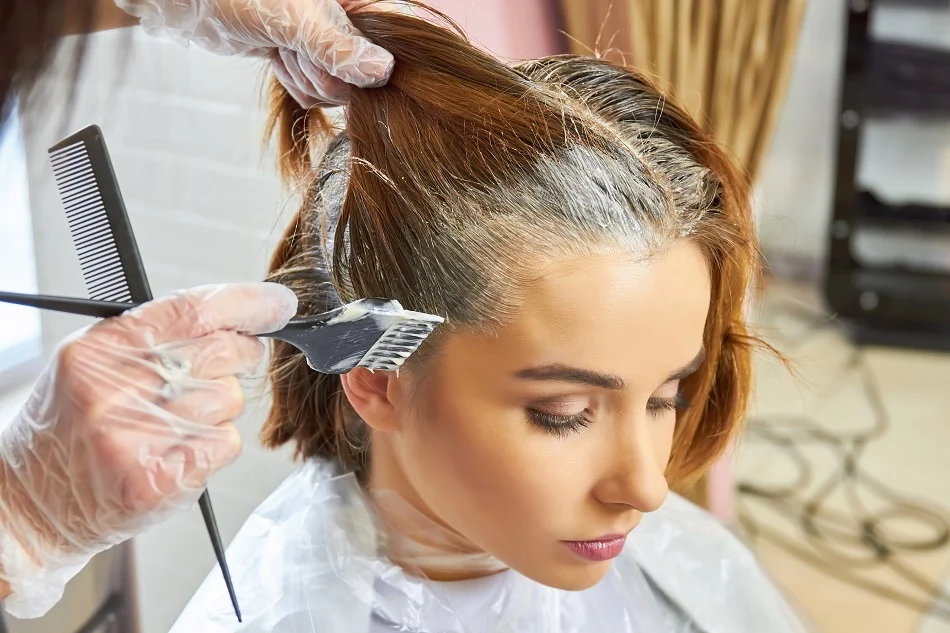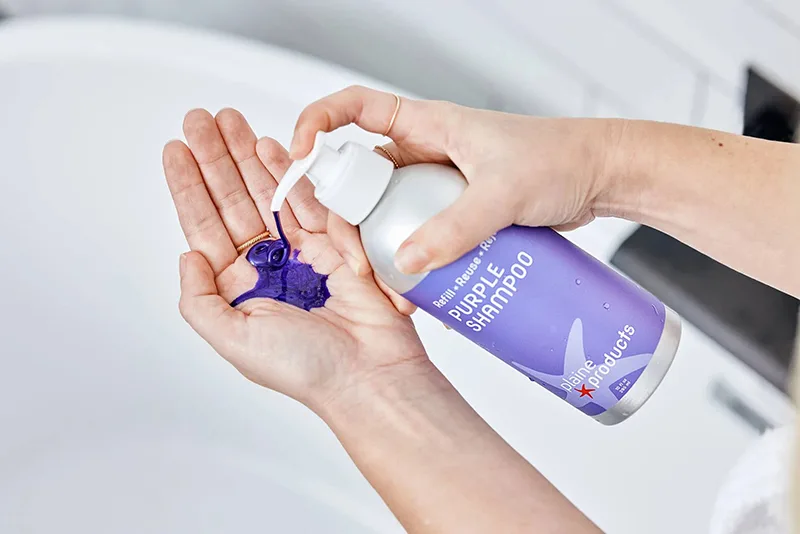
Purple shampoo helps reduce the appearance of unwanted yellow tones in light-colored hair. It contains violet pigments that temporarily make blonde, gray, silver, or bleached hair look cooler and less brassy.
It does not bleach your hair or make it permanently lighter. Think of it as a way to adjust the tone you already have, not as a replacement for hair dye or a salon color service.
How Does Purple Shampoo Work?
Purple and yellow sit opposite each other on the color wheel. When a purple shampoo deposits a small amount of violet pigment on yellow-looking hair, the two colors visually balance each other. As a result, the hair can appear less yellow and have cooler tones.
Imagine a pale blonde that has started to look warmer between salon visits. Purple shampoo may soften that yellow appearance and bring the color closer to a cool or neutral blonde.
The effect is temporary. It can fade with washing, which is why many people use purple shampoo occasionally as part of their color-care routine.
Who Can Use Purple Shampoo?
Purple shampoo works best when the unwanted tone you want to correct is yellow. It can be useful for:
- Blonde hair: Natural or colored blonde hair can develop yellow-looking tones over time.
- Bleached hair: Lightened hair may reveal warmth as salon toner fades.
- Gray, silver, or white hair: These shades can develop a yellow cast that some people prefer to tone down.
- Highlighted hair: Purple shampoo can affect the lighter pieces that show yellow warmth.
If your hair is naturally warm blonde or golden and you like that shade, you may not need it. Purple shampoo is most useful when you actually want to reduce yellow.
For gray and silver shades, our guide to purple shampoo for gray hair explains how to choose and use a suitable product.
Does Purple Shampoo Work on Brown Hair?
It can help if brown hair has blonde highlights or lightened sections that look yellow. The purple pigment acts mainly on those lighter areas; it will not turn dark brown hair blonde.
If your brown hair looks more orange than yellow, a blue shampoo may be a better match. Blue generally targets orange tones, while purple primarily targets yellow tones. Some products combine pigments, so check what the formula is designed to address.
For more examples, see our guide to using purple shampoo on brown hair.
What Does Purple Shampoo Do to Brassy Hair?
“Brassy” describes unwanted warm tones, but those tones are not always the same color. Blonde hair may look yellow, while darker lightened hair can look orange.
Check your hair in natural light before choosing a toning product:
- Mostly yellow: Purple shampoo may help.
- Mostly orange: A blue-toning product may be more suitable.
- Uneven yellow and orange: Ask a colorist for advice, especially if your hair has recently been lightened.
Purple shampoo changes the appearance of brassy tones by adding pigment. It does not remove the underlying hair color.
How to Use Purple Shampoo
Start with the directions on your bottle. Formulas vary in pigment strength and recommended contact time.
- Wet your hair thoroughly, unless the product directions say otherwise.
- Apply the shampoo and distribute it evenly through the areas you want to tone.
- Leave it on for the time recommended on the label. For your first use, choose the shorter end of the stated range.
- Rinse thoroughly.
- Follow with conditioner, focusing on the mid-lengths and ends.
Very light or porous hair can pick up pigment quickly. If you are unsure how your hair will respond, test a small, less visible section first.
How Often Should You Use Purple Shampoo?
Start with about once a week, or follow the product instructions if they recommend something different. Use your regular shampoo for other washes, then adjust based on how your color and hair feel.
If the yellow tone is under control, you may need it less often. If your hair starts to look dull, grayish, or slightly purple, take a break. More frequent use is not always the best route to a better color.
Will Purple Shampoo Damage or Dry Out Hair?
Purple pigment does not bleach hair, but a particular shampoo can still leave hair feeling dry. Bleached and color-treated hair may already be more prone to dryness, and frequent washing can add to that feeling.
If your hair feels rough after use, try using the shampoo less often and follow it with a conditioner suited to your hair. Avoid leaving the product on longer than directed in the hope of getting a faster result.
What If Purple Shampoo Turns Your Hair Purple?
A violet or grayish tint can appear when too much pigment builds up, especially on very light or porous sections. Pause the purple shampoo and return to your regular shampoo. The unwanted tint will often fade with washing.
If the color is noticeably uneven or does not fade, speak with your colorist. Avoid repeated deep-cleansing washes on already fragile hair, as they may leave it feeling drier.
Does Purple Shampoo Make Hair Lighter?
No. Purple shampoo does not lift or bleach your hair. By reducing the appearance of yellow, it can make a blonde or silver shade look brighter or cooler, but the underlying level of lightness stays the same.
Results also depend on your starting color, hair condition, and the product. Our guide to purple shampoo before-and-after results explains what changes to expect.
Why Do Purple Shampoos Give Different Results?
Not every purple shampoo deposits pigment in the same way. The amount of pigment, cleansing ingredients, conditioning agents, and recommended contact time all affect the user experience.
From a manufacturing perspective, the goal is to balance toning with a formula that cleans and rinses comfortably. A darker-looking product in the bottle is not, by itself, proof that it is the right strength for every hair type.
Choose a product for your current shade and follow its instructions. If your hair has been recently bleached or has several different tones, your colorist can help you decide when to start using it.