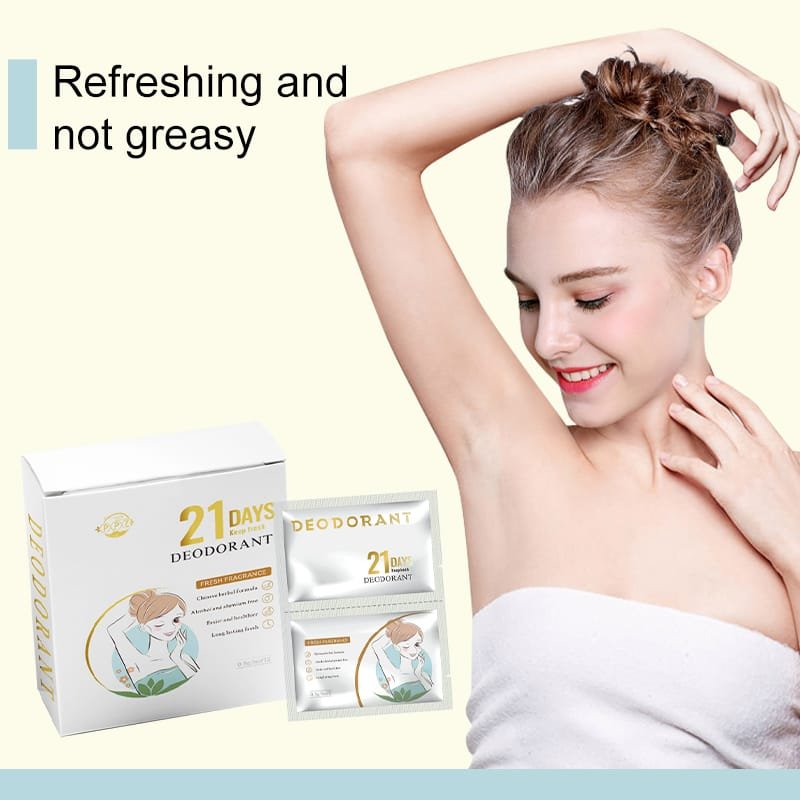
Aluminum free deodorant is an underarm care product made without aluminum-based antiperspirant ingredients. It is designed to help control underarm odor and keep skin feeling fresh.
The main idea is simple. Deodorant targets odor. Antiperspirant targets sweat. An aluminum free formula usually focuses on odor protection, dry feel, scent, and skin comfort.
This topic matters to shoppers. It also matters to body care brands. Many buyers now compare underarm care products by formula type, ingredient story, scent, texture, and packaging.
For B2B buyers, aluminum free deodorant can be a useful product direction. A personal care manufacturer can help brands plan the right formula, format, packaging, claim language, and body care product line.
1) What It Means
Aluminum free deodorant means the formula does not use aluminum salts as the main sweat-control active. Instead, it focuses on odor control and freshness.
Underarm odor is linked to sweat, skin bacteria, clothing, heat, and daily activity. The product does not need to block sweat to help users feel fresh.
A well-designed aluminum free formula can support daily odor protection with odor-neutralizing ingredients, absorbent powders, fresh scent, and skin-comfort ingredients.
| Product Type | Main Goal | Common User Need | Product Story |
|---|---|---|---|
| Aluminum Free Deodorant | Helps control odor | Fresh feel and gentle underarm care | Odor protection, skin comfort, clean formula story |
| Antiperspirant | Helps reduce sweat | Less wetness | Sweat control and dryness |
For brands, the difference should be clear on the product page. Do not confuse deodorant claims with antiperspirant claims unless the formula and local rules support that wording.
Xiangxiang Daily supports this category through deodorant manufacturer services for body care brands, distributors, online sellers, and wholesale buyers.
2) How It Works
Aluminum free deodorant works in a few simple ways. It can help reduce odor, absorb moisture, add scent, and improve the feel of underarm skin.
Odor control: Ingredients such as zinc ricinoleate, triethyl citrate, magnesium hydroxide, or other odor-control systems can support a fresh underarm feel.
Dry feel: Absorbent powders such as tapioca starch, arrowroot powder, corn starch, silica, or kaolin can help the product feel smoother and less wet.
Fresh scent: Fragrance can help build a clear product identity. Clean, floral, citrus, powdery, coconut, musk, and herbal scents are common choices.
Skin comfort: Aloe vera, panthenol, glycerin, allantoin, oat extract, shea butter, and light oils can support a softer underarm care story.
Texture design: The formula should glide well and dry down nicely. A sticky, grainy, or greasy product may reduce repeat purchase.
This is why formula balance is important. Strong odor protection is useful, but the product still needs to feel good on skin.
3) Ingredients Formats and Skin Feel
Ingredient choice should match the product format. A stick, cream, roll-on, spray, and balm do not need the same formula structure.
For stick deodorant: Waxes, butters, oils, powders, and odor-control ingredients can create a smooth solid product. The stick should glide without dragging.
For roll-on deodorant: A liquid or gel formula can spread fast. It should dry quickly and avoid a sticky finish.
For cream deodorant: A soft cream texture can support natural body care, sensitive skin positioning, or premium underarm care.
For spray deodorant: A light spray can feel fresh and fast. It may work well for hot climates, sports use, travel, and active routines.
For balm deodorant: A balm texture can feel soft and smooth. It can work well for brands with a natural or spa-style image.
For sensitive skin positioning, brands should be careful with fragrance level, baking soda level, and cooling ingredients. Some shoppers may prefer a mild scent or fragrance-free option.
For stronger odor protection, an aluminum free formula can use a balanced blend of odor-neutralizing ingredients, absorbent powders, and a clean dry-down feel.
As a private label body care manufacturer, Xiangxiang Daily can help brands match ingredient stories with body care texture, scent, packaging, and market needs.
4) Aluminum Free Deodorant vs Antiperspirant
Aluminum free deodorant and antiperspirant are often compared. They are not the same product type.
Antiperspirants are usually made to help reduce sweat. Many antiperspirant products use aluminum salts for this purpose.
Aluminum free deodorants are usually made to help control odor. They may also help the underarm feel dry, smooth, and fresh. But they are not mainly designed to block sweat.
| Comparison Point | Aluminum Free Deodorant | Antiperspirant |
|---|---|---|
| Main Focus | Odor protection | Sweat reduction |
| Common Formula Story | Freshness, skin comfort, clean body care | Dryness and wetness control |
| Common Formats | Stick, roll-on, cream, spray, balm | Stick, roll-on, spray, gel |
| B2B Positioning | Natural, gentle, lifestyle, fragrance, body care set | Dry feel, sweat control, active use |
For brands, the product page should explain the difference in simple language. This helps buyers and consumers understand what the product can and cannot do.
Safer cosmetic wording includes “helps control underarm odor,” “provides daily odor protection,” and “leaves underarms feeling fresh.” Avoid strong medical or unsupported treatment claims.
5) Product Ideas and Market Fit
Aluminum free deodorant can fit many body care lines. The best idea depends on target market, price level, scent direction, and sales channel.
Daily Fresh Stick: A simple underarm care product for supermarkets, pharmacies, and online shops. It should glide well and feel clean.
Sensitive Skin Roll-On: A mild formula with low scent, smooth spread, and skin-comfort ingredients.
Natural Cream Deodorant: A cream product with shea butter, coconut oil, absorbent powders, and soft scent.
Odor Protection Spray: A fresh spray format for hot climates, active users, travel, and gym routines.
Bright Underarm Care Stick: A product with fresh feel and even-looking underarm skin language. Niacinamide or licorice extract can support this product story when suitable.
Fragrance Layering Deodorant: A scented product made to pair with body mist, body lotion, or perfume.
Travel Mini Deodorant: A small size for beauty boxes, gift sets, hotels, online bundles, and trial packs.
For the Philippines, light texture, fast dry-down, fresh scent, and humid-weather use may be useful angles.
For Nigeria, long-lasting freshness, rich scent, cream texture, and skin-comfort stories may work well. Body care sets with lotion, body wash, and deodorant can also support retail sales.
Useful product pairings include body wash manufacturer support for shower routines, private label body lotion manufacturer support for body care sets, and body scrub manufacturer support for smooth skin routines.
6) Manufacturing Quality and Sampling
For B2B projects, aluminum free deodorant should start with a clear formula goal. The product should match the target user, market, and packaging.
Formula checks: The product should have stable texture, pleasant scent, smooth application, good dry-down, and suitable odor protection.
Packaging checks: Twist-up sticks should move smoothly. Roll-on balls should not leak. Spray bottles should have even mist. Cream jars and tubes should close well.
Hot climate checks: Stick and balm products may soften in heat. Cream products may separate. Roll-on products may leak. These risks should be checked before export.
Skin feel checks: The product should not feel too sticky, too oily, too powdery, or too rough. A smooth finish can help repeat purchase.
Claim checks: Brands should use safe cosmetic wording. Good phrases include “helps control underarm odor,” “daily freshness,” “dry feel,” “skin comfort,” and “odor protection.”
Before bulk production, brands can review cosmetic quality control needs such as stability, packaging fit, leakage, label adhesion, carton strength, and product appearance.
If your brand needs full product planning, OEM and ODM personal care services can help connect formula direction, scent, packaging, samples, and production needs.
For larger orders, cosmetics manufacturing support can also help with filling, packaging, quality review, and export preparation.
Before sampling, brands should prepare a clear product brief.
- Do you want stick, roll-on, cream, spray, balm, gel, or mini format?
- Is the product for daily freshness, odor protection, sensitive skin, natural body care, or fragrance layering?
- Should the formula use baking soda, magnesium hydroxide, zinc ricinoleate, absorbent powders, or plant extracts?
- Do you prefer fresh, floral, fruity, powdery, coconut, herbal, or fragrance-free scent?
- Which market and sales channel will the product target first?
- Do you need retail packaging, wholesale packaging, or gift set packaging?
Conclusion
Aluminum free deodorant is an underarm care product that focuses on odor protection, freshness, skin comfort, and daily use. It does not rely on aluminum-based antiperspirant ingredients as the main sweat-control system.
For consumers, the choice depends on personal preference. Some want odor control and a clean underarm care story. Others may prefer antiperspirant products for sweat reduction.
For body care brands, this category offers many product directions. Stick, roll-on, cream, spray, balm, and mini formats can serve different markets and sales channels.
If you are planning a private label underarm care line, Xiangxiang Daily can help develop aluminum free deodorant products with suitable formula, scent, packaging, claim language, and body care product pairing.
For custom production, our private label deodorant manufacturer service can support retail brands, supermarkets, online sellers, distributors, salons, spas, and wholesale buyers.
FAQ — Aluminum Free Deodorant
Q1: What is aluminum free deodorant?
Aluminum free deodorant is an underarm care product made without aluminum-based antiperspirant ingredients. It is mainly used for odor protection and freshness.
Q2: What is an aluminum free formula?
An aluminum free formula does not use aluminum salts as the main sweat-control active. In deodorant products, it usually focuses on odor control, fresh scent, dry feel, and skin comfort.
Q3: Does aluminum free deodorant stop sweat?
It is not mainly designed to stop sweat. It focuses on odor control, fresh scent, dry feel, and underarm comfort.
Q4: What ingredients are common in aluminum free deodorant?
Common ingredients include zinc ricinoleate, triethyl citrate, magnesium hydroxide, tapioca starch, arrowroot powder, silica, shea butter, aloe vera, panthenol, and fragrance.
Q5: Is aluminum free deodorant the same as natural deodorant?
Not always. Many natural deodorant products are aluminum free, but an aluminum free formula is not always fully natural. The full ingredient list matters.
Q6: What formats can brands develop?
Brands can develop stick, roll-on, cream, spray, balm, gel, mini, or gift set formats.
Q7: Can aluminum free deodorant be made for sensitive skin?
Yes. The formula can use a mild scent level, skin-comfort ingredients, and careful powder or baking soda levels.
Q8: What claims are safer for this product?
Safer wording includes “helps control underarm odor,” “provides daily odor protection,” “leaves underarms feeling fresh,” and “supports underarm care routines.”
Q9: What should brands prepare before contacting a manufacturer?
Prepare the target market, product format, scent direction, texture goal, ingredient story, packaging idea, claim direction, and sales channel.