Salt scrub vs sugar scrub is a common question in body care. Both products help exfoliate the skin. But they do not feel the same.
A salt-based scrub usually feels stronger and more mineral-like. A sugar-based scrub usually feels softer and more gentle. The best choice depends on skin type, texture goal, market, and product position.
This topic is useful for shoppers who want smoother skin. It is also useful for body care brands that want to build a clear exfoliating product line.
A personal care manufacturer can help brands choose the right scrub base, particle size, oil blend, scent, packaging, and claim language.
1) Main Difference
The main difference is the exfoliating particle.
Salt-based products use salt crystals. Sugar-based products use sugar crystals. This changes the texture, skin feel, and product story.
Salt can feel stronger on the skin. It is often used for spa-style body care, foot care, rough areas, and deep exfoliation concepts.
Sugar can feel softer. It is often used for gentle body polish, glow care, sensitive skin positioning, and regular body care routines.
| Product Type | Texture | Best For | Common Positioning |
|---|---|---|---|
| Salt-Based Scrub | Stronger, mineral, grainy | Rough areas, spa care, feet, elbows, knees | Deep exfoliation, mineral care, spa body scrub |
| Sugar-Based Scrub | Softer, smoother, more gentle | Regular body care, glow care, dry skin routines | Gentle exfoliation, soft skin, body polish |
For brands, this difference matters. A mineral scrub can support a stronger spa story. A sugar body polish can support a softer daily body care story.
Xiangxiang Daily supports this category through body scrub manufacturer services for retail brands, beauty stores, spas, e-commerce sellers, distributors, and wholesale buyers.
2) Which One Is Better for Your Skin
There is no single best choice for every user. The best scrub depends on skin type, use area, and use frequency.
Salt-based scrub: Better for rougher body areas. It can work well for feet, elbows, knees, and spa massage routines. It may feel too strong for very sensitive skin.
Sugar-based scrub: Better for softer exfoliation. It can work well for regular body care, dry skin routines, and glow care products.
For sensitive skin: Fine sugar, soft particles, creamy texture, and mild fragrance may be better choices.
For rough skin: Salt, larger particles, or a stronger scrub texture may be useful. The formula should still feel smooth and safe.
For dry skin: A scrub with oils, butters, glycerin, or creamy emollients can help the skin feel softer after rinsing.
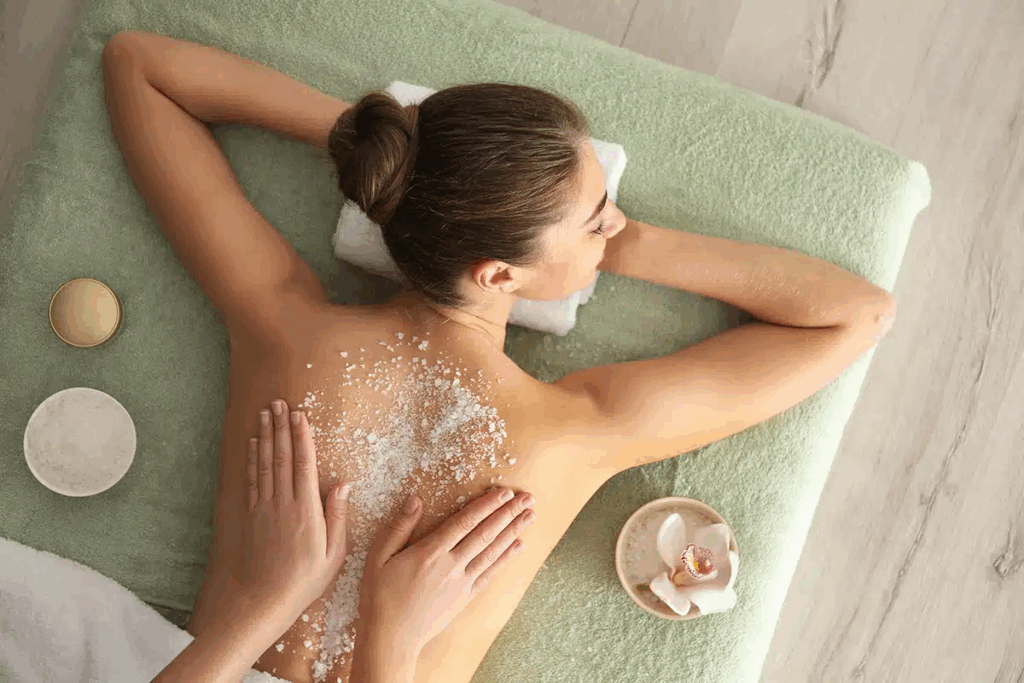
Consumers should usually use body scrub on damp skin. They can massage it in gentle circular motions and rinse it off well.
For brands, this usage story is important. It helps buyers explain the product clearly on labels, product pages, and social media content.
3) Formula Texture and Ingredients
A body scrub formula is not only about salt or sugar. The base, oils, scent, color, and particle size all affect the final product.
For mineral scrub formulas: Sea salt, mineral salt, Epsom salt, fine salt, coconut oil, sunflower oil, jojoba oil, shea butter, essential oils, and fragrance can support a spa-style product.
For sugar body polish formulas: White sugar, brown sugar, fine sugar crystals, glycerin, shea butter, coconut oil, almond oil, fruit extracts, vanilla scent, and botanical oils can support a gentle body polish story.
For exfoliation: Salt crystals, sugar crystals, walnut shell powder, rice powder, pumice, or biodegradable beads can help remove dead skin cells from the skin surface.
For soft skin feel: Shea butter, cocoa butter, sunflower oil, coconut oil, jojoba oil, glycerin, aloe vera, and vitamin-style ingredients can improve after-feel.
For scent stories: Vanilla, coconut, lavender, rose, citrus, coffee, honey, mango, tropical fruit, mint, and clean musk can create clear shelf appeal.
For spa products: Sea salt, essential oils, herbal extracts, massage oil bases, and mineral positioning can create a stronger spa image.
The particle size should match the product goal. A rough scrub may feel effective, but it can also feel too harsh. A very soft scrub may feel gentle, but some users may want a stronger exfoliating feel.
As a private label body care manufacturer, Xiangxiang Daily can help brands match scrub texture, oil base, scent, packaging, and market needs.
4) Product Ideas for Body Care Brands
Both exfoliating formats can become strong products in a body care line. The best concept depends on the target customer and sales channel.
Spa Sea Salt Scrub: A mineral-style scrub for spas, salons, hotels, and premium retail. It can use sea salt, essential oils, and a relaxing scent.
Gentle Sugar Body Polish: A softer exfoliating body scrub for regular use. It can target smooth skin, glow care, and dry skin routines.
Coconut Sugar Scrub: A tropical scent product for e-commerce, beauty stores, and gift sets. It can pair well with body lotion and body mist.
Coffee Sugar Scrub: A popular body scrub concept with a strong scent story and visual texture. It can support online video content.
Bright Body Scrub: A scrub with glow care positioning. Niacinamide, fruit extracts, or vitamin-style ingredients can support even-looking skin language when suitable.
Foot Salt Scrub: A stronger scrub for rough feet and heel care. This can work well in spa and salon channels.
Mini Scrub Set: A set with several scents or textures. It can work for beauty boxes, gift sets, travel kits, and online bundles.
Body scrub products pair well with body wash manufacturer support for cleansing routines, private label body lotion manufacturer support for after-shower care, and private label body oil manufacturer support for glow and massage products.
5) Packaging Market Fit and Claims
Packaging should match the scrub texture. Body scrub products can be thick, oily, grainy, or creamy, so the packaging must be easy to use.
Jar packaging: Common for thicker scrub formulas. It shows texture well and works for spa-style products.
Tube packaging: Cleaner and easier to use in the shower. It works better for creamy or softer scrub formulas.
Sachet packaging: Useful for sample packs, hotel use, trial kits, and single-use spa treatments.
Mini jars: Good for gift sets, travel kits, beauty boxes, and online bundles.
Large salon size: Useful for spas, salons, hotels, and backbar use.
Market fit also matters. In the Philippines, light oils, tropical scents, and non-greasy rinse-off feel may work well.
In Nigeria, rich scrub textures, shea butter, cocoa butter, bright body care, and dry skin routines may have stronger appeal.
For beauty retailers, a scrub can be sold with body wash, lotion, body butter, and body mist. A related article, body butter vs body lotion for dry skin, can support the wider body care routine cluster.
Safer claim language includes:
- Helps remove dead skin cells.
- Leaves skin feeling soft and smooth.
- Supports a smoother skin feel.
- Helps polish rough body areas.
- Gentle exfoliating body scrub for regular care.
- Rich texture for spa body care routines.
- Helps improve the look of dull skin.
Brands should avoid medical or aggressive skin treatment claims. Cosmetic wording should focus on skin feel, smoothness, glow, softness, and routine use.
6) Manufacturing Quality and Sampling
For B2B projects, body scrub development should start with a clear texture goal. The product should feel effective but still pleasant on skin.
Formula checks: The scrub should have stable texture, even particle spread, good scent, smooth application, and suitable rinse-off feel.
Particle checks: Salt crystals, sugar crystals, or other exfoliating particles should not feel too sharp. The particle size should match the target skin area.
Oil base checks: The oil phase should not separate too much. The product should not feel too greasy after rinsing.
Packaging checks: Jars, tubes, caps, seals, labels, and cartons should be tested before shipment.
Hot climate checks: Scrubs with oils and butters may soften in heat. This should be reviewed before export.
Claim checks: Product pages should explain use method, use area, skin type, and claim limits clearly.
Before bulk production, brands can review cosmetic quality control needs such as stability, packaging fit, leakage, label adhesion, microbial control, and carton strength.
If your brand needs full product planning, OEM and ODM personal care services can help connect formula direction, scent, packaging, sampling, filling, and export needs.
For larger orders, cosmetics manufacturing support can also help with production planning, filling, packaging, quality review, and export preparation.
Before sampling, brands should prepare a simple brief.
- Do you want a mineral scrub, sugar body polish, coffee scrub, cream scrub, or a full scrub set?
- Is the product for rough skin, dry skin, glow care, spa use, foot care, or regular body care?
- Should the texture feel strong, gentle, oily, creamy, whipped, or fast-rinsing?
- Do you prefer sea salt, sugar crystals, shea butter, coconut oil, essential oils, or fruit extracts?
- Do you need jar, tube, sachet, mini size, or salon size?
- Which market and sales channel will the product target first?
Conclusion
Salt scrub vs sugar scrub is mainly a question of texture, skin feel, and product position. Salt-based scrub usually feels stronger and more spa-like. Sugar-based scrub usually feels softer and more gentle.
For consumers, both products can support smoother-feeling skin when used correctly. The right choice depends on skin type, use area, and texture preference.
For body care brands, both formats can be useful. Mineral body scrub can support spa, foot care, and deep exfoliation lines. Sugar body polish can support glow care, dry skin routines, fragrance lines, and gift sets.
If you are planning a private label body scrub line, Xiangxiang Daily can help develop salt scrub, sugar scrub, coffee scrub, cream scrub, body polish, and full body care sets with suitable formula, scent, packaging, and market direction.
For custom production, our private label body scrub manufacturer service can support beauty brands, spas, salons, online sellers, distributors, supermarkets, and wholesale buyers.
FAQ — Salt Scrub vs Sugar Scrub
Q1: What is the main difference between these two scrub types?
A salt-based scrub usually feels stronger and more mineral-like. A sugar-based scrub usually feels softer and more gentle.
Q2: Which body scrub is better for sensitive skin?
A sugar-based scrub may be better for sensitive skin positioning because it often feels softer. Brands should still test particle size, fragrance level, and skin feel.
Q3: Is a salt-based scrub good for rough skin?
Yes. It can work well for rough body areas such as feet, elbows, and knees. The formula should not feel too sharp.
Q4: Can sugar crystals help remove dead skin cells?
Yes. Sugar crystals can help remove dead skin cells from the skin surface and leave the skin feeling smoother.
Q5: How should consumers use body scrub?
Body scrub is usually used on damp skin. It can be massaged gently in circular motions and rinsed off well.
Q6: What ingredients are common in body scrubs?
Common choices include sea salt, sugar crystals, shea butter, coconut oil, sunflower oil, jojoba oil, glycerin, essential oils, fragrance, and botanical extracts.
Q7: What packaging is best for body scrub?
Jars, tubes, sachets, mini jars, and salon-size packs are common. The best choice depends on texture, price level, and sales channel.
Q8: What should brands prepare before contacting a manufacturer?
Prepare the target market, scrub type, particle size, texture goal, scent direction, packaging idea, benchmark product, claim direction, and sales channel.